


Japan Plans to Create a Solar Ring Around the Moon to Power Earth for Eternity
In an era where clean, renewable energy sources are more essential than ever, Shimizu Corporation, a prominent Japanese company, has proposed a revolutionary concept: harnessing the Moon’s vast energy potential.
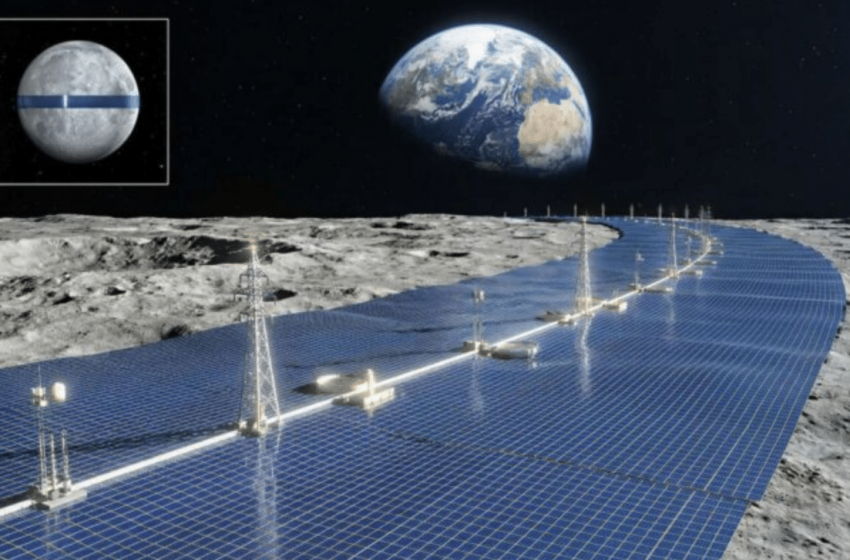
According Shimizu Corporation, this idea could transform the way humanity generates and consumes energy. Known as the Luna Ring, this concept envisions creating a 250-mile-wide ring of solar panels around the Moon’s equator to capture solar energy and beam it back to Earth using microwave and laser technology.
If realized, the Luna Ring could provide a constant, virtually unlimited stream of clean energy, potentially ending the reliance on polluting fossil fuels and nuclear power. This bold idea brings humanity closer to a future where sustainable energy is not just an ideal but a reality.
The Luna Ring: A Groundbreaking Leap Toward Sustainable Energy
Shimizu Corporation’s Luna Ring concept is more than just a space-age fantasy. It represents a drastic shift in how we envision our energy future. The company describes the Luna Ring as an “ingenious” solution that combines space technologies with renewable energy to address the growing demand for clean power. The ring, a band of solar panels wrapping around the Moon, would harvest solar energy continuously, regardless of the time of day or weather conditions. “A shift from economical use of limited resources to the unlimited use of clean energy is the ultimate dream of all mankind,” says the company’s website.
The Luna Ring could harness 13,000 terawatts of power, an amount far beyond what Earth currently consumes. For perspective, the total installed electricity generation capacity in the United States is just over 1,000 gigawatts. Such an energy source could dramatically reduce the planet’s dependence on non-renewable resources and mitigate the environmental impacts of traditional power generation.
Construction and Technology: Robots and Space Infrastructure
Building the Luna Ring would require the collaboration of advanced robotics, AI, and space infrastructure. The concept proposes using robots to construct the solar panel array on the Moon’s surface, performing tasks such as excavation and leveling the lunar terrain. According to Shimizu, these robots would work autonomously, controlled remotely from Earth, with human oversight to ensure precision and safety. This high-tech approach would allow for large-scale construction in an environment that is both harsh and distant.
BREAKING🚨: Japan is planning to build a solar ring around the Moon that will power Earth forever pic.twitter.com/oxndqoj4nh
— All day Astronomy (@forallcurious) January 31, 2026
The sheer scale of the project is staggering. The Luna Ring would stretch 6,800 miles around the Moon, covering a significant portion of the Moon’s equator. Despite this immense challenge, Shimizu is confident that advances in space technology will make this possible by 2035.
Transmitting Power: Microwave and Laser Technology
One of the most innovative aspects of the Luna Ring is the method by which the energy would be transmitted back to Earth. Since Earth’s atmosphere is nearly transparent to microwaves and lasers, Shimizu plans to use these technologies to beam the collected energy. Microwave and laser transmitters positioned on the Moon would send energy to receiving stations on Earth, where it could be converted into usable electricity for power grids.
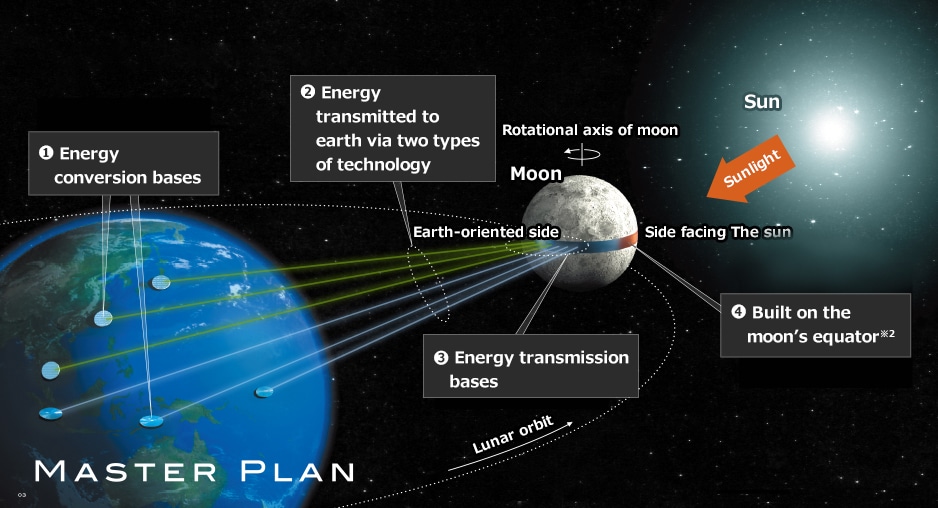
This method of transmission has been proposed before for space-based solar power, but the Luna Ring takes it a step further by making it a large-scale, continuous operation. As the Moon orbits Earth, the energy beam would follow a predictable path, ensuring that power is continuously available at international receiving stations. This concept, if implemented, would mark a giant leap forward in the capabilities of solar power.
Environmental Impact: A Cleaner Future for the Planet
The environmental benefits of the Luna Ring cannot be overstated. With the growing concerns over climate change, reducing the carbon footprint of energy production is crucial. By shifting from polluting fossil fuels and dangerous nuclear energy to clean solar power from space, humanity could take a significant step toward mitigating global warming. The Luna Ring would provide a constant supply of energy without the emissions that contribute to environmental degradation.
In addition to providing clean energy, the Luna Ring could also serve as a stepping stone for future space exploration and resource extraction. Once the infrastructure is in place, it would be easier to mine the Moon’s resources, such as precious metals and regolith, further expanding humanity’s reach in space and reducing reliance on Earth’s natural resources.
Is It Feasible?
Despite the exciting prospects of the Luna Ring, there are many challenges that remain to be addressed. Building a structure of such massive scale on the Moon presents not only technological hurdles but also financial ones.
The cost of the project would likely run into trillions of dollars, requiring a level of investment and international cooperation that has never been seen before. Additionally, the long-term maintenance of the ring, including dealing withlunar dust and potential space debris, could pose significant challenges.
Yet, despite these challenges, Shimizu Corporation is optimistic that the technological advancements over the next decade will make the Luna Ring a reality. While many details of the project remain speculative, it provides a glimpse into a future where energy is harvested from space, and humanity moves toward a more sustainable existence.
First Appeared on
Source link






