


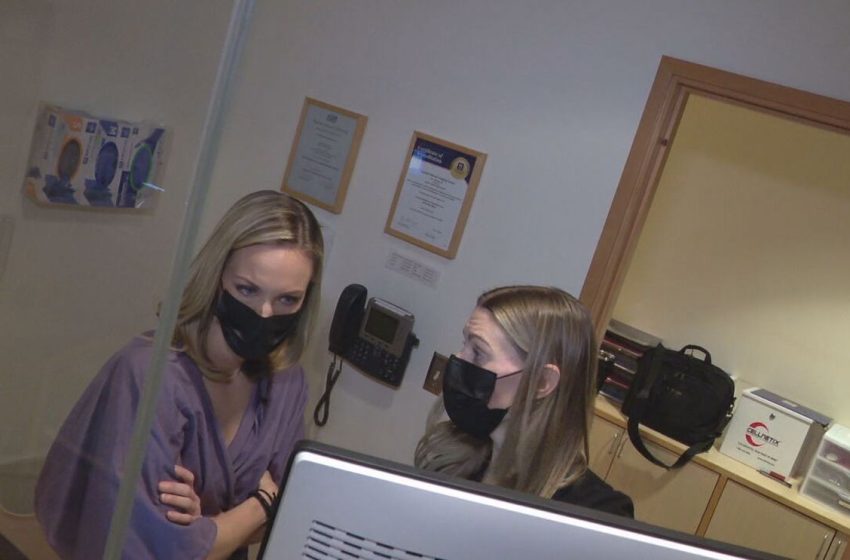
Kelly gets her first breast cancer screening
One in eight women will develop breast cancer in their lifetime. Studies show a mammogram can identify breast cancer up to two years before it can be physically felt, which is why doctors want to emphasize the importance of screening.
After recently turning 40 and after a conversation with my doctor, I decided to get my first mammogram at Seattle’s Swedish Breast Imaging Center.
After changing into a gown and going over my basic medical history, my exam technologist, Michelle Reader, walked me through what to expect.
“To start, when we do a screening mammogram, I’m going to take four images. Two of each breast,” said Reader. “It’s going to feel like I’m both pulling on your breast and skin.”
Over the span of 10 minutes, I’m moved in all kinds of positions. Uncomfortable – maybe. But at least for me – not painful.
“It’s a lot of pressure on you. It feels very different from what you’ve ever done, but the hope is you come out thinking, ‘that wasn’t as bad as I thought,’” said Reader.
Imaging Manager Laura Roberts said annual screens are generally recommended after age 40 for women at average risk.
“Not attending a screening mammogram isn’t going to make things go away,” said Roberts. “It’s just going to delay a diagnosis.”
Roberts says early diagnosis lowers the risk of dying from breast cancer by 40%. Dr. Maryanne Dubard-Gault tells me knowing your family history is critical. Dubard-Gault says it’s important to think of all the factors – big factors and smaller factors – that can all add up to increased risk.
“Two buckets. The big ticket items and the small ticket items,” said Dubard-Gault. “They’re all important because if you add them all, it can be a larger thing.”
Dubard-Gault says things like dense breast tissue, history of smoking or drinking, and never having given birth can add up to an increased risk, while family history of breast or ovarian cancer or genetic predisposition to breast cancer matter a lot on their own.
While I don’t have a family history of breast cancer, after watching my husband battle cancer at age 38, I want to be as proactive with my health as I can. When my exam is finished, I’m told I can expect results in one to two weeks. Reader also says there’s a real possibility doctors could ask me to come back for additional screening. She says this is common and does not mean that the patient necessarily has cancer.
“The vast majority of the things we look at are nothing but what we don’t want to do is overlook something,” said Reader. “If our doctors see something from your first mammogram that they want to look at, please don’t panic.”
According to the American Cancer Society, fewer than 1 in 10 women who are called back for more tests are found to have cancer.
Reader tells me that results appear on patient portals, like MyChart, often times before doctors have time to review the results. I received my results a week and a half after my exam. The exam showed no signs of abnormality and came back negative for signs of breast cancer. I’m advised to come back in a year.
For more information visit:
https://www.cancer.org/cancer/types/breast-cancer.html
https://www.fredhutch.org/en/patient-care/prevention/breast-cancer-screening.html
First Appeared on
Source link






