


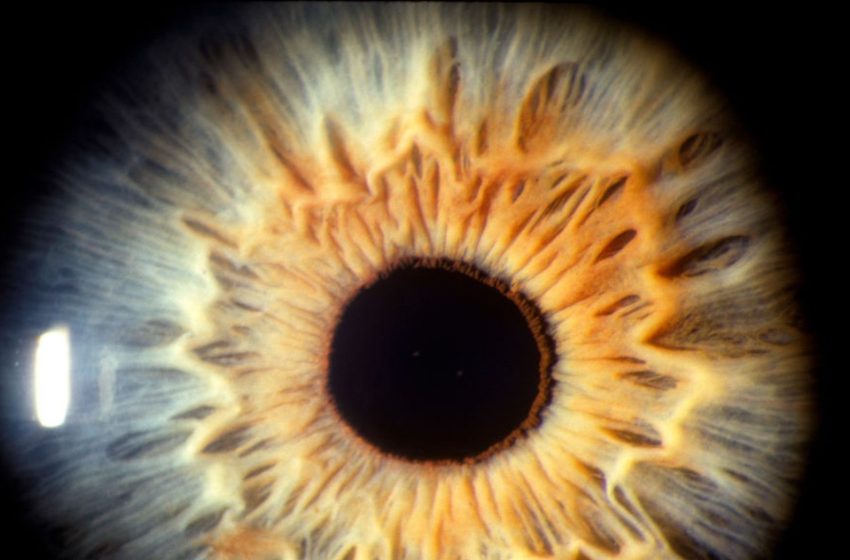
Lab-grown retina reveals secret of sharp human vision growth in eyes
Researchers at Johns Hopkins University have discovered a new cellular mechanism behind how humans develop sharp, high-acuity vision.
Using lab-grown retinal organoids, the team identified how the eye populates the foveola with the specific light-sensing cells needed for clear vision. Foveola is the tiny central region responsible for sharp, high-definition vision.
It was discovered that sharp human vision is formed during fetal development through a dynamic interplay between a vitamin A derivative (retinoic acid) and thyroid hormones.
“This is a key step toward understanding the inner workings of the center of the retina, a critical part of the eye and the first to fail in people with macular degeneration,” said Robert J. Johnston Jr., an associate professor of biology at Johns Hopkins who led the research.
“By better understanding this region and developing organoids that mimic its function, we hope to one day grow and transplant these tissues to restore vision,” added Johnston Jr.
Secret duo behind the human foveola
At the center of the human retina lies a tiny, specialized pit called the foveola. Although microscopic, it accounts for nearly 50% of your visual perception. It is the reason you can read this sentence or thread a needle.
To achieve this level of precision, the foveola must be packed exclusively with red and green cone cells. Blue cones, which handle lower-resolution color, are the noise in the system.
These mini-retinas pointed out that the specific cellular mechanisms arrange red, green, and blue cone cells, noting that the foveola uniquely excludes blue cones to maximize visual clarity.
The foveola is shaped through a precise two-stage chemical process during fetal development.
Between weeks 10 and 14, retinoic acid (a Vitamin A derivative) first limits the initial production of blue cones, followed by thyroid hormones, which trigger any remaining blue cones to physically convert into red and green cones.
“First, retinoic acid helps set the pattern. Then, thyroid hormone plays a role in converting the leftover cells,” Johnston said. “That’s very important because if you have those blue cones in there, you don’t see as well.”
The cellular conversion findings challenge a 30-year-old theory that blue cone cells physically migrate away from the center of the retina during development.
“The main model in the field from about 30 years ago was that somehow the few blue cones you get in that region just move out of the way, that these cells decide what they’re going to be, and they remain this type of cell forever,” Johnston said.
“We can’t really rule that out yet, but our data supports a different model. These cells actually convert over time, which is really surprising,” the author noted.
Future treatments
Because common research animals like mice and fish lack this specific human patterning, these organoids provide a new window into potential treatments for vision loss.
For instance, it could lead to the development of future treatments for currently incurable vision disorders like macular degeneration.
With further refinement of the lab-grown retinal organoids, the Johns Hopkins team aims to replicate human eye function with enough precision to engineer “made-to-order” photoreceptors.
This could pave the way for advanced cell-based therapies, in which healthy, laboratory-grown cells are transplanted into a patient’s eye to replace damaged tissue and potentially restore sight.
The findings were published in the journal Proceedings of the National Academy of Sciences on February 13.
First Appeared on
Source link






