


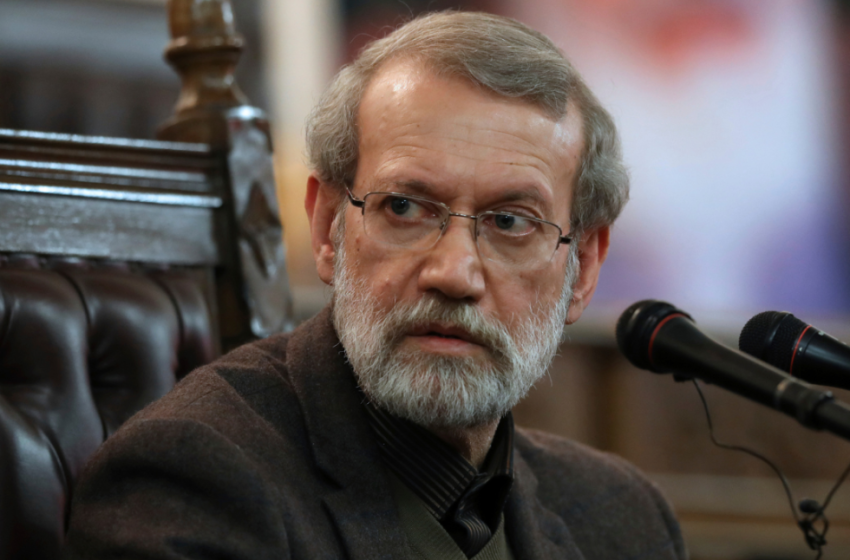
Live updates: Iranian Intelligence Minister killed, Israel says
Israel’s defense minister Israel Katz made the announcement on Wednesday.
The killing of Esmail Khatib follows the killings of top Iranian security official Ali Larijani and the head of the paramilitary Revolutionary Guard’s all-volunteer Basij force.
Katz said that “significant surprises are expected throughout this day on all the fronts,” without elaborating.
The U.S. Treasury, which sanctioned Khatib in 2022 over the Intelligence Ministry “engaging in cyber-enabled activities against the United States and its allies” put his year of birth as either 1960 or 1961.
It said Khatib had been born in Ghayenat in Iran’s South Khorasan Province.
Khatib “directs several networks of cyber threat actors involved in cyber espionage and ransomware attacks in support of Iran’s political goals,” the Treasury said at the time.
“In addition to conducting malicious cyber activity that affected Albanian government websites, (Intelligence Ministry) cyber actors were also responsible for the leaking of documents purported to be from the Albanian government and personal information associated with Albanian residents.”
The Treasury also called Iran’s Intelligence Ministry in another round of sanctions “one of the Iranian government’s main security services which is responsible for serious human rights abuses.”
“Under his leadership, the (Intelligence Ministry) has cracked down on a large number of human rights defenders, women-rights activists, journalists, filmmakers, and members of religious minority groups,” it said.
The Intelligence Ministry “has also aggressively persecuted individuals reporting on human rights abuses and violations in Iran, as well as their families, and subjected detainees to torture in secret detention centers during his tenure.”
In June 2025, Khatib claimed Iran seized documents from Israel’s nuclear program.
The head of the International Atomic Energy Agency later said that the information Iran claimed it seized regarding Israel’s nuclear program “seems to refer” to the country’s Soreq Nuclear Research Center.
Soreq, located 20 kilometers (12 miles) south of Tel Aviv, is a national laboratory for nuclear science established in Israel in 1958, engaged in nuclear science, radiation safety and applied physics.
Khatib was a Shiite cleric who worked in a variety of positions in Iran’s judiciary and the Intelligence Ministry. He served in the Revolutionary Guard in the Iran-Iraq war in the 1980s and was wounded in combat.
Iran did not immediately acknowledge Khatib’s death as Iranian state television aired live footage of a funeral procession for top Iranian security official Ali Larijani, as well as the slain head of the Revolutionary Guard’s all-volunteer Basij force and others, in Tehran.
Thousands thronged to the processional as Larijani’s body and his son, also killed in an Israeli strike, paraded past on a bed of a semitruck adorned with images of the dead.
People waved Iranian flags at the funeral.
Iran has increasingly turned toward large, pro-government events in the war as Israeli airstrikes continue to kill the theocracy’s top leaders, including the late Supreme Leader Ayatollah Ali Khamenei when the war began Feb. 28.
In announcing killing Khatib, the Israeli military described the Intelligence Ministry as having “advanced intelligence capabilities” and conducting operations worldwide, including those against Israel.
“Khatib played a significant role during the recent protests throughout Iran, both with regards to the arrest and killing of protestors as well as shaping the regime’s intelligence assessment,” the Israeli military said. “Similarly, he operated against Iranian citizens during the Mahsa Amini protests.”
First Appeared on
Source link






