


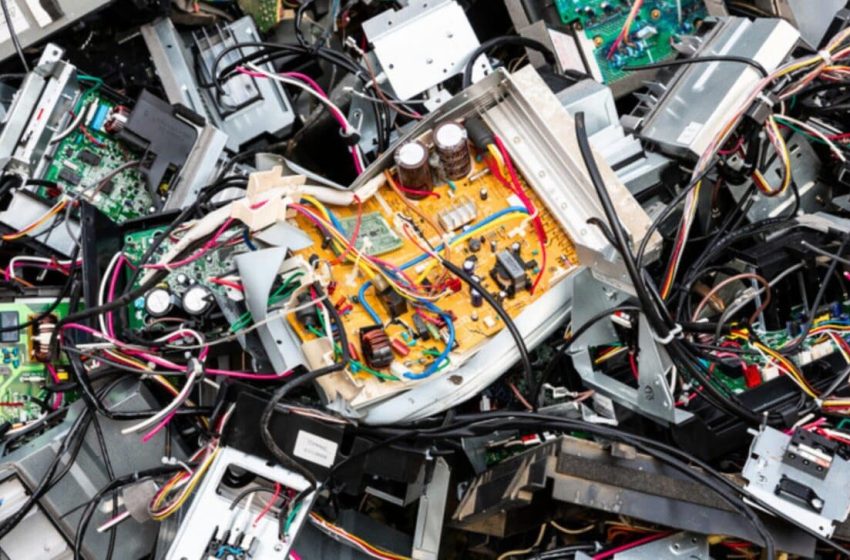
Many People Throw Away This Common Electronic Device Without Realizing It Holds 450MG of 22-Carat Gold
Discarded computer motherboards contain tiny traces of valuable metals hidden beneath layers of plastic and fiberglass. Inside the dense circuitry of outdated laptops or servers are thin pathways made from gold, copper, and other conductive elements that once carried electronic signals. Recovering these metals becomes difficult once the devices reach the end of their life.
Across the world, recycling facilities process thousands of tons of electronic waste each year, dismantling obsolete devices ranging from broken laptops to retired data-center hardware. Most recycling plants shred the equipment and use high heat or strong chemicals to separate the metals from plastics and glass fibers. These industrial methods consume large amounts of energy and often generate chemical residues that must be treated before materials can be reused.
When researchers at ETH Zurich began examining discarded electronics collected from local waste streams, they were searching for a way to extract valuable metals without relying on harsh industrial processes. The team, led by Professor Raffaele Mezzenga, started experimenting with an unusual material that normally ends up as waste in a completely different industry. Instead of complex machinery, they tested whether a byproduct of cheese production could capture precious elements hidden inside old computer hardware.
A Different Approach to Electronic Waste
Modern digital devices contain metals fused with plastics and glass fibers in ways that make separation difficult for conventional recycling plants. Standard recovery usually involves shredding the hardware and melting the metal components at high temperatures. These thermal processes require substantial energy and can produce chemical byproducts that require further treatment.
Researchers at ETH Zurich collected dozens of discarded electronics that were originally destined for landfill or incineration. The team observed that existing recovery techniques often rely on toxic chemicals or large electrical inputs to isolate precious metals. They wanted to test whether a biological material could perform the same task using a simpler method.
Their attention turned to whey, a liquid produced during cheese manufacturing. Dairy facilities generate large volumes of whey during production, and much of it is considered low-value waste. The liquid contains whey proteins that can transform into unusual molecular structures under controlled chemical conditions.
Turning Dairy Waste Into Gold
The team led by Professor Raffaele Mezzenga discovered that whey proteins could be converted into a specialized filter capable of extracting precious metals from dissolved electronic components. When researchers tested the material using scrap from discarded electronics, the results produced a clear demonstration of the technique.
In one experiment, the scientists processed 20 discarded computer motherboards through their system. After completing the extraction process, the researchers recovered a small metallic nugget weighing about 450 milligrams. Laboratory analysis showed the metal was 22-carat gold, with a purity of roughly 91 percent.
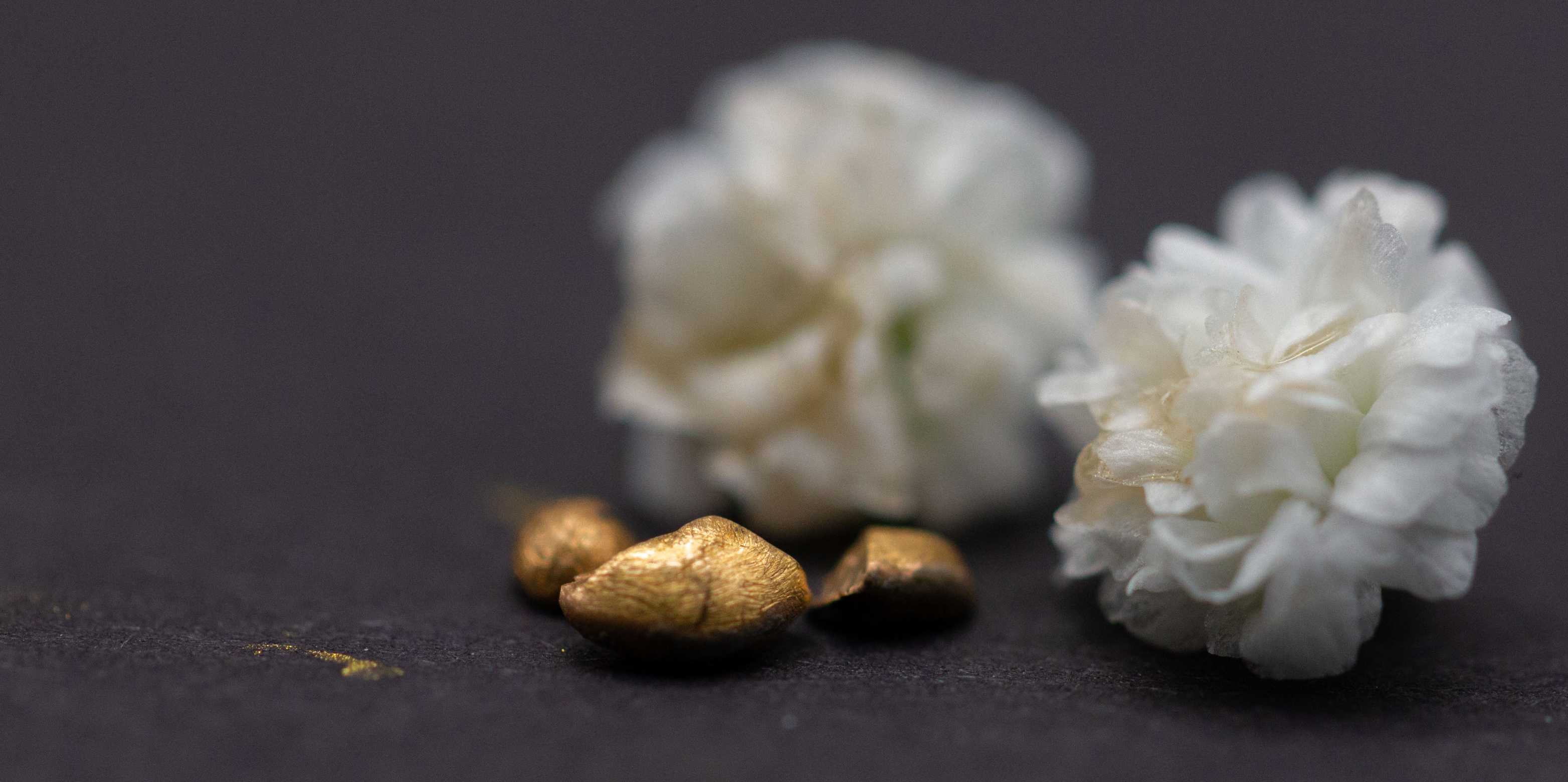
The team published the findings in the journal Advanced Materials, describing how the material selectively captures gold from a mixture of dissolved metals including copper, iron, and aluminum. Because the recovered metal already reaches high purity, it can be used in industrial applications without extensive secondary refining.
“The thing I like the most is that we’re using a food industry byproduct to obtain gold from electronic waste,” said Raffaele Mezzenga while presenting the results.
The researchers also calculated that the value of the recovered gold significantly exceeds the cost of producing the protein material. Using one waste stream to process another creates a circular approach linking the electronics industry with the dairy industry.
How the Protein Sponge Works
The process begins by heating whey proteins in acidic conditions. This treatment causes the proteins to reorganize into microscopic fibers called amyloid fibrils. These extremely thin fibers naturally assemble into a gel-like network that can later be dried into a porous sponge.
The resulting protein sponge contains a dense web of microscopic fibers that creates a large surface area. This structure allows the sponge to interact efficiently with dissolved metal ions in liquid solutions. When electronic components are converted into an ion-rich mixture, the sponge acts as a selective filter.
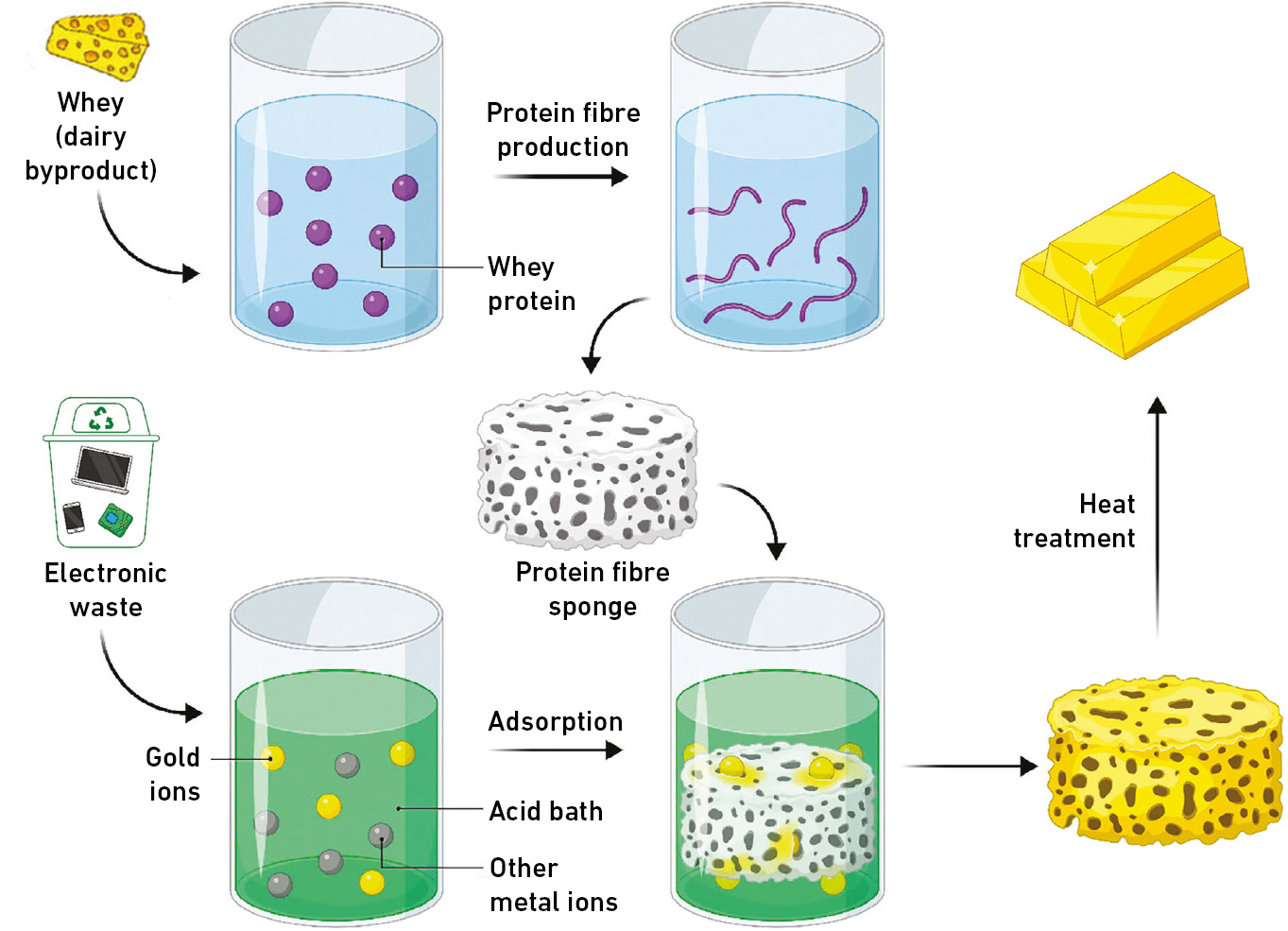
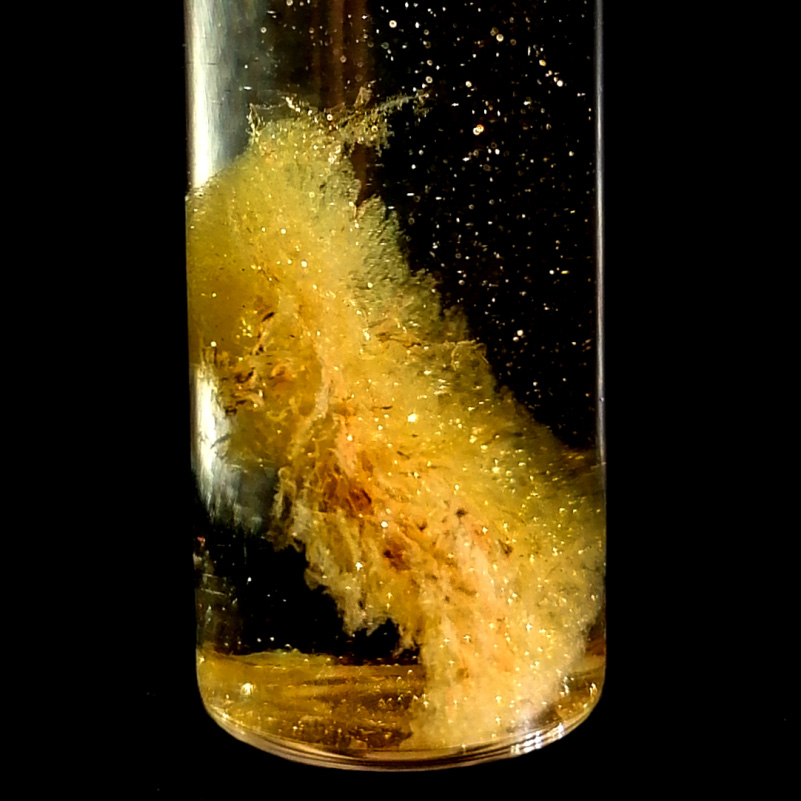
To prepare the electronics, the researchers first dissolved the metal parts of the computer motherboards in an acidic solution. Once the metals were converted into ions, the sponge was placed directly into the liquid. The gold ions adhered to the amyloid fibrils more strongly than most other metals in the mixture.
“You can’t get much more sustainable than that!” Raffaele Mezzenga said while describing the process.
The sponge’s stability in acidic environments proved essential for the extraction process. According to the research team, the material could also be produced at large scale using equipment already available in many existing food-processing facilities.
Recovering the Metal
After the sponge absorbs metal ions, it must be heated to release the captured material. During this step, the ions are reduced into metallic particles that accumulate on the surface. These particles can then be melted together to form small nuggets of metal.
The heating process destroys the protein sponge, but the starting material remains inexpensive because it comes from surplus dairy waste. According to the researchers, the procurement cost of whey is roughly 50 times lower than the market value of the gold that can be recovered through the process.
Lead researcher Mohammad Peydayesh noted that this economic advantage could make the technology attractive for recycling companies seeking better ways to recover precious metals from electronic waste.
“The technology is ready for market,” Raffaele Mezzenga said when discussing the possibility of scaling the system for industrial use.
Expanding the Recovery Method
Although the initial experiments focused on gold, the researchers believe the same approach could eventually be adapted to recover other valuable elements found in electronic components. Metals such as platinum and palladium are commonly used in modern circuitry and industrial equipment.
By adjusting the acidity and temperature used during the formation of amyloid fibrils, the team believes the protein sponge could potentially target different metal ions. Expanding the process could increase the range of materials recovered from discarded electronics.
The researchers also plan to refine the chemical treatment used to dissolve the hardware so that the acidic solution can be neutralized and reused. Combining waste from the dairy industry with scrap computer motherboards demonstrates a circular method that converts two separate waste streams into valuable materials.
The nugget produced during the laboratory experiment weighed 450 milligrams and contained 91 percent gold and 9 percent copper, matching the composition of high-quality 22-carat gold.
First Appeared on
Source link






