


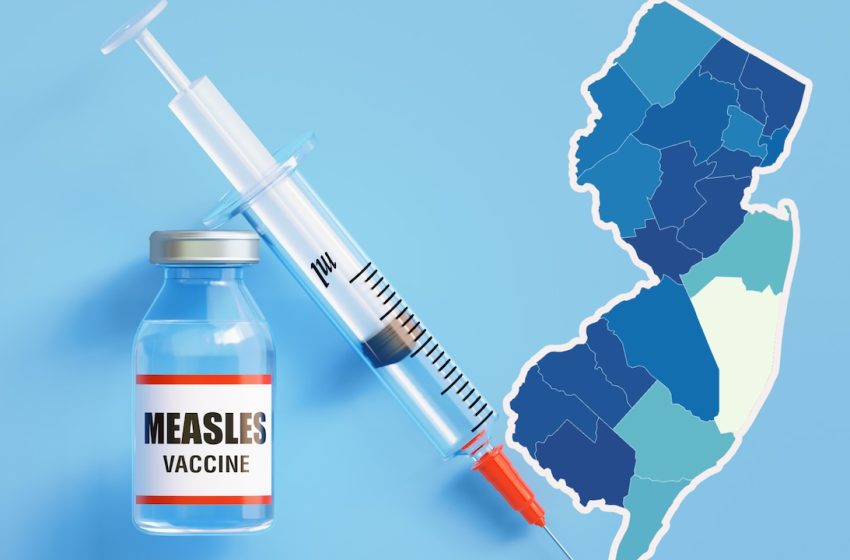
Measles cases are rising across the U.S. Check your N.J. county’s vaccination coverage.
Measles is rearing its ugly head again and public health experts say communities with low vaccination coverage are the most at risk of suffering an outbreak.
A total of 910 confirmed measles cases have been reported this year by 23 states and the five boroughs of New York City as of Feb. 13, according to the Centers for Disease Control and Prevention. That’s already 40% of the total cases reported in 2025, with more than 10 months remaining in the year.
No deaths have been reported, but severe outbreaks in Florida, South Carolina and Utah foreshadow another year of increased measles transmission. In 2025, the United States hit a morbid milestone with 2,280 total measles cases, marking the highest annual case tally in 33 years when officials recorded more than 2,100 infections in 1992.
New Jersey reported a total of 11 measles cases in 2025. That’s up from seven total cases in 2024, according to the state’s reportable disease statistics.
READ MORE: Thousands more N.J. kids are skipping vaccines. See how your county compares.
Currently, there’s no ongoing spread in New Jersey and no cases have been reported in residents. However, the state did warn residents last week about a potential exposure from an out-of-state visitor with measles.
Although measles was declared eliminated in the U.S. nearly 30 years ago, it has reemerged in recent years due to declining measles, mumps and rubella (MMR) vaccination coverage.
According to the CDC, MMR coverage among kindergartners in the U.S. decreased from 95.2% during the 2019–2020 school year to 92.5% during the 2024–2025 school year. That’s well below the 95% coverage target required for herd immunity.
In January, the CDC announced revisions to the U.S. childhood immunization schedule that cut the number of recommended shots for all children from 17 to 11. However, the CDC continues to advise that all children get two doses of the MMR vaccine. The national immunization schedule recommends a first dose at 12-15 months and a second dose at 4-6 years old.
New Jersey, as part of the Northeast Public Health Collaborative, continues to recommend the American Academy of Pediatrics’ immunization schedule which also advises two doses of the MMR vaccine.
While New Jersey’s measles vaccination coverage surpasses the national average, it has also been declining in recent years.
Vaccination among New Jersey kindergarteners dropped from nearly 96% during the 2019-2020 school year to 92.8% during the 2024-2025 school year.
At the same time that MMR coverage has been declining, religious exemptions from vaccines have been rising. It’s a trend that public health experts say may contribute to the resurgence of vaccine-preventable diseases.
During the 2014-2015 school year, only 1.6% of kindergartners had a non-medical exemption from one or more vaccines, compared to 4.6% during the 2024-2025 school year, according to state data.
The CDC warns that when measles reaches pockets of unvaccinated people, outbreaks can occur.
State data shows that only 91.3% of all pre-K/childcare, kindergarten, first grade, sixth grade and transfer students statewide are meeting immunization requirements, meaning they’ve received each of the age-appropriate vaccines, including the MMR vaccine. That’s down from 92.4% during the 2023-2024 school year and 93.3% during the 2022-2023 school year.
Refer to the map below to check the percentage of students meeting immunization requirements, including MMR, in your county.
First Appeared on
Source link






