


Measles Outbreak Associated with an Infectious Traveler — Colorado, May–June 2025
Investigation and Results
Measles is a highly contagious vaccine-preventable viral disease, characterized by fever, rash, cough, coryza, and conjunctivitis. During 2025, the number of U.S. measles cases increased after 25 years of limited domestic transmission (1). In 2025, a total of 2,255 measles cases (including three deaths) had been reported in the United States and 11% of patients were hospitalized, the highest number of measles cases since 1992, when 2,126 cases occurred (Measles Cases and Outbreaks | CDC). Complications occur in approximately 10% of patients with measles, including ear infections and diarrhea; serious complications including pneumonia (5%), encephalitis (0.1%), and death (0.1%–0.3%) also occur. Receipt of measles, mumps, and rubella (MMR) vaccine is the most effective way to prevent measles.* One dose of MMR vaccine is 93% protective against measles, and 2 doses are 97% protective (2). Although infections do occasionally occur in vaccinated persons, these cases often result in a modified illness with fewer or milder symptoms and lower rates of hospitalization (3,4). This report describes measles cases in Colorado residents that were part of an outbreak resulting from exposure to a patient who was infectious during air travel. This activity was reviewed by the Colorado Department of Public Health and Environment (CDPHE) and CDC, deemed not research, and was conducted consistent with applicable federal law, CDPHE policy,† and CDC policy.§
Index Case Identification
On May 20, 2025, CDC notified CDPHE of a person who traveled through the Denver International Airport while infectious with measles. The person was not a Colorado resident and had not been vaccinated against measles. The traveler was exposed to measles in another state during an ongoing outbreak before traveling internationally and was reportedly symptomatic with fever and cough during the return trip. The traveler arrived in Denver on May 13 after an 11-hour international flight, stayed overnight at a Denver hotel, then returned to the airport the next day (May 14) and boarded a domestic flight to another state. During May 27–June 16, nine secondary cases and one tertiary case associated with this traveler were identified among Colorado residents. Six additional secondary cases and one tertiary case were reported by five other states. This report describes the Colorado cases and the Colorado public health response to the outbreak.
Identification of Secondary Cases from Exposure on the International Flight
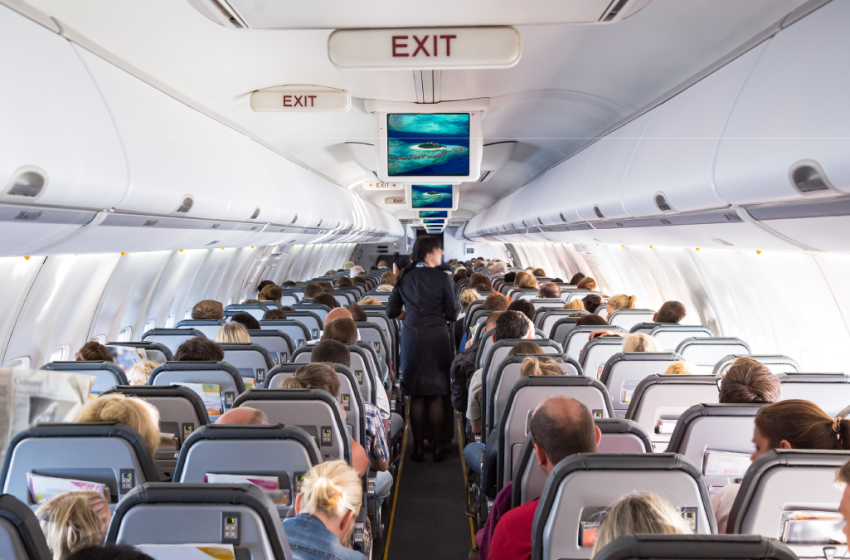
Colorado health care providers are required to immediately report cases of suspected measles to local public health authorities or CDPHE by telephone irrespective of whether laboratory results are available. On May 27, 2025, 2 weeks after the index patient arrived in Denver on the international flight, two measles cases in Colorado residents were reported to CDPHE by separate local health care providers. During the initial investigation, it was learned that these two patients had recently traveled on the same international flight as the index patient. The first confirmed case (rash onset May 25, 12 days after the flight) occurred in an unvaccinated young child (patient A) who was seated on the parent’s lap, more than two rows away from the index patient (Table) (Figure). The second case (rash onset May 26) occurred in an adult with documentation of receipt of 2 MMR vaccine doses (patient B), who was seated within two rows of the index patient. Measles in patient A was confirmed by reverse transcription–polymerase chain reaction (RT-PCR) testing of nasopharyngeal (NP) swabs and urine, and in patient B, by RT-PCR testing of NP swabs only; urine test results were negative. Urine collection for measles testing is recommended in Colorado to improve sensitivity of testing. Both patients had measles immunoglobulin M (IgM) detected by immunofluorescence assay (IFA) and enzyme-linked immunosorbent assay (ELISA).¶
On May 28, after CDPHE notified CDC of the cases (which CDC considered to be part of an outbreak in the state where the index patient was initially exposed), CDC provided CDPHE with the list of Colorado residents identified as airplane contacts from the international flight, which included patients A and B. CDC routinely includes children seated on a parent’s lap anywhere on an airplane, persons seated within two rows of a person with measles on an airplane, and crew members serving the infected person in airplane exposure notifications for flights with a capacity of more than 50 passengers. For flights with a capacity of 50 or fewer passengers, all passengers and crew members on board are included in notifications. CDPHE distributed the air contact list to the respective local public health agencies based on contacts’ addresses so that these travelers could be assessed for measles immunity and presence of symptoms. During these interviews, a third (vaccinated) person (patient C), who was also seated within two rows of the index patient, reported developing respiratory symptoms without rash on May 29; this patient then developed a rash on May 31. NP swab and urine specimens were collected on May 29, 2 days before rash onset. RT-PCR testing of urine confirmed measles, and the NP swab was negative.
Because three secondary cases were identified on this flight, CDPHE requested an expanded air contact list that included passengers seated more than two rows away from the index patient. This expanded list was received on May 30; based on this list, an additional measles case was identified in a vaccinated person (patient G) who was seated five rows from the index patient. No other measles cases were identified among Colorado residents from the international flight.
On May 22, CDC provided CDPHE with a list of airplane contacts who were Colorado residents from the domestic flight; no measles cases were identified among Colorado residents from that flight. CDPHE distributed a health alert network (HAN) message on May 30 to alert Colorado health care providers of confirmed measles cases identified among Colorado residents who were exposed to the out-of-state index traveler during an international flight. This HAN referenced a May 23 HAN that provided notification of the index traveler’s movement through the airport and Denver hotel stay on May 13 and 14.
Identification of Secondary Cases from Exposure in the Denver Airport and a Tertiary Case
On May 31, local providers reported three additional measles cases among adults aged 20–39 years (patients D, E, and F) with rash onset on May 27 (patient D) and May 30 (patients E and F). All three patients reported being at the Denver airport on May 14, the same day the index patient boarded a domestic flight at the airport; among these patients, one (patient F) was vaccinated. On June 7, a provider reported another measles case (patient H) in an unvaccinated person employed by an airport business, who worked a shift on May 13, the day the index patient arrived in Denver. Patient H had first symptom onset on June 2 and rash onset on June 7; RT-PCR results from both urine specimen and NP swab were positive. Although the rash onset occurred 4 days outside the maximum expected incubation period of 21 days, first symptom onset was on day 20 of the incubation period; no other potential exposures between May 13 and the onset of symptoms were identified for this patient.
On June 16, an adult aged ≥50 years with unknown vaccination status (patient I) contacted public health officials and reported a recent hospitalization for acute hepatitis during May 27–29 and concern about possibly having measles after learning that a household contact had measles. Patient I reported rash onset on May 25. On further investigation, the patient was confirmed to have been at the Denver airport on May 14 in the same terminal as the infectious traveler but not on any of the same flights. The patient had had signs and symptoms consistent with measles before and during hospitalization; however, measles was not suspected, and testing was not performed during the hospitalization. Measles was confirmed on June 18 (24 days after rash onset) by PCR testing of urine after the patient had recovered and been discharged from the hospital.
The investigation of patient I’s case revealed that the measles case reported to CDPHE on June 12 in a patient with rash onset on June 7 and a positive NP RT-PCR test result (patient J) had occurred in a household contact of patient I. Patient J’s illness was initially believed to be unrelated to the ongoing outbreak because the rash began on June 7, and although the patient reported international travel (May 15–May 21), no Denver airport transit days coincided with the days the index patient was in the airport (May 13 and 14). Patient J’s case was later classified as a tertiary case, having been infected by patient I.
Four of the nine secondary cases were passengers on the same international flight as the index patient, including three who were vaccinated (Table). An additional five secondary cases occurred among persons who were exposed to the index patient in the Denver International Airport main terminal and a specific concourse, but not on a flight; one of these five persons was vaccinated, three were unvaccinated, and the vaccination status of one was not known. One person was an employee at a business in the main terminal who was likely exposed on the date of arrival of the international flight. A CDC investigation of the domestic terminal determined that the other four cases likely resulted from exposures the following day in a smaller, more congested concourse where the index patient boarded a domestic flight.
Laboratory Testing
All measles cases were laboratory confirmed by RT-PCR testing of urine or NP specimens at the Colorado State Public Health Laboratory or at commercial laboratories. Urine RT-PCR results were positive in six patients, including two vaccinated patients who received negative NP test results (patients C and G) (Table). In patient I, the hospitalized patient whose vaccination status was unknown, measles virus was detected in urine by RT-PCR testing 24 days after rash onset; no NP specimen was collected. Because the investigation of this case occurred outside the recommended time frame for measles specimen collection (i.e., >14 days after rash onset), measles IgM testing was recommended; an ELISA test detected IgM, indicating recent infection. Among six genotyped specimens, all were D8, the most commonly circulating genotype identified in recent 2025 U.S. outbreaks (5).
Characteristics of Patients with Secondary Measles Cases
Among the nine patients with secondary cases in Colorado, four had received 2 MMR vaccine doses ≥2 weeks before exposure, four were unvaccinated, and the vaccination status of one was unknown (Table). The median patient age was 29 years (range = 1–55 years). All nine patients experienced rashes of varying severity. Two vaccinated patients reported mild, atypical rashes, which they compared with acne or insect bites. Vaccinated patients generally reported fewer and milder symptoms than did unvaccinated patients.
Three unvaccinated patients (including the young child from the international flight [patient A] and the two Denver airport contacts [patients D and H]), and one patient with unknown vaccination status (patient I) were hospitalized for 2–5 days with severe signs, symptoms, and complications, including high fever, dehydration, diarrhea, anorexia, and acute viral hepatitis; no deaths occurred. The median age of hospitalized patients was 30 years (range = 1–55 years).
First Appeared on
Source link






