


Meet the 31-Foot Giant Crocodile That Dominated Prehistoric Waters and Ate Dinosaurs
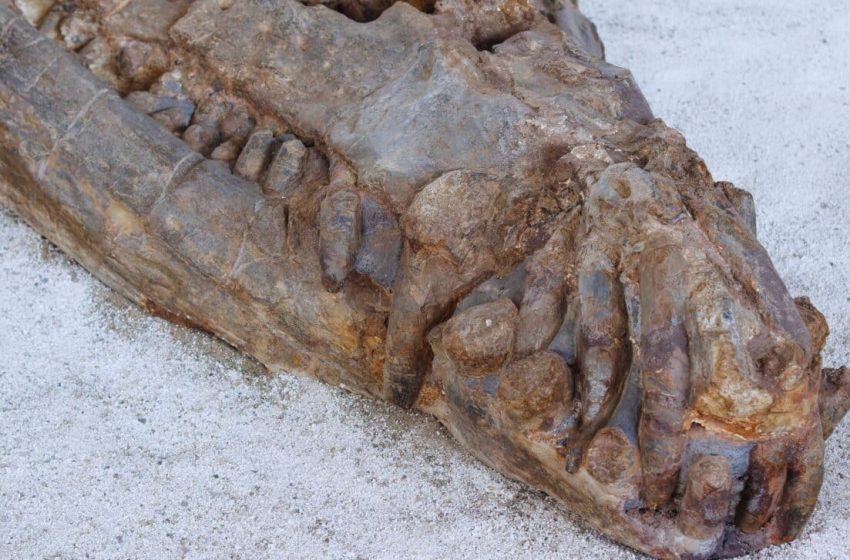
Scientists have completed the first-ever full-scale, scientifically accurate replica of Deinosuchus schwimmeri, a prehistoric crocodile that once ruled North America’s waterways. Known as the “dinosaur killer,” this colossal reptile, which could grow up to 31 feet long, terrorized its environment during the Late Cretaceous period.
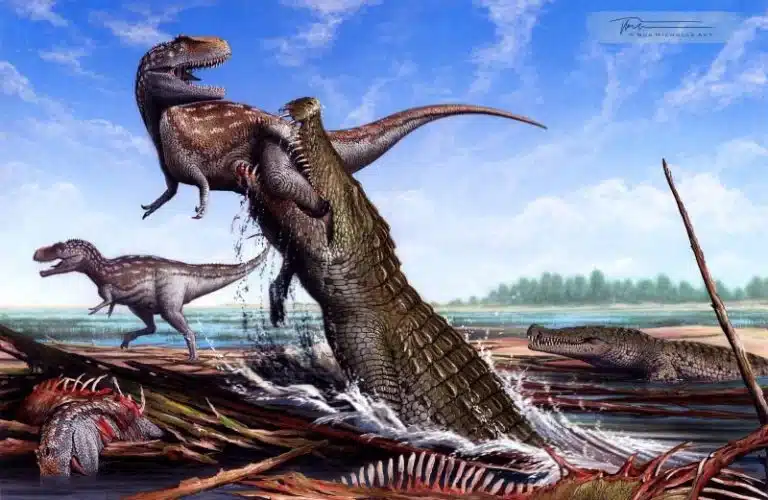
The replica, now on display at the Tellus Science Museum in Georgia, is the result of decades of research by Dr. David Schwimmer, a paleontologist who has spent over 40 years studying this ancient predator. Deinosuchus was the dominant predator in its environment, capable of preying on large dinosaurs such as Appalachiosaurus.
A Terrifying Apex Predator
Deinosuchus schwimmeri lived between 83 and 76 million years ago in what is now the southeastern United States. According to Dr. David Schwimmer, this massive crocodylian was an apex predator in its environment, capable of preying on large dinosaurs like Appalachiosaurus. Its sheer size, growing up to 31 feet, made it a force to be reckoned with, dominating the rivers and coastal waters of its time. Schwimmer describes the creature as a “dinosaur killer,” a title it earned due to its ability to hunt large prey, including herbivorous dinosaurs. The research, avaliable on Journal of Vertebrate Paleontology, revealed that this crocodile was not only large but strategically adapted to its environment, hunting in waterways and ambushing its prey.
The replica on display at the Tellus Science Museum showcases the massive scale of Deinosuchus, allowing visitors to experience firsthand the enormity of this creature. Schwimmer noted that the creature’s size and power set it apart from other contemporary predators, establishing Deinosuchus as one of the dominant figures of the Late Cretaceous period.
“The scale of the dinosaurs and other creatures that lived during [the Late Cretaceous epoch] is hard to capture in words or pictures. We can tell you that Deinosuchus is 30 feet long, but seeing it is far more impactful.” said Rebecca Melsheimer, the museum’s curatorial coordinator.
Bringing the Deinosuchus Crocodile Back
Creating the replica of the massive crocodile was a monumental endeavor that took over two years to complete, whose research on the species dates back to 1979, worked closely with Triebold Paleontology, a company known for its scientifically accurate fossil replicas. Using high-resolution 3D scans of fossil material, the team was able to reconstruct the animal’s skeletal structure and distinctive dermal armor, ensuring an accurate representation of the creature.
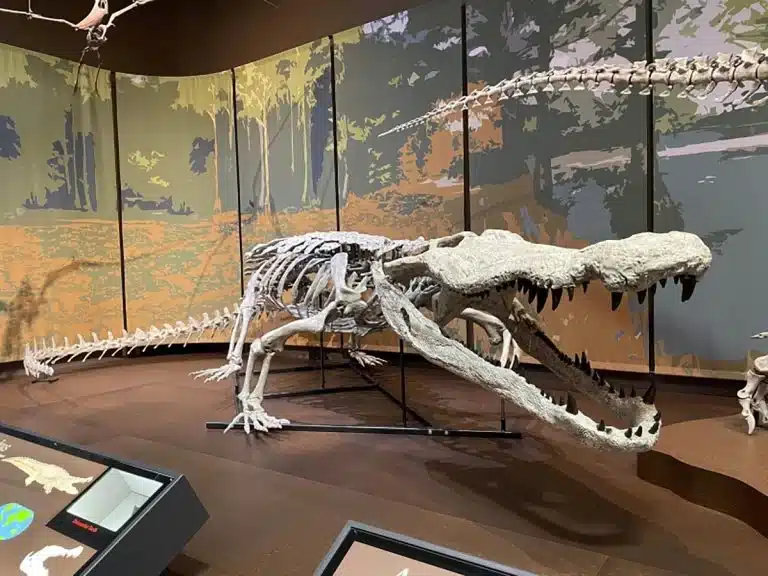
He stated that creating the crocodile’s replica was a technical challenge, as much of the fossil evidence for Deinosuchus was fragmented and scattered across several excavation sites. The team had to combine data from these fossils to piece together the most accurate representation possible. Schwimmer explained that:
“These replicas are more than just creating a ‘scare factor,’” he said. “Understanding dinosaurs’ predatory habits helps us decode some of nature’s greatest survival strategies. By studying these ancient apex predators, we are essentially looking back in time to see exactly how life adapted and dominated a changing world.”
A Legacy of Curiosity and Epic Discoveries
Dr. Schwimmer’s research on Deinosuchus has made a huge splash in the world of paleontology, earning him a reputation as one of the top experts on Cretaceous ecosystems. His discoveries, including the first Deinosuchus fossils found in Georgia and evidence of early flying reptiles, have helped shape our understanding of the ancient world. Schwimmer’s dedication to unraveling the mysteries of the past has not only made him a well-known figure in his field but also turned his 2002 book, King of the Crocodylians, into a go-to guide for students and researchers fascinated by giant prehistoric creatures.
As pointed out by Hannah Eisla, director of education at the Tellus Science Museum, the Deinosuchus replica is a game-changer for students.
“Many of these students come on school field trips specifically to learn more about the region they call home and how it has changed over time. The addition of Deinosuchus schwimmeri allows us to provide a more detailed picture of this area’s ecosystem in the Cretaceous Period.” Eisla said.
And with Deinosuchus on display, the museum is giving them a one-of-a-kind chance to connect with history in a way that no textbook ever could.
First Appeared on
Source link






