


Meet The Giant Sloths That Gave Us Avocados — An Evolutionary Biologist Explains
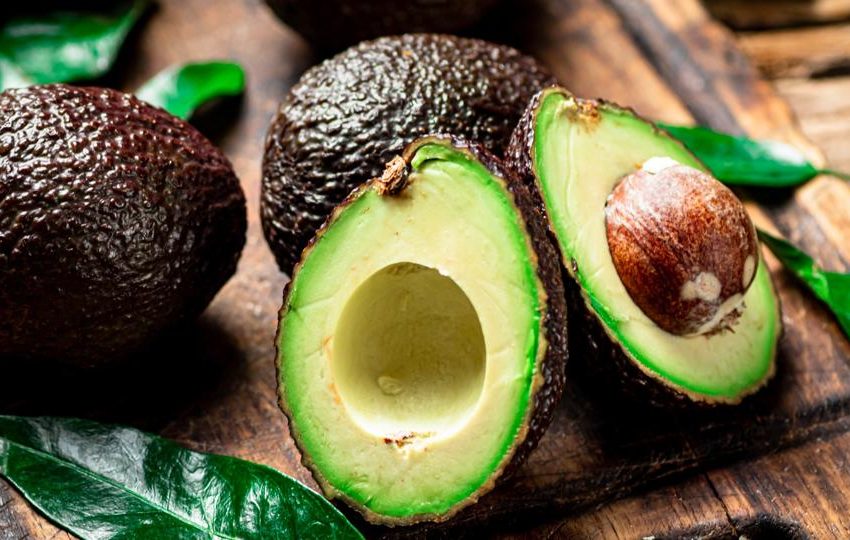
The avocado both looks and feels strangely overbuilt: its flesh is abundant, and its seeds are enormous. In fact, its proportions seem fundamentally mismatched to the modern world. There aren’t any animals alive today that are known to swallow the fruit whole; by extension, there are no animals that could disperse its seed effectively. Yet, having slip through evolutionary cracks, the fruit still persists. It’s globally cultivated and culturally beloved, but biologically speaking, it’s somewhat puzzling.
This inconsistency hasn’t gone unnoticed. Evolutionary biologists have pointed to fruits like the avocado (Persea americana) for decades as relics of a bygone ecological partnership. Its strange traits couldn’t have been shaped by the animals we see today, but instead by ones that vanished at the end of the last Ice Age.
The question, then, is not just why avocados look the way they do. Rather, it’s who they were built for.
An Evolutionary Mismatch Hiding In Plain Sight
In a 2021 study published in Frontiers in Plant Science, researchers revisited a long-standing ecological idea: that some fruits are best understood as evolutionary anachronisms. In simple terms, this means that they have traits that evolved in response to interactions that no longer exist.
Avocados are a textbook case of an evolutionary anachronism. Most angiosperms, or fruiting plants, rely heavily on animals to disperse their seeds; the logic behind this partnership is basic, yet also elegant. If a plant produces a nutritious, attractive fruit, it can entice an animal to eat it; in turn, it can outsource the job of having its seed carried away (often over considerable distances) to be deposited in a new location. But this system depends on a tight fit between fruit traits and animal capabilities.
This logic is also what makes avocados seem conspicuously out of place. Their seeds are unusually large, and their fruits are also too bulky for most extant mammals or birds to swallow whole. Even animals that are known to eat avocado flesh tend to either discard or destroy the seed, rather than dispersing it.
From a modern ecological perspective, the avocado seems maladapted, or almost as though it’s waiting for a partner that never arrives. But as the 2021 study explains, this apparent design flaw is actually a clue to its survival.
In comparing fruit sizes, seed structures and dispersal mechanisms across species, the researchers argue that evolutionary mismatches like these point to a past shaped by megafaunal dispersers. That is, at some point in the past, there must have been large-bodied animals that could ingest these sizeable fruits whole, and transport their seeds across landscapes.
When those animals disappeared, some of the fruits remained, the avocado being just one of many examples. Each carries with them the imprint of an earlier ecological world. When framed beneath this hypothesis, we can see that the avocado isn’t nearly as poorly designed as we initially believed. It’s exquisitely designed — just for a context that no longer exists.
Fruits That Evolution Built For Giants
To understand that lost context, we turn to the animals that once roamed the Americas during the Pleistocene: megafauna. This is relatively a loose category that encompasses all the large mammals that dominated during this era, such as gomphotheres, giant rodents and, perhaps most evocatively, giant ground sloths.
A 2001 study published in Acta Palaeontologica Polonica provides some of the clearest evidence that giant ground sloths (the species Megatherium in particular) weren’t just incidentally herbivorous. More likely, they were active participants in plant–animal interactions that involved fruits.
Illustration representing Megatherium (Photo by De Agostini via Getty Images/De Agostini via Getty Images)
De Agostini via Getty Images
Through ecomorphological analysis of fossil remains — examining skull structure, dentition, and inferred feeding behavior — the researchers found that ground sloths possessed broad, flexible diets. Their anatomy suggests the ability to process a wide range of plant materials, including significant proportions of fruit.
Importantly, fossil evidence indicates the consumption of fleshy-fruited shrubs and trees, precisely the kinds of plants that rely on animal-mediated seed dispersal. This matters because fruit consumption is only half the story. The other half, as a 2008 study from PLOS One argues, is movement.
Large-bodied animals tend to travel farther, ingest more and excrete seeds intact. In doing so, they serve as vessels that link plant populations across space. A giant ground sloth, capable of consuming a large fruit whole, would have been an ideal disperser for species like the avocado. The seed would pass through the digestive system and be deposited elsewhere, often in nutrient-rich dung.
In other words, giant sloths and other megafauna would turn bulky fruits into ready-made packages for germination. Avocados and other large-seeded fruits start to make more sense in this light. Today, their size might be seen as excessive, but during the Pleistocene, it was functional.
This is a prototypical example of coevolution: plants and animals that shape one another’s traits over evolutionary time. The avocado’s design reflects a relationship with an animal capable of both handling and benefiting from their abundance, until the disappearance of one left the other in ecological limbo.
The Evolutionary Vacuum Left Behind
If the story ended with mismatched fruits, it would already be compelling. But the consequences of megafaunal extinction run far deeper than any single species.
As a 2025 study in Biology Letters emphasizes, ground sloths were engineers of their ecosystems. Their roles spanned multiple ecological processes: they transported nutrients, disturbed soils, opened vegetation and, by extension, fundamentally shaped the spatial structure of plant communities.
Seed dispersal, in particular, was more than just a means for plant and fruit relocation. It influenced genetic diversity, population dynamics and the resilience of plant species to environmental change. By moving seeds across long distances, ground sloths maintained the connection between otherwise isolated patches of vegetation.
When these animals went extinct (likely due to a combination of human pressures and climatic shifts around the start of our ancestors’ rise), those processes couldn’t be transferred to smaller species; they simply weren’t capable of fulfilling the niche that sloths held. In turn, they diminished, fragmented or vanished altogether, which left behind an ecological vacuum.
Plants that had evolved to depend on large dispersers found themselves constrained. Some adapted by shrinking their ranges or relying on secondary dispersers. Others persisted in reduced numbers, their original ecological strategies only partially functional. And in a few cases (avocados being one of them), survival was secured by means of human intervention.
This is an important distinction. Humans could never perfectly replicate the ecological roles of megafauna. Through cultivation, trade and global distribution, we could only ensure the persistence of certain species. What we couldn’t ensure was the restoration of the systems that once sustained them.
The traits that define the avocado are reflective of interactions with animals that no longer exist. Those interactions shaped the fruit’s evolutionary trajectory, even if they’ve since stopped. What remains is a species that still carries the logic of an Ice Age ecosystem within it, almost like a time capsule.
Evolution doesn’t plan for the future. It can only respond to a species’ present. And when the present changes abruptly, the past can linger on in ways that don’t quite fit the modern world. Avocados are a case in point. We still eat them anyway, of course, which is also part of its story. Life, in its persistent, improvisational way, finds new partners when the old ones disappear.
Think you understand evolution? Take the Evolution IQ Test and see how many of nature’s strangest stories you can actually explain.
First Appeared on
Source link






