


Meet the Sea’s Most Mysterious Creature, It Looks Like Sauron, But Bites Like a Jelly
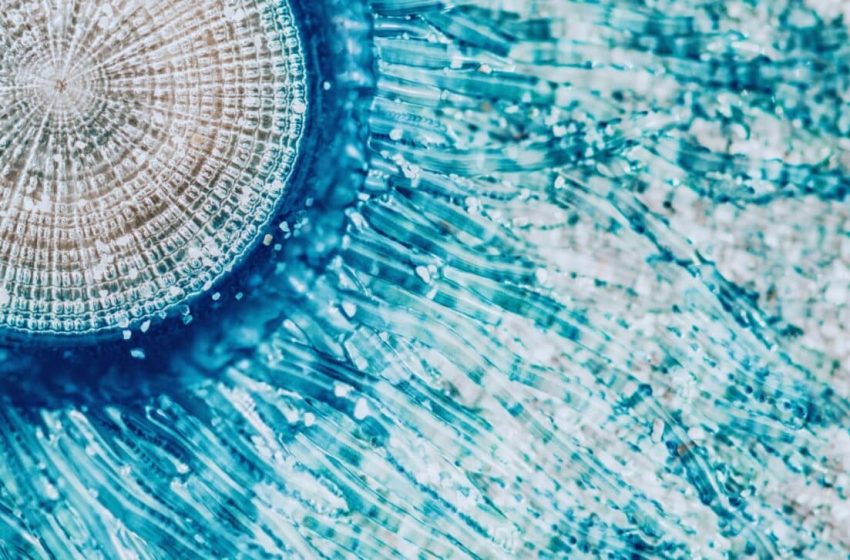
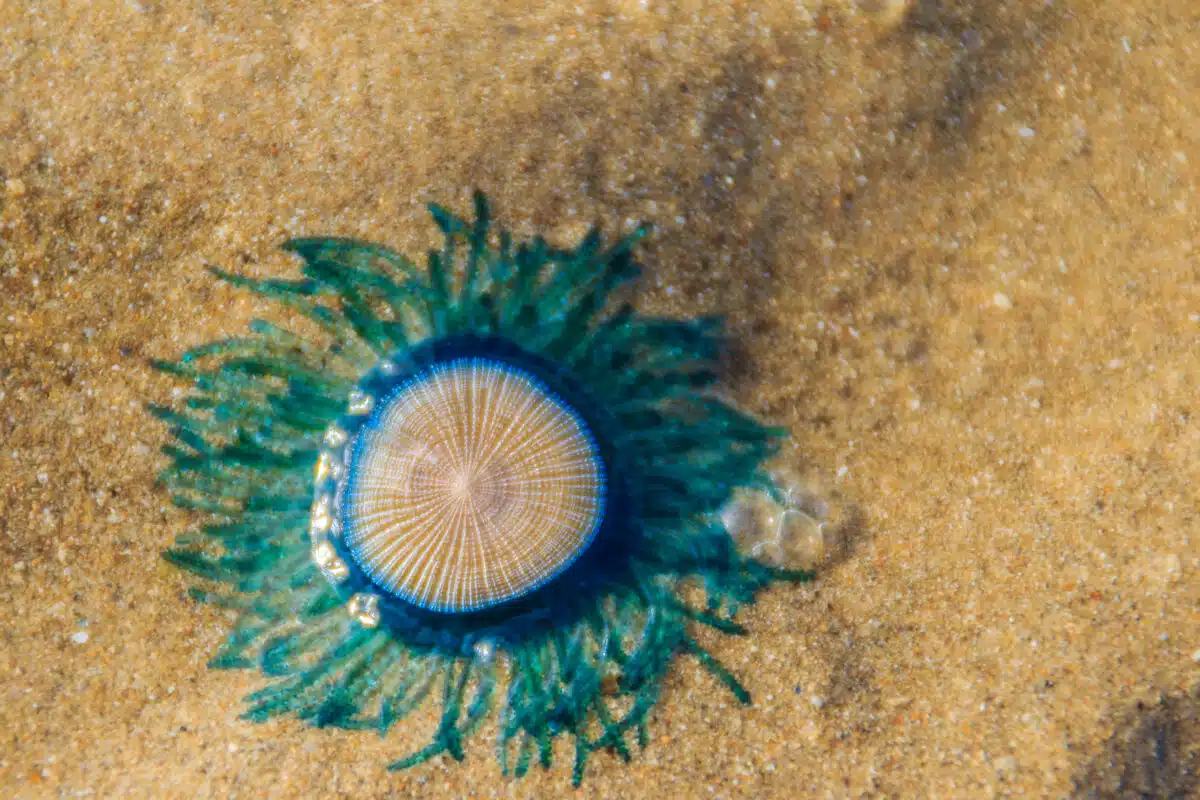
With its vivid blue float and glowing, radiating tentacles, the blue button jelly looks more like a creature from science fiction than a living organism. Found drifting on the surfaces of warm oceans, it has captivated researchers, not just for its appearance, but for the mystery surrounding what kind of lifeform it truly is.
Though it shares the jellyfish’s translucent charm, Porpita porpita belongs to a different corner of the animal kingdom. Scientists still can’t agree whether it’s a single organism or a colony of specialized parts acting in sync, an ambiguity that’s keeping marine biologists guessing.
A Marine Creature With a Puzzling Structure
The creture is a cnidarian, part of the same group as corals, sea anemones, and the Portuguese man-of-war. Yet it resists simple classification. As stated in a study published in Marine Ecology, unlike many of its relatives, it neither swims nor sinks; instead, it drifts at the ocean’s surface, carried by currents, and functions as both predator and prey.
Much of the mystery lies in its structure. The round, floating disc visible from above is only one part of the organism. Beneath it hangs a fringe of tentacles: some equipped with stinging cells to capture food, others apparently linked to defense or reproduction.
According to Popular Science, Larry Madin of the Woods Hole Oceanographic Institution describes the blue button jelly as a “quasi-colonial organism.” It appears to function as a coordinated system of specialized parts, each performing a distinct role such as feeding, protection, or reproduction.
However, unlike true colonial organisms such as corals, which are made up of genetically identical units, the blue button jelly appears to develop from a single larva.
Not a Jellyfish, Not a Colony
Confusion around Porpita porpita is partly driven by its resemblance to better-known species. Its float and trailing tentacles look much like those of the Portuguese man-of-war, a truly colonial animal made up of specialized zooids. But beneath the surface, their biology diverges in important ways.
“It’s considered sort of a colony because there are tentacles that some of them are for catching food, they have stinging cells on them. Some of them are defensive tentacles to sort of attack things that might attack this, and then it also has some reproductive structures that are suspended from the bottom of this float,” he stated.
As noted by Popular Science, the sea creature grabs its prey with its tentacles, but everything gets processed in one central stomach. That setup makes it seem more like a single organism than a group working together, which just adds to the confusion about what it really is.
An Alien Predator With A Taste For Blue Buttons
Even as it floats serenely through tropical waters, the blue button jelly isn’t safe from predators. One of its most visually striking enemies is Glaucus, a marine snail often nicknamed the blue dragon. With metallic blue hues and wing-like extensions, the blue dragon looks just as otherworldly as its prey.
Popular Science reports that Glaucus doesn’t just consume the blue button jelly, it also feeds on creatures like the Portuguese man-of-war, collecting their stinging cells and using them for its own protection. This behavior gives Glaucus an unusual and dangerous edge, especially for creatures like Porpita porpita that rely on tentacle defenses.
First Appeared on
Source link






