


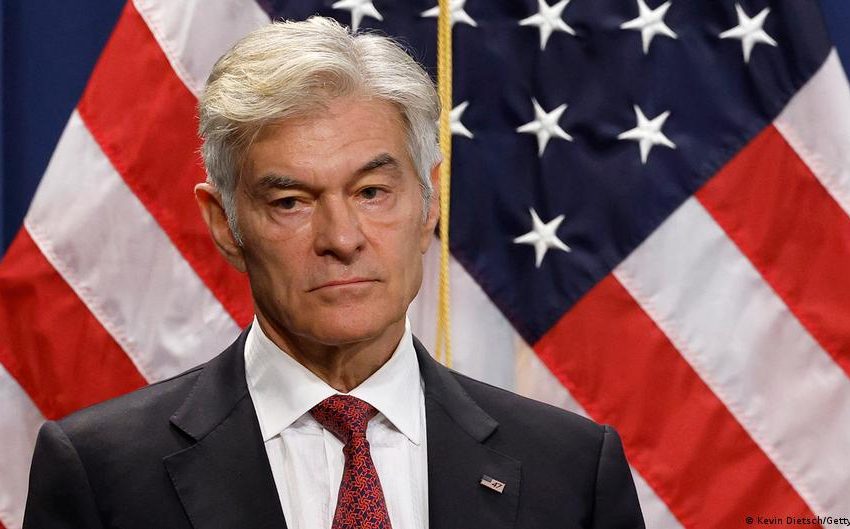
Mehmet Oz’s vaccine call is ‘too little, too late’
What you need to know
-
Measles cases have risen for over a year in the US and the country is likely to lose its “measles-free” status.
-
Other world regions had lower case numbers in 2025 but experts say this is unlikely to mark a sustained downward trend.
-
Health professionals warn that vaccination responses from governments are not enough.
Measles is still spreading in the US and calls to get the vaccine from government officials won’t be enough to stem the tide.
In response to the growing number of cases across the United States — the highest since 2000 — Mehmet Oz, the former celebrity doctor who now serves as Donald Trump’s administrator for the Medicare and Medicaid health insurance programs, has appealed to Americans to ensure they’ve had the measles vaccine.
The US is still considered measles-free by international standards. But, unable to stem the rise of cases, it is expected to lose that status this year.
In an interview with CNN this week, Oz said there was a “solution” to the problem of measles in the US.
“Take the vaccine, please,” Oz said.
“Not all illnesses are equally dangerous and not all people are equally susceptible to those illnesses, but measles is one [disease where] you should get your vaccine.”
CNN host Dana Bash challenged Oz on the contradiction between his appeal and the views of his boss, US Health Secretary Robert F. Kennedy Jr, who has long cast doubt on vaccine safety.
Since being appointed as a member of Trump’s cabinet, Kennedy has overseen the rewriting of US vaccine recommendations, including those for Hepatitis B, COVID-19 and combination inoculations for measles, mumps, rubella and varicella (which causes chickenpox).
Against this backdrop of changing advice, Oz’s recommendation is unlikely to spark a sudden turnaround in vaccine uptake in the US. Measles vaccine coverage there is now below the 95% threshold required for herd immunity. In some parts of the country, including parts of Texas and South Carolina that have seen large caseloads, it’s much lower.
“This week’s renewed call for measles vaccination from the administrator of the Centers for Medicare and Medicaid Services, Dr. Mehmet Oz, feels like too little too late,” Sruti Nadimpalli, a clinical associate professor specializing in pediatric infectious disease at Stanford University, told DW in an email.
“We need our leaders to more proactively, strongly and consistently endorse childhood vaccines, which have been repeatedly proven to be safe and effective.”
Measles rising in the US, declining elsewhere
Because the US was declared measles-free in 2000, this current spike in numbers is occurring from a low base. For years, the US — a country with a population of over 340 million — saw annual cases in the mere hundreds.
But 2025 marked a record number of cases since eradication was declared and 2026 is on track for an even higher case load.
Monitoring by Johns Hopkins University’s International Vaccine Access Center shows 866 cases were reported nationwide in the first five weeks of 2026. At the same time last year, just 71 cases had been detected.
Cases in other parts of the world are in decline. Europe and Central Asia reported a 75% drop in cases from 2024 (a record high) to 2025.
Though those declines are an encouraging sign, the World Health Organization and UNICEF have warned local governments against complacency. In September 2025, 32 European countries were declared measles-free but in January several others, including Austria, Spain and the UK, lost their measles elimination status.
Like the US, health services in Europe and Central Asia are grappling with a mix of under-vaccination, loss of herd immunity and case spikes in vulnerable communities.
On both sides of the Atlantic, the problem is being spurred by complacency and poor understanding of the danger posed by highly contagious – and potentially lethal – childhood diseases.
“Given how things are evolving globally, we do expect a big problem in the making,” Fatima Cengic, UNICEF’s immunization specialist for Europe and Central Asia, told DW.
Cengic said the challenge for health groups is that immunization has become a victim of its own success. With measles now relatively uncommon due to historic vaccination programs, complacency has contributed to a decline in uptake.
That complacency is found not only within families but also in governments that have grown less willing to fund vaccination programs.
“Because it’s been very successful in preventing deaths, governments are not so willing to to pay so much attention to it or invest in immunization programs, so they’re very often underfunded,” said Cengic.
Edited by: Derrick Williams
First Appeared on
Source link






