


Memory loss is fuelled by gut microbes in ageing mice
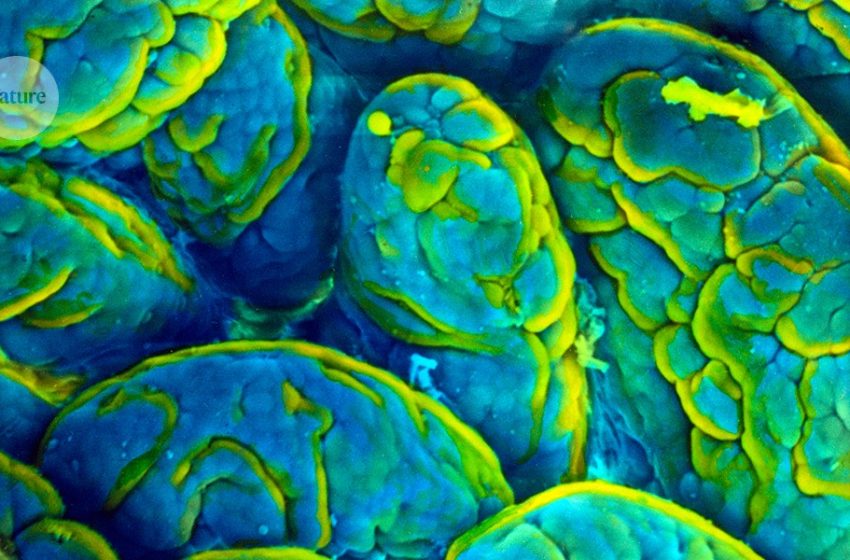
Some bacteria in the intestines of mice increase in abundance as the animals age.Credit: Prof Cinti & V. Gremet/Science Photo Library
A species of gut bacteria that proliferates as mice get older plays a part in cognitive decline, a study finds1. Researchers determined that the bacterium interferes with signalling along sensory nerves that connect to the brain.
Although the experiments were conducted in mice, the gut–brain circuit that the team identified “is likely conserved in humans”, says David Vauzour, a biochemist at the University of East Anglia in Norwich, UK. That would need to be confirmed, but if the circuit is present in humans, then this research could reveal a mechanism that explains why people’s memory and ability to learn naturally decreases with age — and offer hope that gut-targeted therapies could reverse the decline.
The effects of the bacteria, which dampens the gut–brain circuit in mice, seem similar to other consequences of ageing. “When we get older, we need things like glasses and hearing aids”, says co-author Christoph Thaiss, an immunologist at Stanford University in California. The study — published today in Nature1 — shows that, just as ageing causes a decline in sensory perception of the external world, it might also be causing a loss of perception of internal signals, too, he says.
Memory testing
To explore how gut microorganisms contribute to ageing, the researchers housed ‘young’ mice that were two months old with ‘old’ mice that were 18 months old. That’s like having a person in their late teens live in close quarters with a person in their late 50s.
How fast your brain ages is affected by these 64 genes
After a month of living in the same cage, the young mice began performing in a similar way to the old mice on a maze task and another memory test. In the memory test, mice usually remember objects that they’ve seen before and therefore spend more time exploring new objects, but the younger animals instead spent equal time investigating both familiar and new objects — just as the old mice did. This indicated that they had lost their short-term memory.
“Their deficit was so profound, they were basically undistinguishable from the old mice,” says co-author Timothy Cox, a neuroscientist at the University of Pennsylvania in Philadelphia. “It was almost unbelievable.”
What had changed was that the young animals’ microbiomes had become similar to those of the older mice. By living near and eating each other’s faeces, mice can easily transmit their gut microbes to one another. The researchers suspected that one or more species of bacteria found in the gut of the old mice might be causing cognitive decline.
Therefore, they colonized young mice with various bacterial species and zeroed in on one in particular, Parabacteroides goldsteinii. When the team transplanted this bacterium into young mice, it worsened their ability to remember objects that they had seen before. In addition, giving old mice antibiotics that wiped out their gut bacteria or a phage therapy that killed P. goldsteinii improved the animals’ performance on the same task — to levels comparable with young, healthy mice.
First Appeared on
Source link






