


Meta’s Defense In Social Media Addiction Trial Is Basically A Shrug
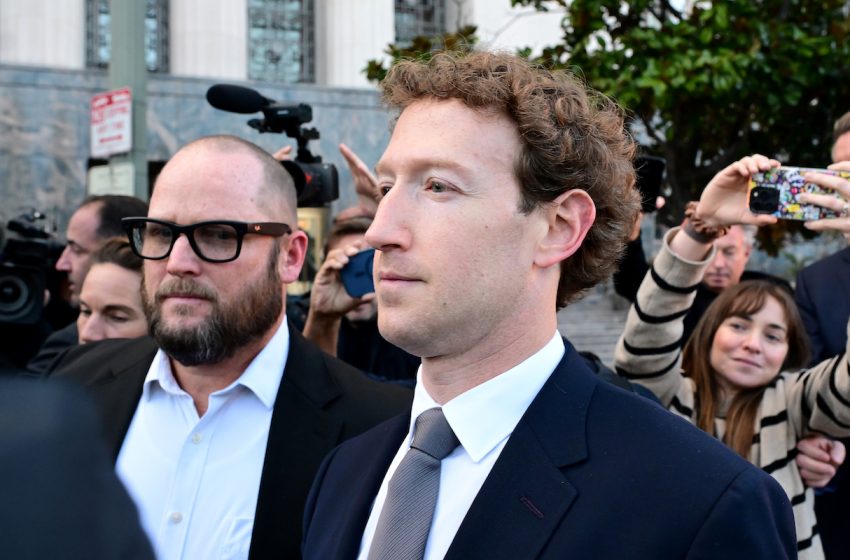
Last week, Mark Zuckerberg sat in a Los Angeles courtroom and testified for five hours that he and his company, Meta, are not culpable in claims that they have deliberately made the platform addictive and harmful for young users.
The testimony was part of a bellwether trial in California in which a 20-year-old woman, referred to in the trial as K.G.M., or “Kaley,” alleges that Meta and YouTube deliberately designed their platforms to be addictive and that her addiction to Instagram and YouTube specifically contributed to the degradation of her mental health. Meta’s lawyers argue that the mental health problems she suffered as an adolescent were caused by separate trauma and abuse. So far, the trial has hinged mainly on the question of whether social-media addiction is possible, from a psychiatric perspective. Meta is arguing that there is a difference between “problematic” and “clinically addictive” usage, and that the company and Zuckerberg are not responsible for negative mental health outcomes produced or exacerbated by extreme use of their platforms.
Meanwhile, YouTube is arguing that it simply isn’t a social media platform at all, despite its pushes in recent years into short-form video that looks an awful lot like Instagram and TikTok, as well as photo-based posts.
This trial has been called social media’s “Big Tobacco moment“: More than 1,500 similar lawsuits will rely on its outcome. If found liable, YouTube and Meta could potentially pay billions in damages and be forced to make radical changes to how their platforms work. The case hinges on how the jury will decide to define addiction, and whether the tech companies, in their pursuit of making their platforms “sticky,” crossed the line into harmful habit formation and neglected to adequately safeguard minors.
In her book Careless People, former Facebook Director of Public Policy Sarah Wynn-Williams writes about her efforts over seven years at convincing Facebook leadership to see the company not as a scrappy startup but as, in effect, a country with diplomatic interests that needed to be handled with the delicacy of international relations. She pitched herself as a diplomat for the company who would “protect, promote, and defend” Facebook’s interests. Wynn-Williams frames her mission as quixotic and prescient; she depicts herself as a guileless Chicken Little trying to persuade her boy-genius boss to seriously consider the power he wields. Nearly two decades later, Zuckerberg and the head-of-state concept have converged in at least one respect: His testimony in the California trial is the exact strain of shameless, bald-faced self-exoneration you might hear from Donald Trump, only with a poreless sheen of professional media training.
“We get feedback from a handful of different stakeholders,” Zuckerberg testified regarding his products’ potential to harm users, “including people who study wellbeing. I took into account all of that info and I think I navigated this in a reasonable way.” He denied the claim that Meta intentionally made its platforms more addictive, even as the plaintiff’s lawyers revealed an internal email from 2015—when Kaley was nine years old—which set increased goals for time users spent on the platform. When asked if people tended to use things more when they were addictive, Zuckerberg said, “I’m not sure what to say to that.”
Zuckerberg’s lawyers have tried to keep the plaintiff’s attorneys from asking any questions about how his $231 billion net worth might reveal an interest in making the platform more addictive. They got their way at least a little: Judge Carolyn B. Kuhl ruled that “questions about Zuckerberg’s compensation and stock holdings were allowed, while specific questions related to his total net worth and assets like property and homes were prohibited.” In an opinion piece in the New York Times this weekend, David Wallace-Wells cited an Oxfam finding that “the top 0.0001 percent in the United States now controls a greater share of wealth than it did in the Gilded Age.”
In 2021, whistleblower Frances Haugen testified before Congress that the company then known as Facebook knew that features on its platforms, like the infinite scroll and autoplay videos, could be harmful to young users, especially to teenage girls. In documents made public by the Wall Street Journal in 2021, Facebook researchers found the platform “make[s] body image issues worse for one in three teen girls.” In their testimonies, Zuckerberg and Instagram head Adam Mosseri have gestured at accountability, pointing to recently added safeguards like minimum age requirements and guardian oversight tools meant to give parents and guardians more control over when and how teens use the apps. But the safeguards for minors are perfunctory at best, as Zuckerberg himself admitted, in so many words, acknowledging that kids can—and do—easily bypass them by lying about their birthdates when creating their accounts.
Another internal Facebook document said, “If we want to win big with teens, we must bring them in as tweens.” The company’s researchers found that if someone joined Facebook by age 11, they had “four times the long-term retention as people who joined at 20.” Kaley testified that she was eight years old when she first downloaded YouTube, nine when she joined Instagram, and 11 when she joined Snapchat, an experience broadly matching that of millions of members of her generation, who grew up—and did the bulk of their identity and community formation—on the social internet. In her teens, Kaley testified, she sometimes used Instagram as much as 16 hours a day.
The courts examine these things in legal terms; perhaps this one will rule that Meta’s actions have not made it liable for the harm experienced by addicted users. As to the moral or public health ramifications of gamifying social life into a quick-hit dopamine slot machine for mushy young brains and then ducking behind an impenetrable User Agreement when those brains get hooked on it, well. In a 2019 interview on Fox News’ Daily Briefing, Zuckerberg said that he and his wife, Priscilla Chan, restrict the screen time of their daughters, then preschool-aged. “I don’t generally want my kids to be sitting in front of a TV or a computer for a long period of time,” he said.
First Appeared on
Source link






