


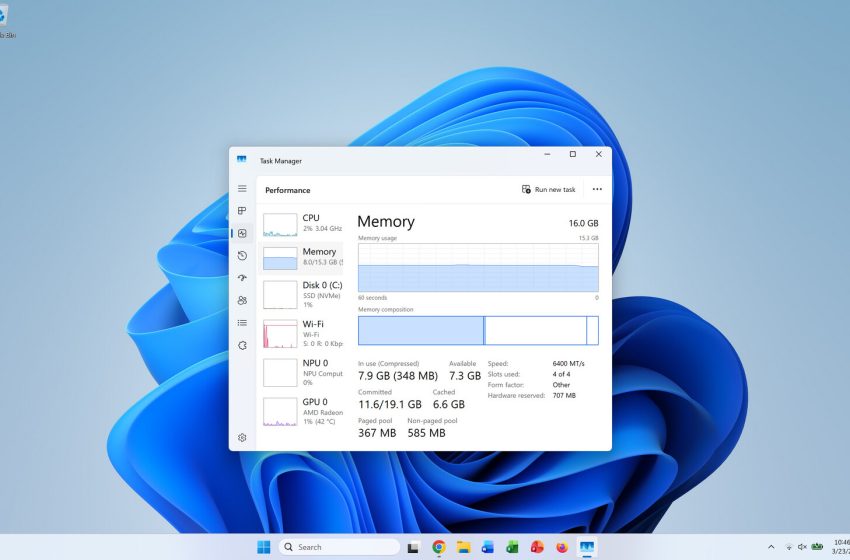
Microsoft Plans Better Windows 11 RAM Management and a Smoother User Experience
However, Microsoft plans to change this with better background memory management. For example, OS overhead is a significant performance and memory hog, which impacts the user’s overall experience on the PC. Apple recently launched a MacBook Neo with 8 GB of memory, and reviews confirmed that users will be able to get a relatively smooth user experience with only 8 GB, while a comparable Windows-based machine would struggle. This has pushed Microsoft to think about memory management more, and the company now promises that the entire operating system will implement new background policies that will help with resource management. While the exact implementation is unknown, we suspect that doing something like Xbox Full Screen Experience, which is proven to increase performance and lower RAM usage, will be implemented on a wider scale. When the numerous background tasks disappear, memory is freed for other things like excessive Chrome browser tabs.
Next, Microsoft plans to improve the software animations, transitions, and UI to look better and feel smoother by reducing latency. For now, Windows 11 is a mixture of legacy Microsoft frameworks for the user interface, which include web-based WebView2, React, and others. Microsoft plans to transition its entire user experience to the desktop-only WinUI 3 framework, which will reduce application latency, improve user experience, and feel noticeably smoother. Core Windows 11 applications like File Explorer, which is now being preloaded, are also getting additional optimizations so that application launch is instantaneous, file search is much faster, and the overall experience is improved. Windows Search is also becoming much faster and more accurate, so your start search doesn’t lead to a web search first but performs an application and file search first.
First Appeared on
Source link






