


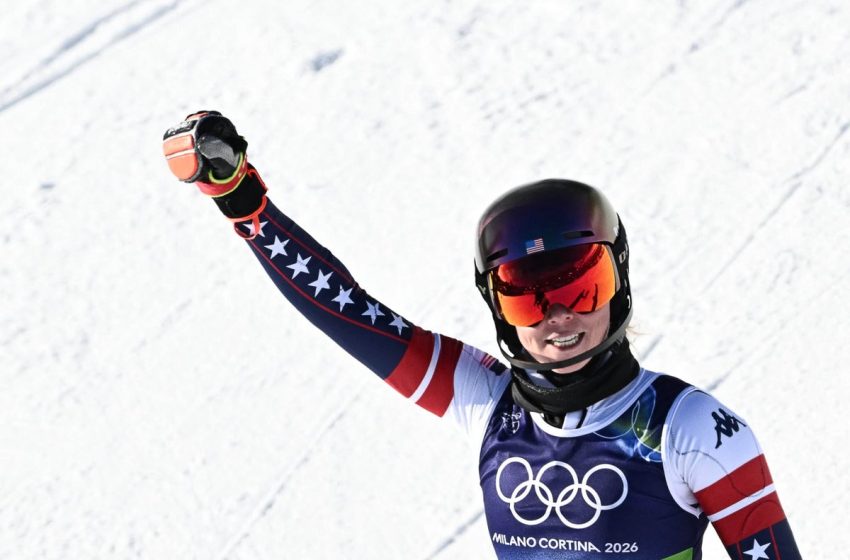
Mikaela Shiffrin slays Olympic dragon, wins slalom gold for first medal since 2018
CORTINA D’AMPEZZO, Italy — Mikaela Shiffrin’s long Olympic nightmare is over.
With two nearly flawless runs, the American took the gold medal in slalom on Wednesday, and it wasn’t even close. The win ended four years of frustration, dating back to a disastrous performance in Beijing and continuing through two subpar races in Cortina.
After 1,459 days of reflection and answering questions about how the greatest skier in the sport’s history could fall three times in six races and come away from an Olympics empty-handed, it took a little more than 47 seconds Wednesday morning for Shriffrin rip the monkey off her back during her morning run, building a lead of nearly a second over the rest of the field.
In the afternoon, all that was left to do was tighten her grip and squeeze, and then bury the darn thing in a pile of snow on the other side of the finish.
Mikaela Shiffrin won her first Olympic medal since the 2018 Games. She failed to medal in six events in Beijing and two in Cortina before Wednesday. (Ezra Shaw / Getty Images)
Shiffrin crossed the line in a combined time of 1 minute, 39.10 seconds. A grandstand filled with red, white and blue exploded, letting out a roar eight years in the making. Shiffrin slouched down to her skis in disbelief and relief. Years of misery snuffed out in a moment of pure ecstasy.
In her second run, Shiffrin started slow, then turned on the gas. She gave back a tenth of a second early but then grabbed it back and built from there. Her winning margin was a massive 1.50 seconds over Switzerland’s Camille Rast, her chief rival on the World Cup tour this season. Sweden’s Anna Swenn Larsson took bronze, 1.71 back.
Shiffrin shook off the demons of Beijing and also the bizarre happenings right in front of her. Sweden’s Cornelia Öhlund, third to last to go, broke a pole during her run, tried to struggle through it, but ultimately skied out. Then came Germany’s Lena Duerr, who slipped and skied out after the first gate.
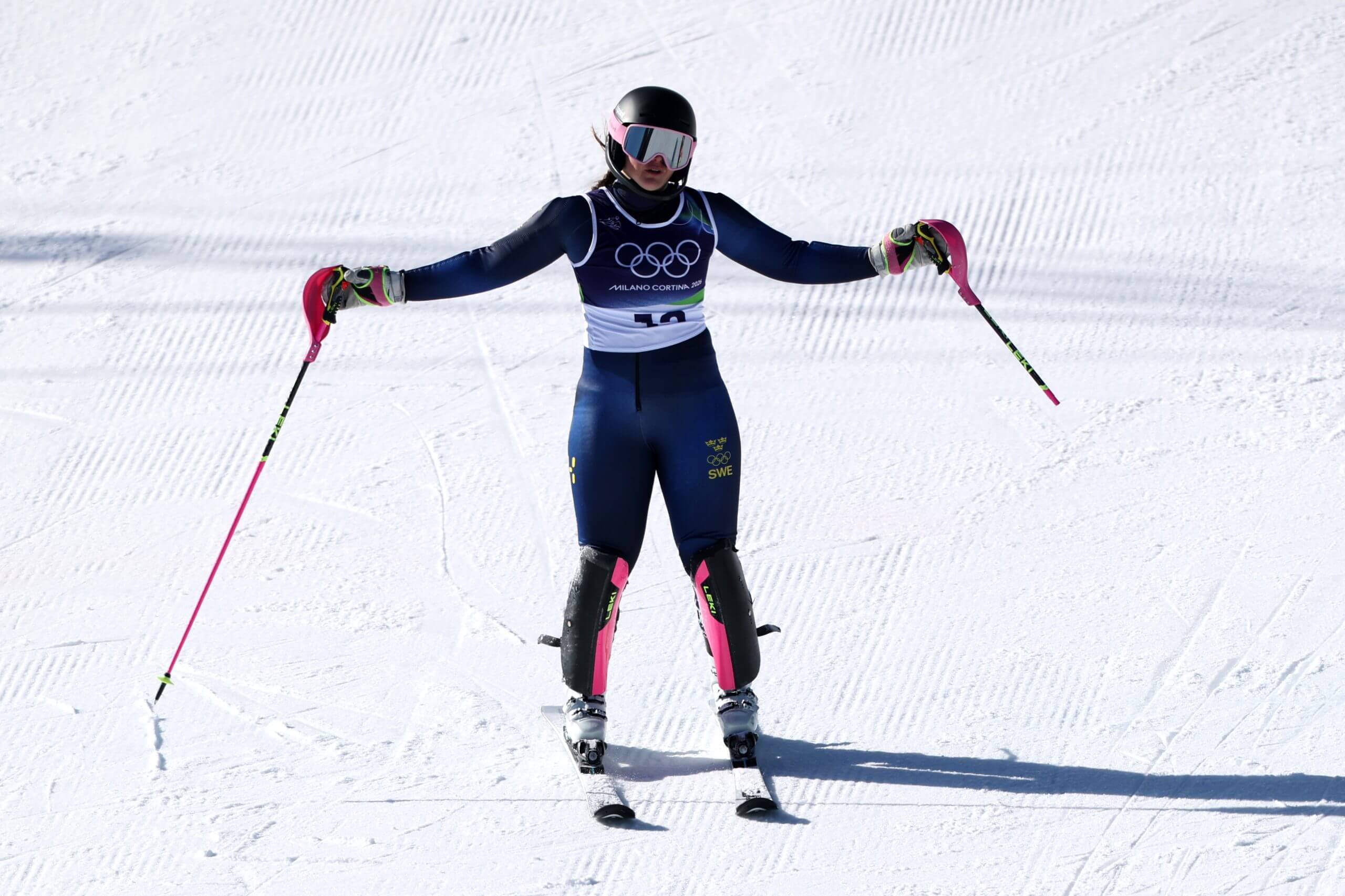
Sweden’s Cornelia Oehlund, third after the first run, broke a pole and skied out in the decisive second run Wednesday. (Mattia Ozbot / Getty Images)
With her two closest competitors out, all that was left to do was complete the run. And Shiffrin did, returning to the top of the podium.
The opportunity was perfect from the moment the sun rose on Wednesday, delivering a crystal-clear sky. Here was a cold, bright morning, allowing for a fast course with great visibility, just as Shiffrin would have ordered.
As she inspected the morning run, there was more good fortune — a technical, zig-zagging top that played right into her strengths, delivering a burst of confidence right after she blasted out of the gate. No one can maintain speed while turning at near right angles on a pair of skis like Shiffrin can when she is on.
Skiing seventh, she had a quarter of a second lead by the time she was a quarter of the way down the course, with 64 gates set across about 550 feet of vertical drop. And it just kept growing from there, through the lines of straight gates known as a flush, double gates, hairpins, anything that was in her way.
There was one little wobble midway through when her right ski appeared to slip on a tricky left-handed turn. However, by the time Shiffrin leaned over at the finish, she’d done exactly what she had mostly done in slalom races for 15 years. She had a lead of .82 over second-place Duerr, the sort of cushion that turned the competition into a race for the silver medal, assuming Shiffrin could stay on her feet during the afternoon run.
Shiffrin long ago proved that, when she has a big lead, she usually slams the door shut. Shiffrin is hard enough to beat when it’s even. Give her a lead that allows her to ski within herself, and catching her becomes one of the hardest tasks in sports. She knows how to close.
Usually.
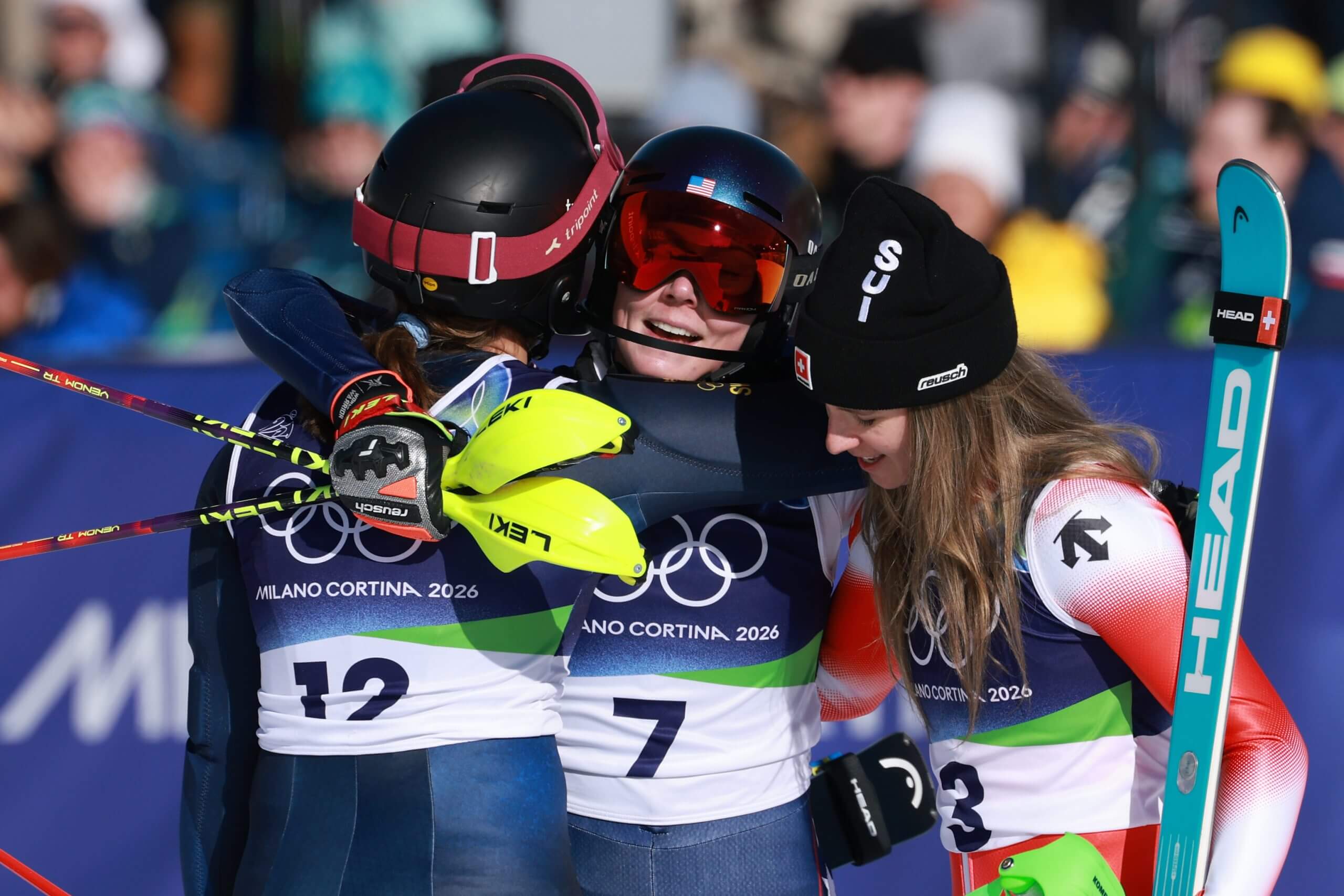
Medalists Anna Swenn Larsson, Mikaela Shiffrin and Camille Rast celebrate after Wednesday’s slalom. (Ezra Shaw / Getty Images)
Olympic pressure is unlike anything else, one chance every four years to be the best while the whole world is watching. No one knows that better than Shiffrin. She’d learned that the hard way last week in the team combined event, which pairs a slalom specialist with a downhiller and combines their times.
Her partner that day, Breezy Johnson, had staked her to a lead of six hundredths of a second. Shiffrin needed to be average that afternoon to secure the third gold medal of her career, her fourth overall and her first in eight years.
Instead, she was different, unstable and unable to adapt to the sloppy, soft conditions. She finished 15th out of 18 skiers as she and Johnson tumbled from first to fourth, ceding the bottom step of the podium to their compatriots Paula Moltzan and Jackie Wiles.
In giant slalom two days later, she gave her second-worst performance of the season. The Olympics appeared to be happening to her again, rather than the other way around.
Now she had one more slalom run to get down fast and safe with the stakes as high as they have ever been for her.
Early in her career, Shiffrin handled Olympic pressure like a seasoned pro.
She won three medals in her first two Games, including her first in Sochi in 2014 at 18, when she was the sport’s rising young star. She backed up that performance in PyeongChang four years later with a gold in the giant slalom and a silver in the individual combined, before that became a team event.
The past fortnight in Cortina, those triumphs increasingly felt like a long time ago. And then Shiffrin delivered one of those performances that made it curious why anyone had ever thought to doubt her.
Of her 108 World Cup wins, 71 of them have come in slalom. Her win rate in slalom is 71 for 126, better than one out of two. She has been on the slalom podium another 26 times. If there is a slalom race going on, it’s a good idea to reserve a step for Shiffrin.
Then again, she was just 1 for 3 in Olympic slalom races. With the day staying bright and cold into the afternoon, the only thing that was going to get in Shiffrin’s way was Shiffrin. She made sure that didn’t happen.
First Appeared on
Source link






