


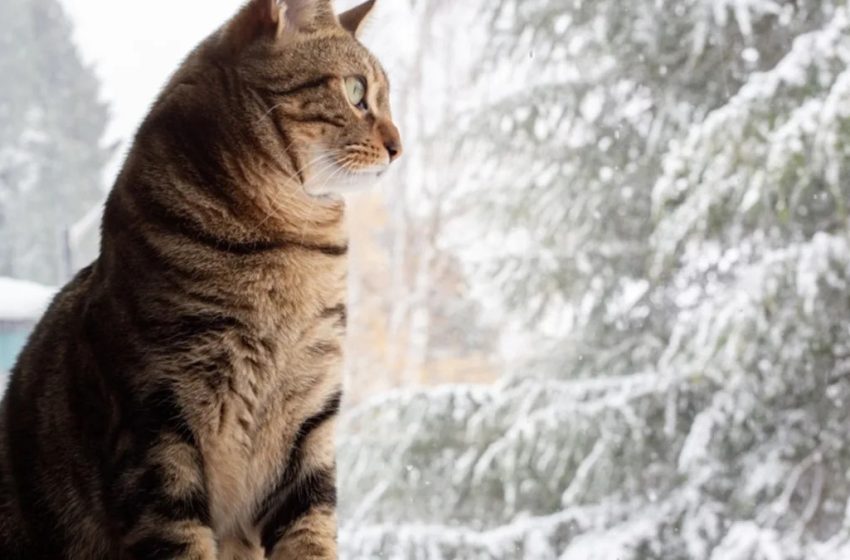
Mom Brings Snow Inside for Her Disabled Cat to Enjoy, and It’s Giving People All the Feelings
A special needs cat named Ada isn’t a fan of going outside, but her mom was curious to see how she’d react to snow. Instead of taking Ada out into it, she decided to bring the snow inside to her.
Ada’s mom went out and collected two big bowls of snow, laid down some wee-wee pads inside, and dumped the snow out for Ada to investigate. The calico was curious but hesitant at first, until her mom hid a few treats in the snow for her to find. That did the trick, and it worked like a charm!
Ada’s mom admitted in the video’s caption, “My frozen hands and feet were so worth it!” We’re not sure if Ada eventually ended up playing in it or not, but she sure enjoyed eating it!
Related: Mom Helps Disabled Cat Enjoy Breakfast and It’s Truly Warming Hearts
🐶SIGN UP to get “pawsitivity” delivered right to your inbox with inspiring & entertaining stories about our furry & feathered friends🐾🐾
Sweet Comments About Ada the Wobbly Cat
Ada’s video quickly went viral, garnering more than 5 million views and thousands of likes. @Tayler.cas got more than 66,000 likes when she pointed out, “You even have bumper pads on the walls…” @lexi replied, “LIKE I love when people actually love their furbabies!”
@AlexisGal shared, “You didn’t just bring her snow…. You brought him *GOOD* snow!” @Kendall Mitchell added, “Cat Mom of the Year!!!”
Commenter @NOVA got thousands of likes when she shouted, “WOBBLY CAT SYNDROME IS CUTE!”
Dr. Joseph Mankin, a clinical associate professor in neurology at the Texas A&M College of Veterinary Medicine & Biomedical Sciences, explains the condition. “Cerebellar hypoplasia is a condition in which the cerebellum, the part of the brain that is responsible for coordination and balance, does not develop properly,” Mankin said. “It results in cats that have exaggerated movements of their legs and head, as those movements are normally controlled by the cerebellum.”
He goes on to say that it’s not contagious, it doesn’t worsen over time, and it doesn’t cause any serious or harmful effects.
“These cats can live long and healthy lives; they just look a bit funny when they walk around,” Mankin said. “As they grow older, they may learn to compensate for their cerebellar dysfunction and although their clinical signs will not go away, they may improve greatly.”
This story was originally published by PetHelpful on Feb 8, 2026, where it first appeared in the Pet News section. Add PetHelpful as a Preferred Source by clicking here.
First Appeared on
Source link






