


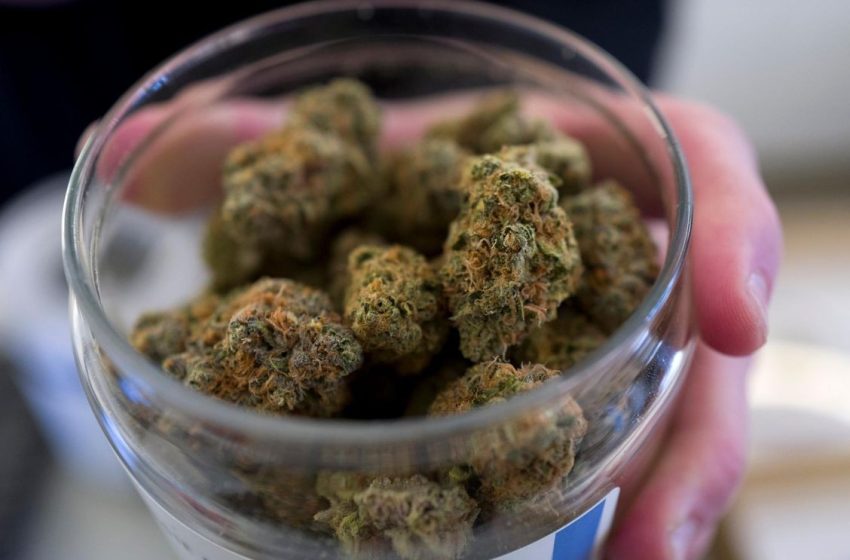
More than half of Washington clinicians cite mental-health risks from cannabis use
SEATTLE — More than a decade after Washington legalized recreational cannabis, a new survey suggests many clinicians are increasingly worried about the mental-health risks tied to its use — and some say they are regularly treating patients for cannabis-related health problems.
Researchers reported the findings in the Substance Use & Addiction Journal, based on a 20-question survey of 388 Washington state doctors, nurses, and other health care professionals conducted between December 2024 and March 2025.
SEE ALSO | Trump signs exec. order easing marijuana restrictions; reclassifying as schedule III drug
The survey asked about clinicians’ experiences treating patients with health problems from cannabis use after Washington legalized the drug for recreational use in 2012.
In the survey, more than half of the respondents expressed strong concern about the mental-health risks of cannabis use.
Nearly 20% reported seeing patients with cannabis-related adverse health events two to three times per month.
“Healthcare providers are noticing, and concerned about, cannabis adverse events,” said Beatriz Carlini, the paper’s lead author and a research associate professor of psychiatry and behavioral sciences at the University of Washington School of Medicine.
“It’s also interesting,” she added, “that we could find no other research papers where clinicians in the United States are asked about treating cannabis-related adverse conditions. Their voices have not been heard on this topic before now.”
Four conditions emerged as relatively more common and concerning among respondents.:
- 70% percent of clinicians reported treating patients for cannabis hyperemesis syndrome, described in the survey as repeated cycles of nausea and severe vomiting that can lead to dehydration and prolonged emergency department visits.
- 65% percent identified patients with cannabis-use disorder, showing signs of addiction or dependency.
- 63% percent identified patients with anxiety related to cannabis use.
- 53% identified patients with psychoses or hallucinations attributed to cannabis use; 34% called psychoses or hallucinations the most serious cannabis-related adverse event they see.
When asked about their knowledge across a series of cannabis-related clinical topics, respondents most frequently described themselves as “moderately” knowledgeable, compared with other options of “extremely/very” and “slightly/not at all.”
The survey also pointed to gaps in training.
Nearly two-thirds — 65.9% — reported having slight or no knowledge about how cannabis interacts with other medications, and 42.8% reported limited knowledge about cannabis-induced psychoses. Nearly 75% said they want more training on how to screen for cannabis use and manage related health risks.
Respondents also cited system-level barriers to treating cannabis-related conditions more effectively. More than 80% said they would be more likely to screen and intervene if they had established treatment protocols and more referral options for patients.
Carlini said a shortage of providers with expertise in cannabis-related care remains a challenge, particularly as substance-use treatment providers nationally are overwhelmed by patients with opioid- and methamphetamine-use disorders, while alcohol continues to cause harm.
The study did not measure whether cannabis-related adverse health effects are increasing in Washington, but Carlini said literature from other areas suggests that is likely.
First Appeared on
Source link






