



Most people follow this routine without question: Doctor warns it may be harming your body in ways you can’t see |
A typical day moves from a chair to a screen, with quick snacks filling the gaps. It feels harmless because it is so common. But doctors now warn that this quiet routine may be placing steady pressure on multiple organs at once. The damage does not arrive overnight. It builds slowly, often without clear symptoms, until the body starts to struggle.
The “trifecta” doctors are worried about
“Sitting, snacking and scrolling is a behavioral trifecta getting increasingly more persistent and visible in young millennials, the Gen-Z and even Gen Alpha. It’s an outcome of the evolving socio-consumption patterns, triggered by the involvement of digital equipment in our daily lives. However, what most people often overlook is the slow, multi-level stress response it can build in a person over years. This combination can impact your heart and arteries, your liver as well as your eyes and metabolism, often without early symptoms,” says Dr Mandeep Singh, Senior Consultant Internal Medicine, Fortis Hospital Ludhiana.This is not just about lifestyle. It is about how daily habits quietly shape long-term health.
Sitting: The stillness that strains your body
Sitting for long hours may look restful, but the body reads it differently. Muscles go inactive, blood flow slows, and metabolic processes lose pace.A large analysis cited by the World Health Organization reviewed data from over 1 million people. It found that sitting more than eight hours a day, without physical activity, raises the risk of death to levels comparable with obesity and smoking.Inside the body, an enzyme called lipoprotein lipase drops sharply during long sitting periods. This enzyme helps clear fats from the bloodstream. When its activity falls by up to 90%, fat begins to circulate longer in the blood. Even a workout later in the day cannot fully reverse this effect.Over time, this pattern increases the risk of high blood pressure, high blood sugar, and weight gain.

Research shows these behaviours can increase the risk of serious conditions, even in people who exercise.
Snacking: Small bites, bigger consequences
Frequent snacking, especially on packaged foods, adds another layer of stress. These foods are often high in sugar, salt, and unhealthy fats.When the body is inactive, these calories are not used as energy. Instead, they raise triglyceride levels. Triglycerides are meant to fuel movement between meals. Without movement, they stay elevated.According to the National Institutes of Health, consistently high triglyceride levels are linked with heart disease and fatty liver.The effect is gradual. There may be no immediate warning signs. But over time, the liver starts storing excess fat, and the heart works harder than it should.
Scrolling: The invisible pressure on heart and eyes
Screen time is often seen as mental relaxation. Yet, long hours of scrolling may be doing the opposite.Recent findings from the American College of Cardiology in 2026 suggest that people with more than six hours of recreational screen time daily show higher blood pressure and LDL cholesterol levels.This effect persists even in people who exercise later. In simple terms, one healthy habit does not fully cancel out a harmful one.Then comes eye strain. Continuous exposure to blue light leads to dryness, headaches, and disturbed sleep. The brain stays alert when it should be winding down.
Why your body cannot “balance it later”
Many people believe that an evening workout can undo a sedentary day. It helps, but it does not erase the full impact.The body responds to habits in real time. Long hours of sitting slow down fat metabolism immediately. Frequent snacking raises blood lipids as it happens. Extended screen time keeps stress hormones slightly elevated.These effects overlap. The heart, liver, and metabolism all face repeated small hits through the day. Over months and years, those small hits add up.
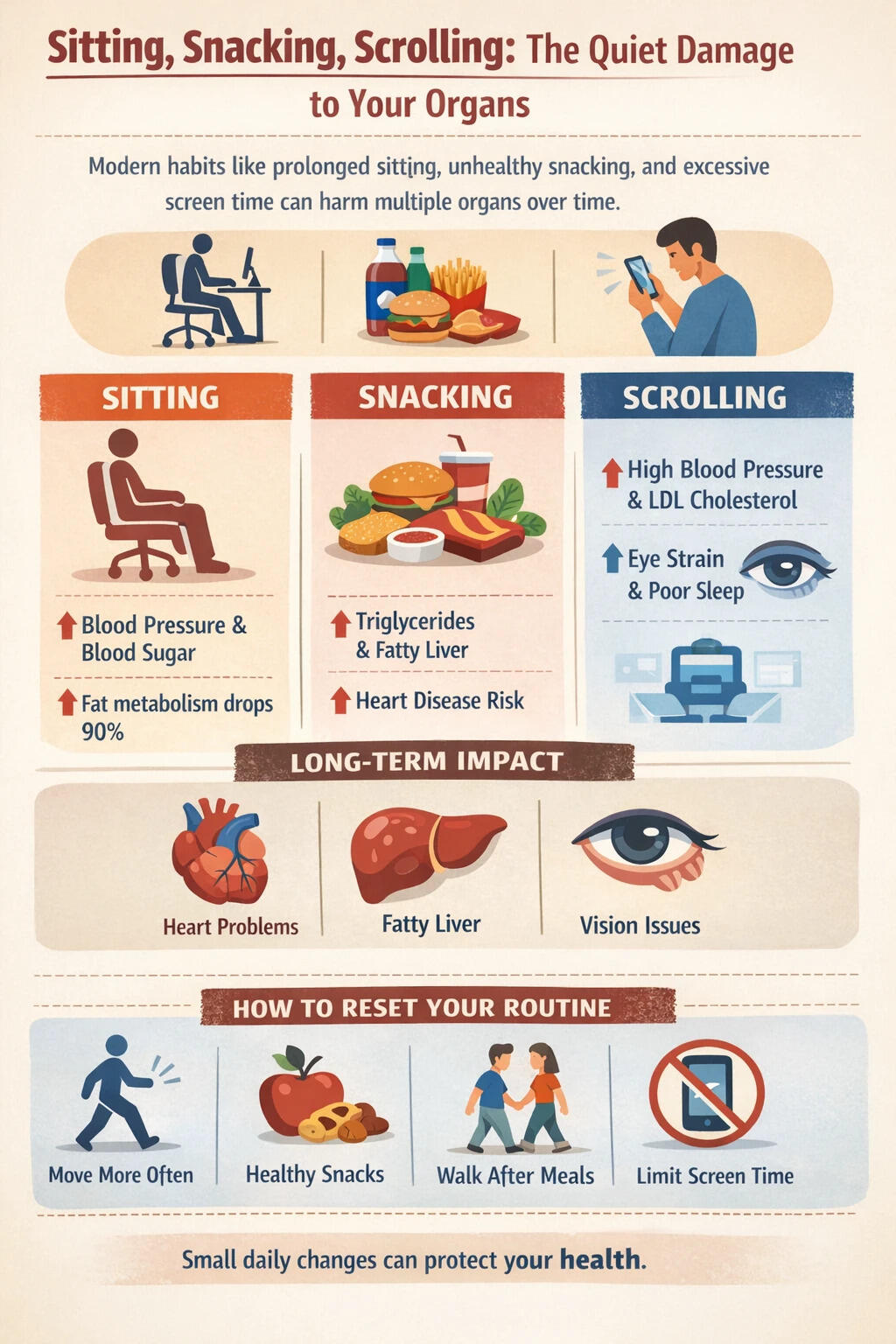
Small, consistent changes such as taking movement breaks, improving snack quality, and reducing screen time can help reverse the impact and protect long-term health.
The reset: Small changes that actually work
Resetting this pattern does not require extreme steps. It needs consistency.Start with time. Reduce sitting in small blocks. Stand or walk for one to two minutes every hour. This keeps blood flow active.Add movement after meals. A 10 to 20 minute walk, especially after dinner, helps digestion and stabilises blood sugar.Rethink snacks. Replace ultra-processed foods with simple options like fruits, nuts, or home-cooked items. The goal is not to eliminate snacking but to make it meaningful.Limit scrolling in phases. Set screen-free windows, especially before sleep. Even a one-hour break at night can improve sleep quality.These changes may feel small, but they act directly on the body’s daily rhythm.
A routine worth rebuilding
Health rarely collapses in a single moment. It shifts slowly, shaped by daily patterns.The modern routine of sitting, snacking, and scrolling is not entirely avoidable. Work demands it. Social life depends on it. But awareness changes how it affects the body.The question is simple: can the routine be adjusted before the body starts paying the price? The answer is yes, and it begins with small, repeated actions.Medical experts consultedThis article includes expert inputs shared with TOI Health by:Dr Mandeep Singh, Senior Consultant Internal Medicine, Fortis Hospital Ludhiana.Inputs were used to explain why the sitting, snacking, scrolling routine is a major health risk, how it quietly damages multiple organs, and why making the right lifestyle changes is essential to reset it safely.
First Appeared on
Source link






