


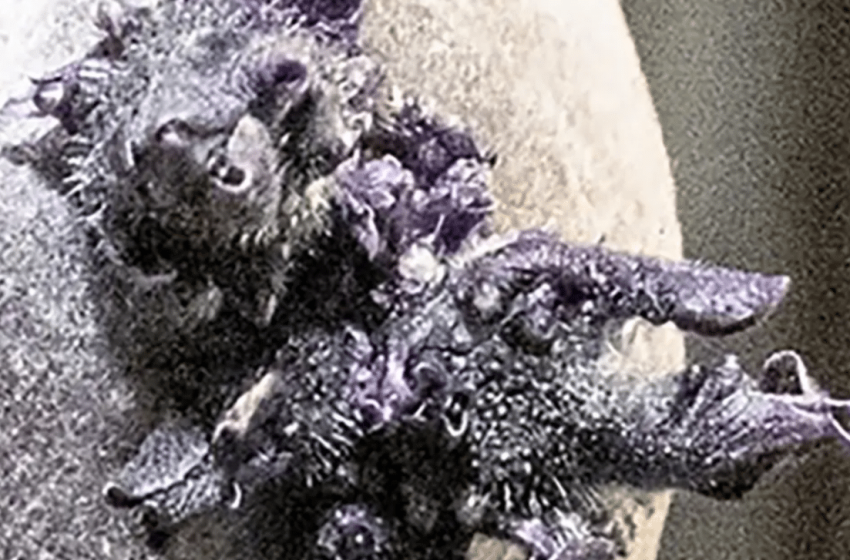
NASA Astronaut Shares Image of Bizarre Tentacled Object Growing on ISS
In a surprising twist that stunned social media, NASA astronaut Don Pettit recently published a photo of a bizarre tentacled object growing aboard the International Space Station (ISS). At first glance, the object, which looked like an egg sprouting dark, black tendrils, prompted humorous online reactions, with some users joking that the eerie growth needed to be “killed with fire.” But the truth behind this peculiar sight was far less ominous and far more fascinating. According to Pettit, what appeared to be an alien growth was, in fact, a potato, part of his personal space garden project conducted during his time aboard the ISS.
The Mystery Behind the Tentacled Growth
When Pettit first shared the photo on social media, it sparked immediate interest, with people guessing that the object might be some sort of alien creature or even a mysterious lifeform growing in the unique environment of space. The photograph, captured during Expedition 72, which took place between September 2024 and April 2025, shows what appears to be an egg-like shape with dark tendrils sprouting from its base. Pettit’s lighthearted and scientific explanation revealed that the object was simply an early purple potato, growing in the microgravity conditions of the ISS.
“This is an early purple potato, complete with a spot of hook Velcro to anchor it in my improvised grow light terrarium,” the scientist explained, adding that he had flown potatoes as part of a personal space garden project. The space garden initiative, which Pettit engaged in during his off-duty time, aims to explore the potential of growing crops in space, a necessary step toward supporting long-duration missions, including the possibility of establishing bases on the Moon or Mars.
Why Potatoes in Space Matter
Potatoes are not just a staple food on Earth; they also play a crucial role in the study of food production in space. Known for their high nutritional value, potatoes were famously highlighted in The Martian movie, where the protagonist grows potatoes to survive on Mars. Pettit’s space garden is part of NASA’s broader research into growing food in space, a vital area of study for future missions.
“The roots would grow in all directions absent gravity, and all plants I have ever grown in space have grown far slower than they would have on Earth,” Pettit noted in response to inquiries about how the potatoes compared to those grown on Earth. His insight highlights a key challenge for growing plants in space: the absence of gravity affects root growth and overall plant development. Despite these challenges, Pettit’s experiment represents an essential step toward understanding how to grow food in a zero-gravity environment.
As Pettit continues to experiment with growing food on the ISS, he also shared that the potatoes were part of a broader effort to test the viability of different crops in space. “I have more pictures I will share later,” he added, signaling the potential for more insights into the future of space agriculture.
The Future of Space Agriculture and Sustainability
NASA’s research into growing crops in space is not just about satisfying the astronauts’ hunger, it is part of a larger vision for sustainable food production in space. By experimenting with various crops, including potatoes, tomatoes, and peppers, NASA aims to understand which plants are best suited to thrive in the challenging conditions of space. Additionally, certain antioxidant-rich foods, such as berries and beans, could help protect astronauts from space radiation, adding an extra layer of importance to these experiments.
Looking beyond the ISS, NASA envisions a future where space agriculture could support missions to the Moon and Mars. “Potatoes are one of the most efficient plants based on edible nutrition to total plant mass (including roots),” Pettit remarked. By starting these experiments now, NASA hopes to lay the groundwork for future space explorers to grow their own food, reducing reliance on resupply missions from Earth.
The significance of these efforts cannot be overstated, sustainable food production in space is one of the key components necessary for long-term human exploration beyond Earth. As Pettit’s potato experiment shows, even the most seemingly mundane items can have profound implications for the future of space travel.
NASA’s Vision for the ISS and Beyond
The ISS, a $100 billion science and engineering laboratory orbiting 250 miles above Earth, has been continuously occupied since November 2000. With numerous experiments in various fields, from human health to physical sciences, the ISS has provided invaluable data on how life and materials behave in space. NASA, alongside its international partners, has spent over two decades researching space environments, focusing on key issues such as gravity’s effect on plants and human health.
As the ISS approaches the end of its original design life, NASA is already planning for the next generation of space stations. “Foods like berries, certain beans, and other antioxidant-rich foods would have the added benefit of providing some space radiation protection for crew members who eat them,” NASA explained. These innovations are paving the way for future space missions, including the ambitious goal of establishing a permanent human presence on the Moon and eventually Mars.
First Appeared on
Source link






