


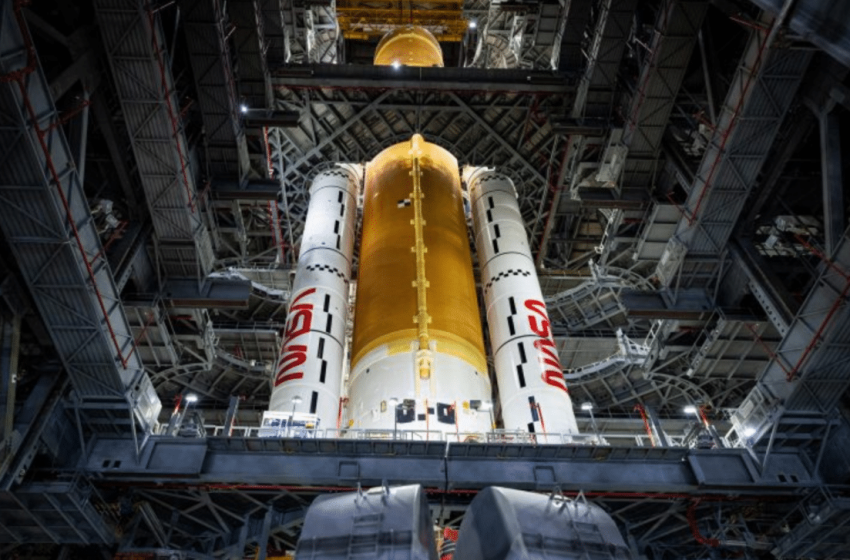
NASA to Provide Update on Artemis II Flight Readiness Ahead of Launch
NASA’s Artemis program continues to push the boundaries of human exploration, with its next landmark mission, Artemis II, on the horizon. The space agency has made significant strides in preparing for a crewed mission that will orbit the Moon, marking a crucial step in its broader goals of establishing a sustainable presence on the Moon and ultimately sending astronauts to Mars. This upcoming mission will test the Space Launch System (SLS) rocket and the Orion spacecraft with crew onboard, making it an essential milestone in the journey to interplanetary exploration.
The Artemis II Flight Readiness Review
In preparation for the Artemis II mission, NASA will host a media briefing on Thursday, March 12, 2026, to discuss the progress made toward this ambitious project. The news conference, set to take place at NASA’s Kennedy Space Center in Florida, will occur after the conclusion of the Artemis II Flight Readiness Review, a critical assessment that ensures all systems are ready for the crewed mission to the Moon.
“NASA will host a news conference at 3 p.m. EDT, Thursday, March 12, to highlight progress toward the Artemis II crewed mission around the Moon. The media briefing will take place from the agency’s Kennedy Space Center in Florida after the conclusion of an Artemis II Flight Readiness Review,” NASA stated in a recent post.
The event will provide updates on the Artemis II mission’s progress, allowing the space community and the general public to better understand the complexities involved in sending humans around the Moon. The conference will be streamed live, allowing anyone with an internet connection to tune in and learn about the latest developments in the mission’s preparations. NASA officials involved in the briefing will include key figures such as Administrator Jared Isaacman, Lori Glaze (acting associate administrator), and John Honeycutt (chair, Artemis II Mission Management Team), who will share critical insights into the mission’s readiness.
Credit: NASA/Cory Huston
The Importance of Artemis II in NASA’s Lunar and Mars Missions
Artemis II is not just a mission to send astronauts to the Moon; it is a vital test for the technologies and systems that will enable future lunar exploration and eventually crewed missions to Mars. The flight will serve as a dry run for future missions under NASA’s Artemis program, with a focus on evaluating the performance of the SLS rocket and the Orion spacecraft, both of which are key components in NASA’s deep space exploration strategy.
This mission is a major step toward NASA’s broader goal of sustainable lunar exploration. Following Artemis II, NASA plans to conduct additional missions that will establish a long-term human presence on the Moon, paving the way for the eventual construction of a permanent base and new infrastructure. By testing these technologies now, NASA is setting the stage for future missions that will not only explore the lunar surface but also lay the foundation for humanity’s first mission to Mars.
The Path to Mars: How Artemis II Supports Human Exploration Beyond the Moon
NASA’s Artemis program is part of a broader vision to eventually send humans to Mars, and Artemis II plays a significant role in making that vision a reality. While the Artemis I mission tested uncrewed systems and technologies, Artemis II will give astronauts the opportunity to evaluate the spacecraft’s performance in deep space, allowing them to assess potential risks and challenges before embarking on missions to Mars.
NASA’s plans for Mars are ambitious, with a goal to send astronauts to the Red Planet by the 2030s. However, that goal hinges on successful missions like Artemis II, which will provide valuable data on spacecraft performance, space environmental conditions, and astronaut safety. The experience gained from Artemis II will be directly applicable to future Mars missions, helping NASA refine its technology, mission plans, and astronaut training for long-duration space exploration.
First Appeared on
Source link






