



NASA’s ANITA Experiment Picked Up Strange Signals Beneath Antarctic Ice That Traveled Through Thousands of Kilometers of Rock
A decade after their detection, strange radio pulses emerging from beneath Antarctica continue to puzzle scientists. New research has ruled out some of the most exciting explanations, but the true origin of these signals remains unknown.
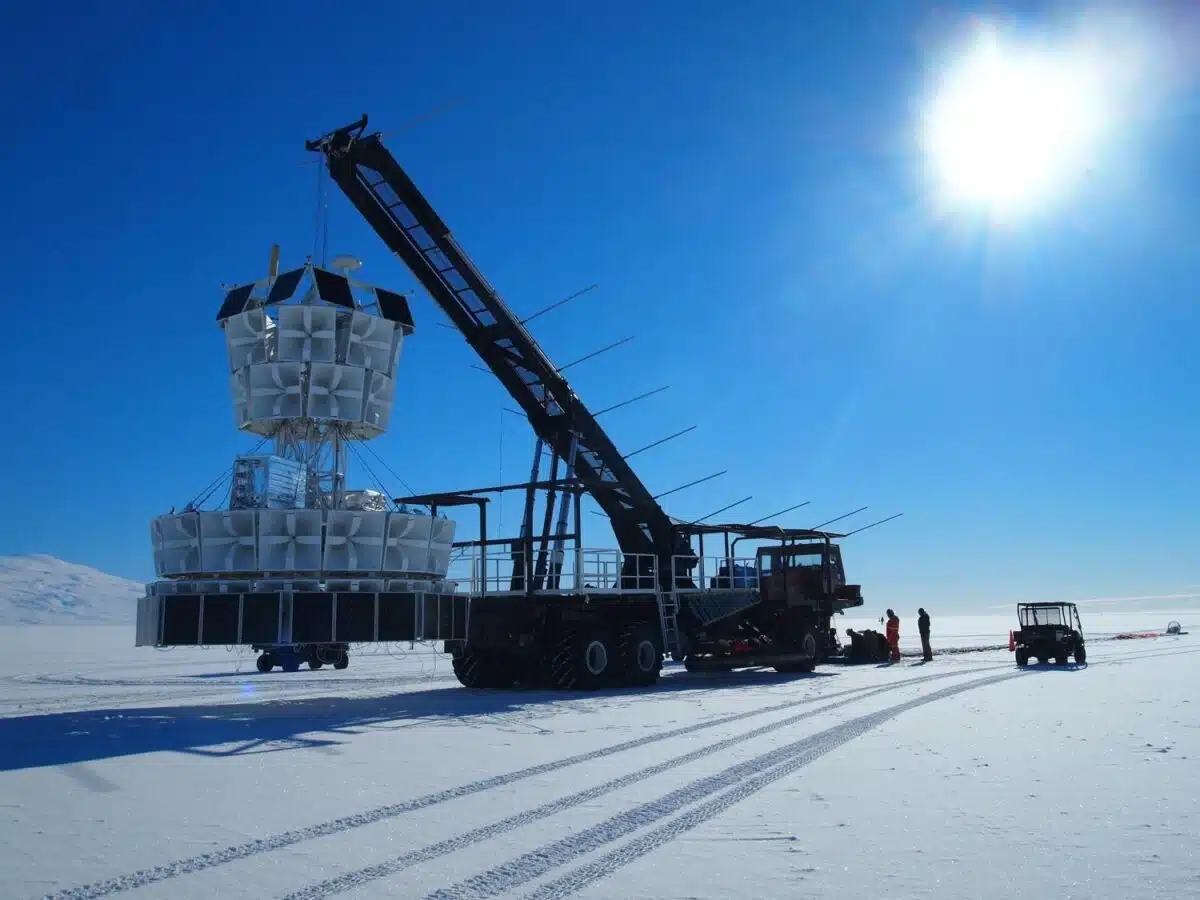
The signals were first captured between 2016 and 2018 by NASA’s ANITA experiment, a balloon-borne antenna designed to detect radio waves produced by high-energy cosmic particles. Instead of observing expected reflections off the ice, the instrument recorded signals appearing to rise from below the horizon, a configuration that does not fit established physical models.
This anomaly has drawn sustained attention because it challenges how scientists understand particle interactions with matter. If confirmed as something new, it could have pointed to unknown physics. Yet recent findings suggest a more complex explanation.
Signals That Should Not Exist
The unusual pulses detected by ANITA arrived at steep angles, roughly 30 degrees below the ice surface. According to Stephanie Wissel, a physicist at Penn State involved in the experiment, these signals would have had to travel through thousands of kilometers of rock before reaching the detector. For her, such a journey should have rendered the signals undetectable, as the intervening material would absorb them. This contradiction is at the heart of the mystery.
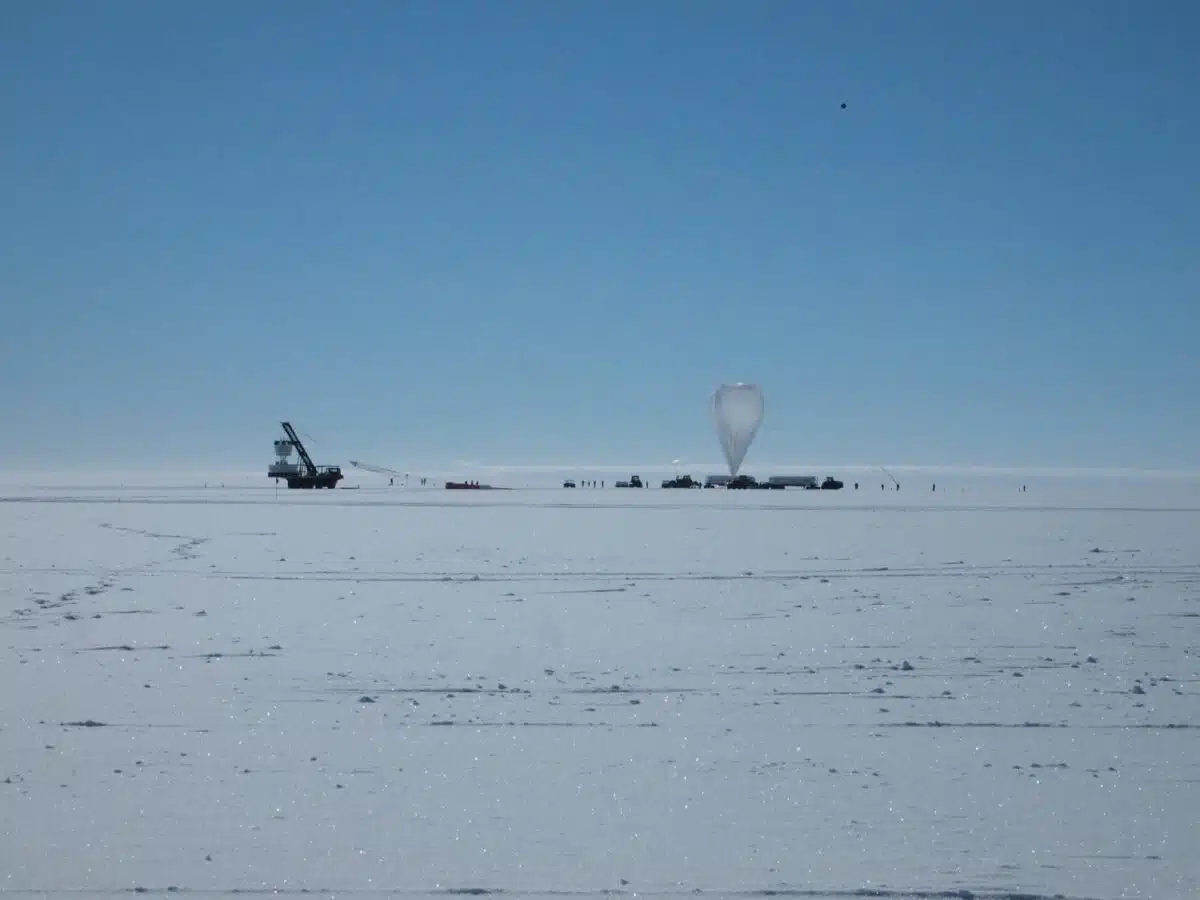
As explained in a statement from Pennsylvania State University, the ANITA system itself operates at an altitude of about 40 kilometers, scanning the Antarctic ice for radio emissions produced when high-energy particles interact with the surface.
“We point our antennas down at the ice and look for neutrinos that interact in the ice, producing radio emissions that we can then sense on our detectors,” Wissel noted.
These interactions generate what scientists call air showers, cascades of secondary particles that emit detectable signals. Under normal circumstances, the geometry of these signals is predictable. The “anomalous” events break that pattern entirely, making them difficult to trace or explain using current models.
New Study Finds No Supporting Evidence Elsewhere
In an effort to understand the anomaly, researchers turned to the Pierre Auger Observatory in Argentina, which has collected extensive cosmic-ray data over 15 years. The results, recently published in Physical Review Letters, offered a critical comparison.
The research team said that no similar upward-going events were detected in the Auger dataset. This absence carries weight because a signal linked to new particles or interactions would likely appear in multiple experiments with large exposure. The team also compared findings with data from the IceCube experiment in Antarctica. Again, no corresponding signals were found.
This cross-checking process led scientists to classify the ANITA detections as “anomalous,” meaning they do not match known particle behavior. At the same time, the lack of confirmation elsewhere suggests the events are unlikely to represent new physics, narrowing the range of possible explanations.
Neutrinos No Longer the Leading Explanation
Early interpretations focused on neutrinos, particles known for their ability to pass through matter with minimal interaction. These particles are abundant and originate from powerful cosmic sources such as supernovae or even the Big Bang.Wissel noted that neutrinos are notoriously difficult to detect because they rarely interact with anything. This property made them a plausible candidate for the strange signals.
Yet calculations show a major issue. For ANITA to detect such events, neutrinos would need to traverse vast distances through Earth and still produce a measurable interaction near the surface. As stated by the study, this scenario is highly improbable, as the particles would almost certainly be absorbed before emerging.
An Enduring Anomaly Still Without Explanation
Researchers now consider neutrinos an unlikely source of the anomaly. Wissel said the origin remains unclear, but current data point away from these particles. She also suggested a possibility that has not yet been confirmed.
“My guess is that some interesting radio propagation effect occurs near ice and also near the horizon that I don’t fully understand, but we certainly explored several of those, and we haven’t been able to find any of those yet either,” she said.
She added that the signals remain “one of these long-standing mysteries” and expressed optimism about the next-generation detector PUEO, which should provide improved sensitivity. This new instrument is now in development to capture more precise data. Scientists hope it will help clarify these anomalies and improve the detection of neutrinos in the future.
First Appeared on
Source link






