


NASA’s Curiosity Rover Cracks Open Martian Rock, and Makes an Unbelievable Discovery
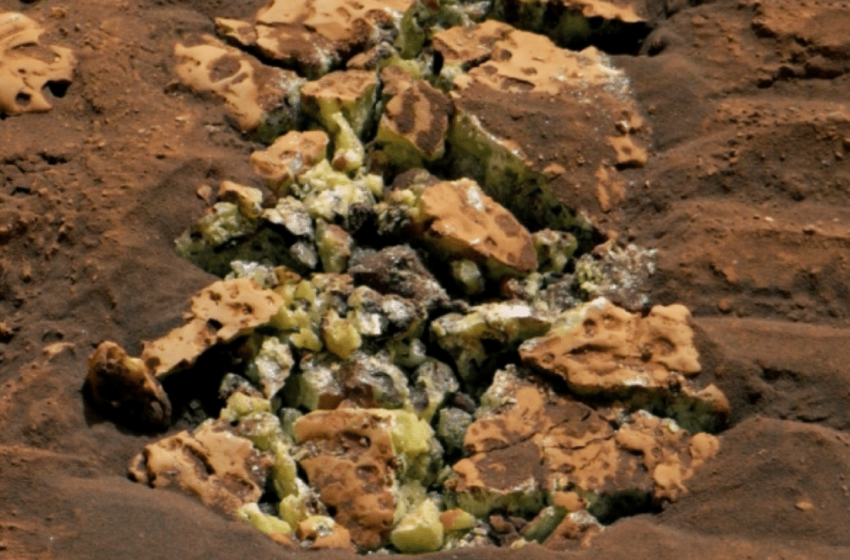
NASA’s Curiosity rover uncovered a remarkable surprise on Mars that could reshape our understanding of the planet’s geological history. When the rover rolled over a seemingly mundane rock in May 2024, it revealed something extraordinary: yellow crystals, marking the first time this pure form of sulfur has been discovered on Mars. The discovery, made in the Gediz Vallis Channel, a region rich in Martian history, promises to offer new clues about Mars’ past and its potential for supporting life.
The Significance of the Sulfur Discovery
While sulfates (sulfur compounds) are commonly found on Mars, pure sulfur is a rarity. Sulfates typically form when sulfur mixes with minerals in water, which then evaporates, leaving behind solid salts. However, sulfur in its elemental form requires very specific conditions to form, conditions that have never been confirmed in the region Curiosity was exploring. This discovery of pure sulfur has sparked intense curiosity among scientists, as it could suggest that something unusual and previously unknown is at play in the Martian environment.
“Finding a field of stones made of pure sulfur is like finding an oasis in the desert,” said Curiosity’s project scientist, Ashwin Vasavada, at NASA’s Jet Propulsion Laboratory in Southern California. “It shouldn’t be there, so now we have to explain it. Discovering strange and unexpected things is what makes planetary exploration so exciting.”
For planetary scientists, this discovery presents both a mystery and an opportunity. Understanding how this sulfur came to be on Mars could unlock new insights into the planet’s geological processes, particularly how it may have been shaped by water in the distant past. This question remains unresolved, and further exploration is required to determine the origin of these unusual sulfur deposits.
What the Gediz Vallis Channel Can Teach Us About Mars
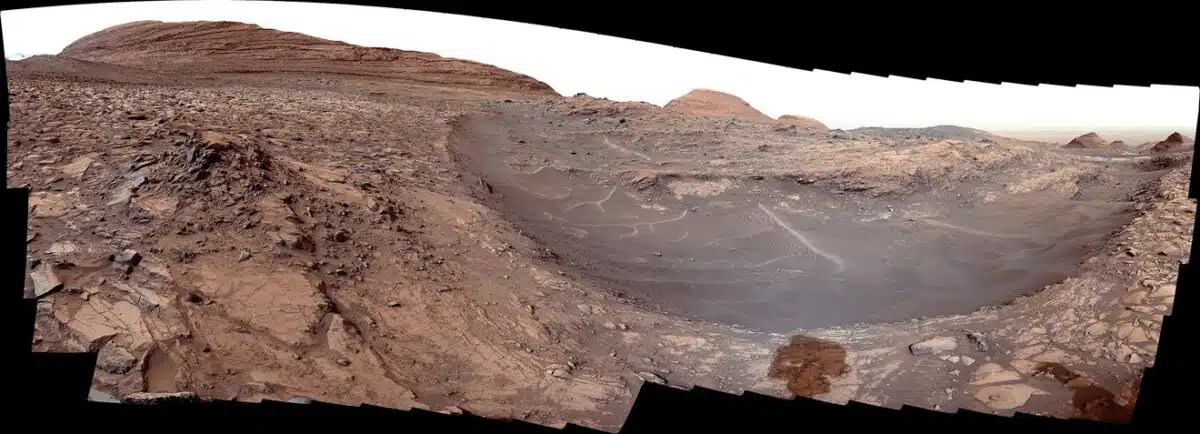
The Gediz Vallis Channel, a dried-up waterway once carved by ancient Martian floods, is an area of great interest to scientists. As Curiosity traverses the channel, it uncovers more evidence that Mars was once a much more active planet, with flowing water and dynamic geological events shaping the surface.
“This was not a quiet period on Mars,” said Becky Williams, a scientist with the Planetary Science Institute in Tucson, Arizona, and the deputy principal investigator of Curiosity’s Mast Camera. “There was an exciting amount of activity here. We’re looking at multiple flows down the channel, including energetic floods and boulder-rich flows.”
The channel’s rocks bear the unmistakable marks of past water activity, and scientists are now piecing together a more complex story about how water may have interacted with the Martian environment over billions of years. The presence of pure sulfur could indicate a unique interaction between the Martian atmosphere, geological processes, and perhaps even water in a form previously undiscovered on the planet’s surface.
Credit: NASA/JPL-Caltech/MSSS
What’s Next for Curiosity and Mars Exploration?
As Curiosity continues its mission, scientists are eagerly awaiting what new surprises might lie just beyond the next rock. With more than five years of data collection under its belt, the rover has already made a number of significant discoveries, including analyzing rock samples and investigating Mars’ weather and geology. The discovery of pure sulfur is just one of many breakthroughs that will continue to shape our understanding of Mars’ past, and perhaps, its future.
NASA’s Curiosity rover will keep exploring the Gediz Vallis Channel, conducting more tests and collecting additional samples to unravel the mysteries of Mars. With each new discovery, scientists inch closer to answering one of humanity’s most profound questions: Was Mars ever capable of supporting life?
First Appeared on
Source link






