Neanderthals May Have Used the World’s First Antibiotic 50,000 Years Ago
If you were a Neanderthal hunter 50,000 years ago, even a small cut could be deadly. Without sterile bandages or antibiotics, a wound was an open invitation for infection — one that could easily turn fatal before the seasons changed.
But Neanderthals may not have been as defenseless as we once thought.
For decades, archaeologists have found a sticky black residue on Neanderthal tools. It was long dismissed as a simple adhesive meant to hold stone points and wooden handles together. But new research suggests it may have done something far more remarkable: act like a primitive, targeted antibiotic.
The Original Chemists
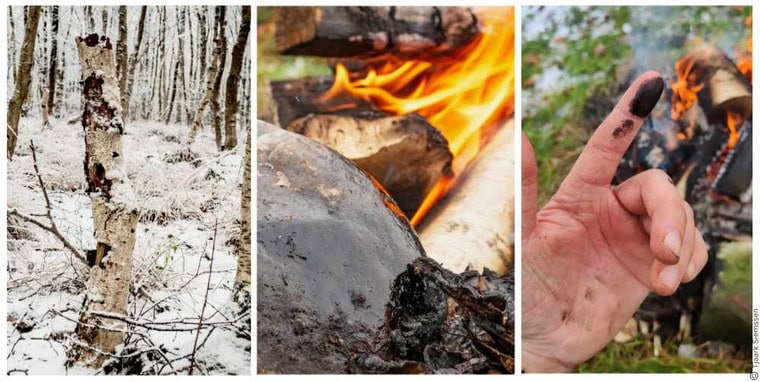
That black residue was birch tar. Neanderthals were producing it as early as 200,000 years ago, making them some of the world’s first practical chemists.
And creating it wasn’t trivial. Birch bark had to be heated in low-oxygen conditions, a surprisingly sophisticated process. The simplest technique, known as the condensation method, involved burning bark beneath a stone surface and collecting the tar that condensed above.
It took a lot of effort, but it paid off.
Birch tar was an excellent adhesive, used to fix stone tools onto wooden shafts for hunting and daily life. Still, researcher Tjaark Siemssen and colleagues at Oxford University suspected it might have served another purpose.
To find out, they recreated the tar using ancient methods and tested it in the lab.
A Stone Age Antibiotic
They collected bark from two species common during the time of the Neanderthals and created tar using three different methods also used by the Neanderthals. They then set out to see whether this tar had antimicrobial properties. It did.

The researchers tested the tar against Staphylococcus aureus, a major cause of skin infections, and Escherichia coli, a common gut bacterium. The tar selectively killed S. aureus while leaving E. coli largely unharmed. This matters a lot.
Killing Staphylococcus aureus was a tremendous pharmaceutical victory. This bacterium was (and still is) a primary driver of skin and wound infections. It’s exactly the kind of pathogen you want to kill. In the harsh environment, having a readily available antiseptic that targets their most likely source of infection is extremely valuable.
But would Neanderthals have known this?
They Probably Knew
As the team found out during their experimental production process, making birch tar is very messy. “Every step of the production is a sensory experience,” the researchers noted, adding that the tar is so sticky that getting it on your skin during production is “nearly inevitable”. It doesn’t take much, either — just 0.2 grams of the stuff can cover 100 square centimeters of skin.
That means Neanderthals producing tar would have repeatedly exposed their skin to it. If it helped prevent infections or soothe wounds, they likely noticed.
And there’s more evidence pointing to this.
Chemicals recovered from the dental calculus (the fossilized plaque on their teeth) of Neanderthals reveals that they specifically sought out and ingested plants with therapeutic properties, such as chamomile for its anti-inflammatory benefits and yarrow, a known medicinal herb. Traces of these bitter, non-nutritional plants suggest they were selected for their chemical properties rather than as a primary food source.
“Alongside these findings, there is also growing evidence of medicinal practices and the use of plants among Neanderthals, which is why we were interested in the use of birch tar in this context,” says Siemssen.
For a long time, popular culture painted Neanderthals as brutish, solitary creatures. But the archaeological evidence shows a much more impressive society.
We have found Neanderthal remains, such as the famous individual from Shanidar Cave in Iraq, who survived a severed tibia and other debilitating injuries. He couldn’t have survived alone; his group must have cared for him for years. Neanderthals took care of their injured, and they had the ability to treat some infections and inflammations as well.
Neanderthals may have vanished 40,000 years ago, but their medical legacy might just be getting a second life. They were more like us than we ever cared to admit. In fact, in some ways, they were likely better prepared than our ancestors.
This could provide important lessons for today’s medical research as well. As bacteria become increasingly resistant to our modern drugs, the selective antibacterial properties of substances like birch tar offer a potential roadmap for new therapeutic developments.
The study was published in PLoS.
.
First Appeared on
Source link