


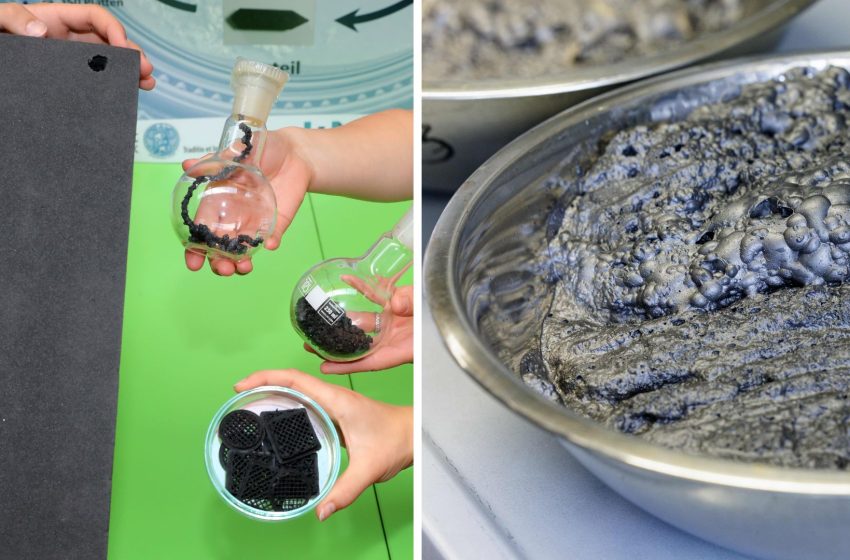
New bio-based graphene foams can be used to build aerospace objects
The search for materials that combine high performance with environmental responsibility has led researchers toward nature-inspired solutions. Among the most promising outcomes of this approach is the development of bio-based graphene foams.
These are lightweight, porous structures engineered using renewable resources and advanced nanotechnology.
In the EU project Bio.3DGREEN, 14 partners under the coordination of Laser Zentrum Hannover e.V. (LZH) have developed graphene foams from renewable raw materials.
Sustainable lightweight materials for automotive, aerospace applications
They aim to create a sustainable alternative to conventional damping and lightweight materials for automotive, aerospace and marine applications.
These materials reflect the efficiency of natural systems while offering exceptional mechanical and functional properties for industrial use.
Many biological systems—such as spongy bone or plant tissues—exhibit remarkable strength despite being highly porous. Scientists have drawn inspiration from these structures to design graphene-based foams with similar characteristics. By organizing graphene into a three-dimensional network, researchers have created materials that can endure repeated compression and still regain their original shape.
Bio-based graphene foams
What makes this innovation particularly significant is the shift toward bio-derived precursors. Instead of relying on fossil-based chemicals, renewable sources are used to produce these foams, reducing environmental impact and supporting sustainable manufacturing practices.
One of the defining advantages of bio-based graphene foams is their ability to combine low density with high mechanical resilience. These materials can absorb mechanical shocks efficiently, making them suitable for applications where energy dissipation is critical. Unlike conventional foams that may degrade over time, graphene-based foams maintain their structural integrity even after repeated stress cycles, according to reports.
This balance between flexibility and strength positions them as strong candidates for replacing traditional materials in demanding environments.
Since this material is being used in additive manufacturing for the first time, developing the printing process is challenging: the paste made from coated metal particles and plant oil requires a specially developed feeding system. Additionally, the team will determine the optimal laser wavelength for precise material processing, reported Nanowerk.
With the Bio.3DGREEN project, the partners aim to demonstrate that additive manufacturing with graphene foams can be a high-performance and sustainable alternative for the production of shock-absorbing, sound-reducing, and/or lightweight structures.
As research progresses, bio-based graphene foams are expected to gain increasing attention in sectors that demand both performance and sustainability. Advances in fabrication techniques and growing environmental awareness will likely accelerate their transition from laboratory innovation to commercial application.
Bio-based graphene foams represent a new generation of materials that successfully merge strength, flexibility, and sustainability. By drawing inspiration from nature and utilizing renewable resources, they offer a forward-looking solution to many industrial challenges. With continued development, these materials could play a key role in shaping a more sustainable and efficient future.
First Appeared on
Source link






