


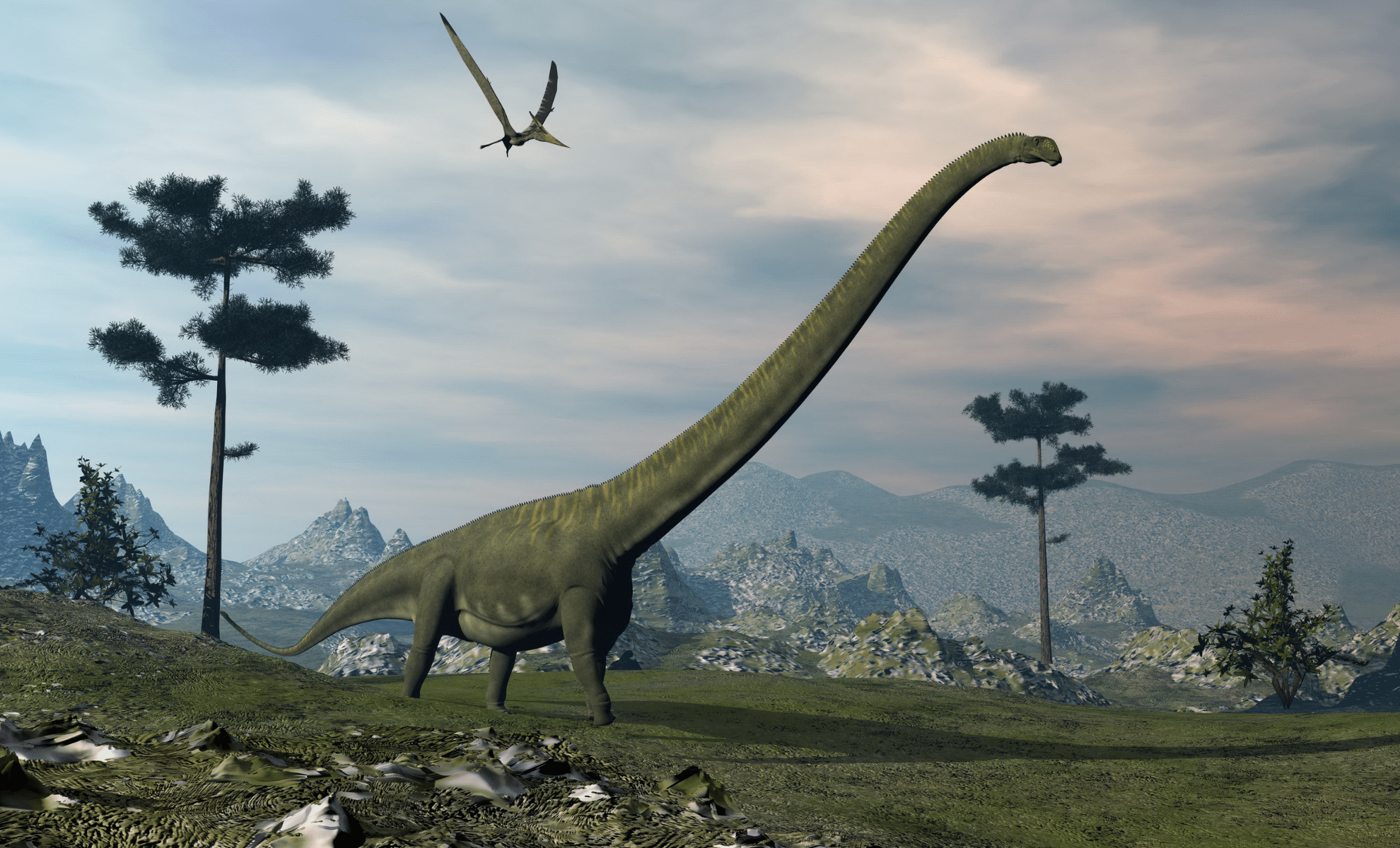
New Dinosaur Species with Incredible Long Neck Discovered in China
Paleontologists have discovered a new species of dinosaur, Mamenchisaurus sanjiangensis, in China’s Upper Shaximiao Formation. This long-necked giant, which lived about 160 million years ago, challenges old theories of East Asian isolation and highlights the global diversity of sauropods during the Late Jurassic. The discovery offers valuable insights into how these herbivores adapted to their environment and dominated ancient landscapes.
A New Dinosaur Giant: Mamenchisaurus Sanjiangensis
Paleontologists working in the Upper Shaximiao Formation near Chongqing, China, have identified a new species of dinosaur, Mamenchisaurus sanjiangensis. This plant-eating sauropod lived about 160 million years ago during the Late Jurassic Period. The fossilized remains of this long-necked giant have provided valuable information about sauropod evolution, offering new perspectives on the dinosaurs that once roamed East Asia. This discovery, published in Nature, contributes to a growing body of knowledge about the diversity of sauropods in ancient ecosystems.
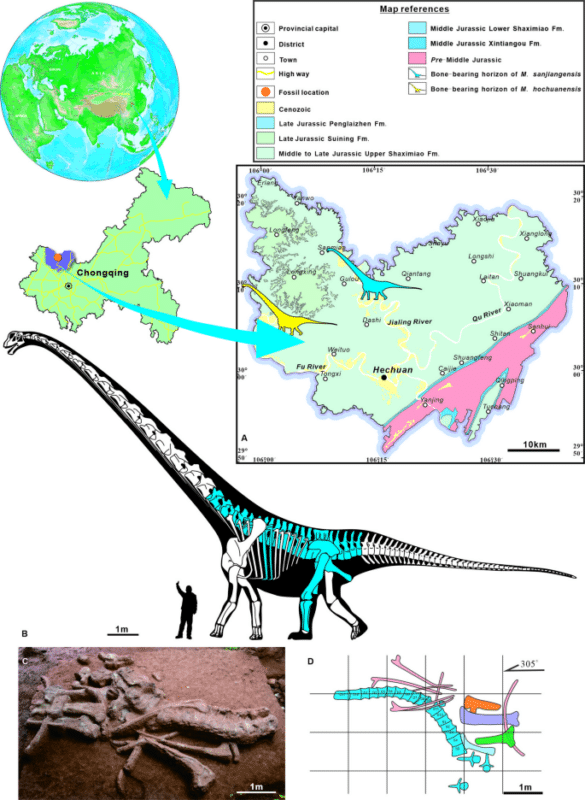
The species was named after the region where it was discovered, the Hechuan District of Chongqing, where three rivers converge. The bones, which were found in mudstones that once lined the shores of a shallow lake, offer fascinating clues about the life and environment of this extraordinary dinosaur. Researchers believe that Mamenchisaurus sanjiangensis was likely tens of feet long and weighed many tons, positioning it as one of the larger sauropods of its time.
Challenging Old Theories About East Asian Dinosaur Ecosystems
For decades, paleontologists believed that East Asia’s Jurassic dinosaur species were isolated from those of other continents. This theory, known as the East Asian Isolation hypothesis, suggested that the region’s ecosystems were unique and different from the rest of the world. However, the discovery of Mamenchisaurus sanjiangensis and other newly found sauropods from China and Africa is softening these claims. The fossil evidence indicates that many dinosaur lineages, including sauropods, had broader distributions and did not evolve in complete isolation.
According to Dr. Hui Dai, lead paleontologist on the study, “Late Jurassic sedimentary units of China preserve rich sauropod records, and most of them are dominated by mamenchisaurids.” The research conducted in the region has revealed that the diversity of sauropod species was not only greater than previously thought but also more interconnected with global dinosaur ecosystems. Mamenchisaurus sanjiangensis provides another key piece in the puzzle, shedding light on the nature of East Asian dinosaurs during the Late Jurassic.
The Evolution of Long Necks: Sauropod Success in East Asia
One of the most striking features of Mamenchisaurus sanjiangensis is its long neck. Sauropods, known for their massive size and herbivorous diets, are famous for their elongated necks, which allowed them to access vegetation in hard-to-reach areas. The neck of Mamenchisaurus sanjiangensis likely reached impressive lengths, contributing to the species’ success as it browsed across vast areas for food.
The long necks of mamenchisaurids, such as Mamenchisaurus sanjiangensis, appear to have evolved as an adaptive trait to help these dinosaurs dominate East Asia’s diverse ecosystems. These dinosaurs could graze on vegetation in the treetops without the need to move their massive bodies too much, thus conserving energy. The internal structure of the bones, including the air-filled chambers within the vertebrae, made the necks not only long but also lighter and more efficient to support.
As Dr. Dai notes, “Sauropod dinosaur diversity reached an apparent peak in the Late Jurassic,” highlighting how species like Mamenchisaurus sanjiangensis were part of a flourishing group of long-necked herbivores that played a crucial role in their ecosystems.
Bone Structure and Adaptation: How Mamenchisaurus Sanjiangensis Survived
The bones of Mamenchisaurus sanjiangensis provide critical insights into how these enormous animals managed to sustain their massive size. For example, the bones of the neck and back were lightweight, thanks to a unique camellate structure. This honeycomb pattern within the bone tissue helped reduce the overall weight of the skeleton while maintaining its strength. The femur, unusually wide for its length, suggested that the dinosaur had powerful hind limbs that helped stabilize its massive body.
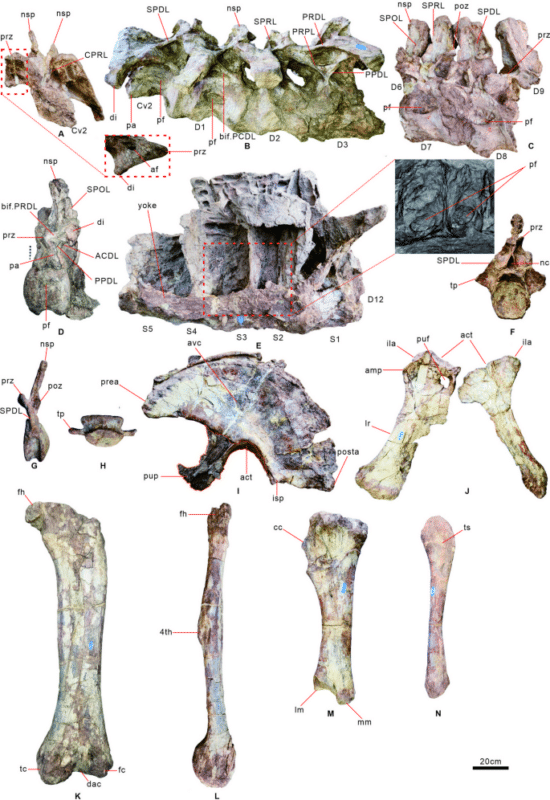
The vertebrae of Mamenchisaurus sanjiangensis also exhibited a structure that was both efficient and adaptive, allowing the dinosaur to support its enormous neck while maintaining the necessary strength to move across the land. This anatomical evidence provides further proof of how mamenchisaurids were specially adapted to thrive in their environment.
First Appeared on
Source link






