


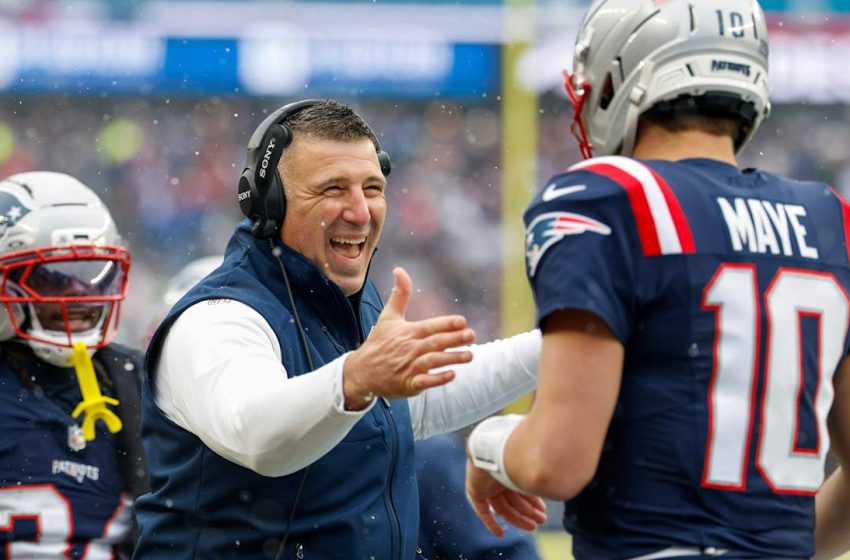
New England Patriots’ quick rebuild, rise to Super Bowl underscores shifting AFC landscape
The question facing teams like Buffalo is whether they will do better in a stacked AFC. The conference is sitting in such an intriguing position because money is affecting plenty of franchises. Those elite quarterbacks previously mentioned all are playing on lucrative deals that represent major chunks of their team’s salary caps. Meanwhile, three of the four AFC signal-callers who played in this year’s Divisional Round (New England’s Drake Maye, Denver’s Bo Nix and Houston’s C.J. Stroud) are still on their rookie contracts.
It’s not hard to understand that those teams with younger quarterbacks had the flexibility to build better rosters around their players. The Eagles did the same thing with Jalen Hurts on their way to two Super Bowls — and won last year’s championship — without his own contract being a major strain (he only accounted for 5.2 percent of Philadelphia’s salary cap in 2024 despite signing a five-year, $255 million extension a year earlier). The Patriots are in a great position because Maye, like Brady when he won his first championship, is only in his second year. They also have a coach in Vrabel who understands what it takes to sustain success.
The Patriots certainly benefitted from playing a weaker schedule after finishing last in the AFC East in 2024. Their ability to keep growing depends on not forgetting how they thrived.
“When you’re in a situation like [New England’s], it’s important that everyone understands you won as a team, just as you lost as a team,” said former Cincinnati Bengals head coach Marvin Lewis, who turned around that moribund franchise in the early 2000s. “The biggest thing I learned in Cincinnati is that you don’t get to start the next year where you left off the season before. I saw (Chicago Bears head coach) Ben Johnson say that when they lost. You build credibility as a staff because now they believe. But then you have to come back and grind all over again.”
Cincinnati reached the postseason seven times in Lewis’ 16 years, but his teams were competing against Brady’s Patriots, as well as Peyton Manning with the Colts and Broncos and Ben Roethlisberger in Pittsburgh. The hurdles then are the same ones that this season’s upstarts face, and they revolve around grasping that beating great quarterbacks is easier when a team believes in commitment and sacrifice. It’s much harder when essential players start earning more money or failing to meet expectations.
Lewis specifically referenced the difficulty in keeping younger receivers like Marvin Jones or Mohamed Sanu when Cincinnati had a Pro Bowl talent at the position in A.J. Green. Lewis also watched the current Bengals go from being a team that reached the Super Bowl in the 2021 season to one that has missed the playoffs in each of the last three years.
“You look at Cincinnati, and Joe Burrow is upset now because he wants them to get some defensive players,” Lewis said. “But the model there was set up to outscore people. They put a lot of money into four or five guys on that offense, and you end up trying to put some electrical tape onto the rest of the roster. That’s the stuff that catches up to you.”
The real test for this new group of contenders in the AFC will be making those hard choices about their rosters once those cheap quarterbacks cost more money.
“If you want to sustain success, you need to know that, besides your quarterback, you can only pay three or four other guys big money,” said Doug Whaley, a former general manager of the Bills who also worked in the Steelers front office and currently serves as general manager of the United Football League. “That’s when you sit down with your head coach and ask him which top three positions need to be paid outside of the quarterback to win a Super Bowl. Other than those moves and drafting well, you’re looking at those guys at the back end of the roster who don’t cost much to contribute. That’s how you keep it going.”
First Appeared on
Source link






