


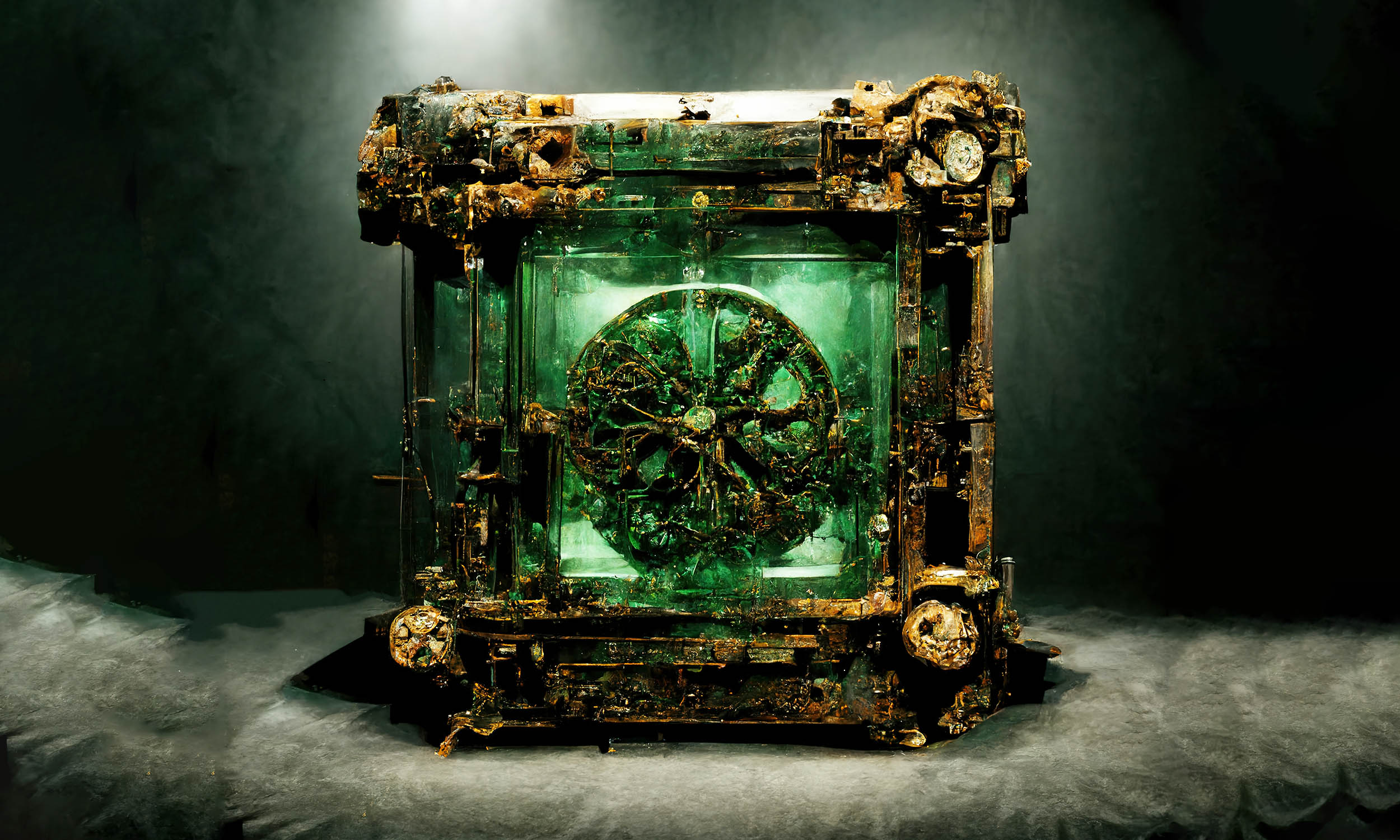
New insights into how the famed Antikythera Mechanism operated
For more than a century, a corroded bronze machine from ancient Greece called the Antikythera Mechanism has stood as evidence that complex mechanical thinking arrived far earlier than expected.
New analysis now suggests that this celebrated device may have stopped working within months, undermined not by its bold design but by subtle flaws that quietly halted its motion.
Understanding the Antikythera Mechanism
The Antikythera Mechanism is a hand-cranked system of bronze gears built in ancient Greece to calculate and display repeating astronomical cycles, including the movements of the Sun, Moon, and eclipses.
In a detailed study, physicist Professor Esteban Guillermo at the National University of Mar del Plata used a computer simulation to rebuild the ancient device in digital code.
His research focuses on tracking how small machining errors can cascade through linked gears, ultimately causing catastrophic failure.
In the simulation, tooth shape in each of the machine’s gears was less important than the gears’ spacing, because one tight mesh was able to lock every pointer.
Time and water took a toll
Work on reconstructing the Antikythera Mechanism starts with battered bronze fragments pulled from a shipwreck.
The device spent over 2,000 years underwater, which left cracks, missing gears, and heavy crusts that hide tooth edges on gears and bend thin plates.
Researchers use computed tomography, which is a 3D X-ray scan of internal structures, to measure gear teeth and read inscriptions.
Those measurements are are never complete because corrosion can erase the original geometry the ancient maker actually cut.
Gear teeth and motion
Long before modern gear standards, triangular teeth could still be used for mechanical rotation, but they vary speed during contact.
Analysis shows why the Antikythera Mechanism’s driven gear speeds up and slows down as each tooth engages. That non-uniform motion can make a pointer wobble around its ideal position, even when the crank turns steadily.
Real gears fail when tolerances, the allowed mismatch between parts, are exceeded and teeth start colliding instead of rolling.
A paper modeled gear tooth placement errors and calculated how those offsets spread through linked gears.
When random errors mix with repeated bias, the model predicts that pointers can drift far enough to hide the targets intended motion.
That kind of drift also increases the chance of a critical failure, because a stalled pair interrupts every downstream gear.
Gear spacing matters most
Jamming often begins with clearance of the small gap that keeps meshed teeth from rubbing as they rotate.
The simulation varies the center-to-center distance between gears, which changes that gap until tips catch in valleys.
An off-center axle can make the gear gap pulse wider and tighter each turn, converting smooth motion into sudden binds.
Disengagement is the opposite failure, and both outcomes matter because the Antikythera Mechanism design links many gears to one crank.
Testing a working lifetime
To judge practicality, the authors set a failure rate and then ran many trials. They treated any jam as serious, because one frozen pair can halt the whole mechanism with a single twist.
Under realistic error levels, most simulated runs stopped early, and the surviving runs kept slipping out of sync.
This outcome suggests that the main problem with the Antikythera Mechanism was reliability, not just accuracy, because a precise dial is completely useless if it freezes or breaks.
Corrosion changes the evidence
Any simulation depends on input measurements, and the Antikythera Mechanism fragments are not neat parts pulled from a workshop.
Corrosion and mineral crust can blunt tooth tips and shift gear centers, which makes modern measurements larger than originals.
“Since the impact of these variables is speculative, our results must be interpreted with caution,” wrote Prof. Guillermo.
Better scans and more surviving gear surfaces would narrow those inputs, and could show whether corrosion created the worst jams.
How precise could they cut
The team searched for error limits that would let every gear pair keep moving, even with imperfect hand-cut teeth.
The findings indicate that the triangular shape of the gear teeth alone produces only minor errors, while manufacturing inaccuracies greatly increase the risk of gears stalling or disengaging.
In their tests, small increases in precision mattered most for the largest gears, where off-center motion changes spacing the most.
Lessons from Antikythera Mechanism
A mechanism that jams often cannot guide observations, but it can still teach cycles by showing what the sky should do.
The simulation raises the possibility that some surviving gears preserve damage, rather than the maker’s original spacing and alignment.
If the original errors were smaller, the same design could track months and eclipses for years with a smooth crank.
Large errors would still signal deep mathematical planning in the design, even if the owner turned it gently.
Taken together, the modeling work shows that tooth shape was a small issue, while spacing errors could stop everything.
Future imaging and metal studies may separate original craftsmanship from centuries of corrosion, making the mechanism’s purpose easier to judge.
—–
Like what you read? Subscribe to our newsletter for engaging articles, exclusive content, and the latest updates.
Check us out on EarthSnap, a free app brought to you by Eric Ralls and Earth.com.
—–
First Appeared on
Source link






