


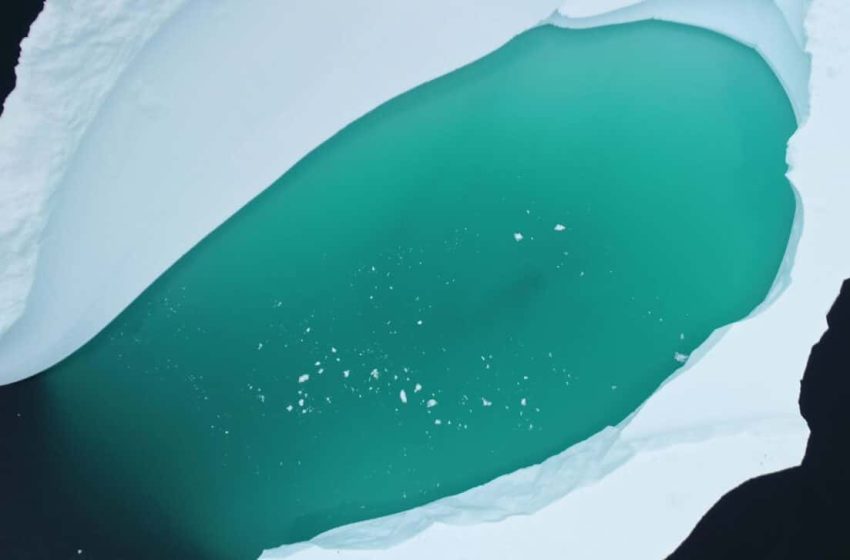
New Satellite Images Reveal Antarctica’s Ice Changing Color…It’s Turning Green
In early March, satellite images from the European Space Agency’s Copernicus program revealed something unexpected in Antarctica: green ice. This strange sight immediately caught the attention of scientists, who were quick to investigate. What could be causing this unusual color change? The answer lies in a surprising phenomenon involving tiny organisms.
Captured by the Sentinel-2 and Sentinel-3 satellites, these images are helping scientists better understand how the Southern Ocean’s ecosystems are changing. What’s even more interesting is how this new view of the ice could help researchers track ocean currents and marine life from space.
Why Phytoplankton Blooms Mark Spring’s Arrival?
According to the Copernicus program, the green color of the ice and surrounding waters is a sign of phytoplankton blooms. These microscopic organisms are key players in the food web, performing photosynthesis and contributing to the color change in the water. The blooms happen as sunlight starts to return to Antarctica after the long polar night.
With the return of light and the melting of the ice, nutrients are released, giving phytoplankton the perfect environment to thrive. This growth happens every year as part of the region’s natural cycle, and it shows that the ocean is staying healthy.
A New Way to Track Ocean Health
The images taken by the Copernicus satellites are a part of a larger effort to keep an eye on the planet’s ecosystems from space. Satellites like Sentinel-2 and Sentinel-3 give scientists the ability to observe and measure changes in the ocean, even in remote areas like Antarctica, where it’s difficult to study up close.
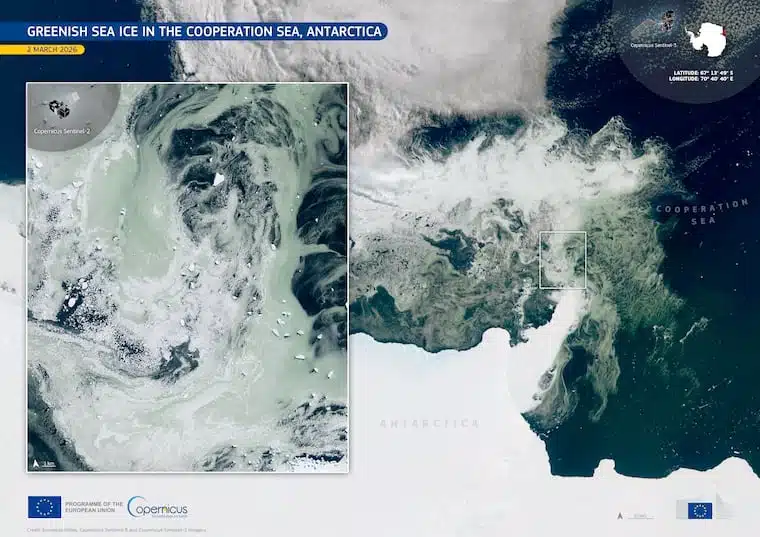
With these high-resolution images, researchers can monitor how phytoplankton blooms spread across the Southern Ocean around Antarctica, helping them understand how these changes might affect the wider marine ecosystem.
“These observations help researchers better understand austral marine ecosystems and assess how they respond to environmental change,” announced Copernicus.
A Balanced Marine Ecosystem Beneath Antarctica’s Ice
Though the presence of green ice may initially seem alarming, it is, in fact, a positive sign of a balanced ecosystem. Phytoplankton blooms indicate that the marine food web is functioning as it should, supporting a variety of species. These creatures are foundational to the Antarctic food chain, serving as a food source for small fish and larger animals like krill.
More phytoplankton means the Southern Ocean’s nutrient cycles are in balance, showing that the marine environment is healthy. It’s a reminder of how important it is to keep an eye on things, since even small shifts in the ecosystem can affect biodiversity worldwide.
First Appeared on
Source link






