


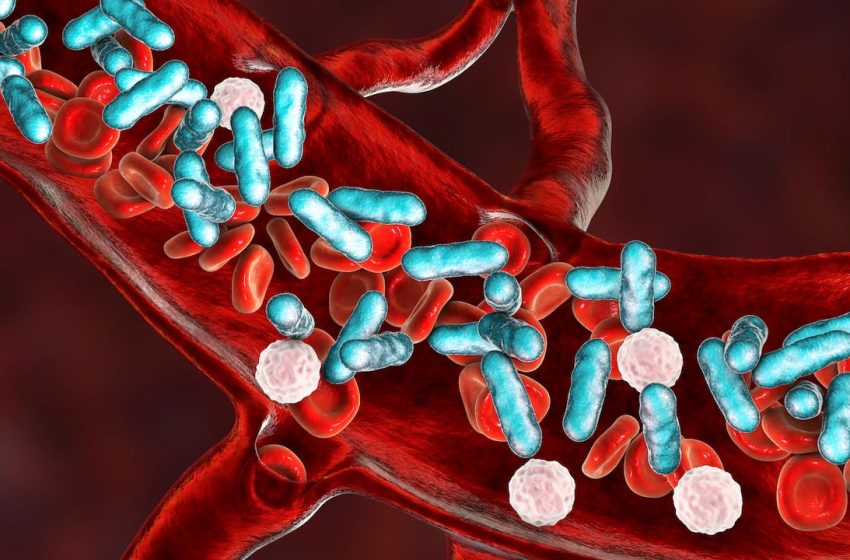
Newlywed dies from sepsis. What is it?
Sepsis is a life-threatening medical emergency that happens when a person’s body overreacts to an infection. It triggers a rapid, overwhelming inflammatory response that can result in organ failure.
“It’s not really the infection itself, but rather the body’s response to that infection,” said Dr. Brien Barnewolt, chair emeritus of emergency medicine at Tufts Medical Center.
Organ dysfunction brought on by sepsis can cause a range of symptoms affecting different parts of the body. Early symptoms can start as subtle discomfort at the site of the infection, Barnewolt said. Lung infections like pneumonia can cause cough. A urinary tract infection can lead to frequent urination. Abdominal infections can start with stomach pain.
As sepsis progresses, the symptoms can grow more severe. Dr. Shira Doron, chief infection control officer for Tufts Medicine, said she can picture “from head to toe, all of the things that can go awry” with sepsis. Symptoms include confusion, loss of consciousness, shallow breathing, fever, chills, and low blood pressure.
A patient’s blood test results can help doctors diagnose the condition, Doron added. In severe cases, low body temperature can lead to hypothermia.
How dangerous is sepsis, and why?
Depending on the severity of the infection, the number of bacteria or viruses involved, and the host’s response, the onset can be very quick and dangerous.
Sepsis requires immediate medical treatment to prevent septic shock and death. Septic shock is the combination of organ failure with abnormally low blood pressure, Barnewolt said.
“It’s this vicious circling in a downward spiral that, unless someone jumps in and intervenes in a very rapid fashion, can result in death,” he said.
Anyone can contract sepsis from an infection, Doron said. Certain pathogens are more likely to result in sepsis, namely bacteria.
“I know that for any individual out there, they may not have had it or seen it,” Doron said. “But for us in the hospital, we are absolutely seeing it every day, multiple times a day.”
However, certain individuals are at higher risk. Immunocompromised individuals, such as the elderly or those with preexisting conditions, may be more likely to develop sepsis when they get an infection. Certain medications can trigger a stronger inflammatory response, Barnewolt said.
Can a younger, healthy person contract sepsis out of the blue?
While uncommon, doctors do see cases like Adam’s. Barneholt recalled treating a 40-year-old male patient who “developed sepsis right in front of my eyes” after being diagnosed with a bacterial infection.
The patient survived. But Barnewolt said that recovery can depend on how long sepsis progresses before treatment, whether the patient has underlying conditions, and the rate at which inflammatory markers in the body escalate and lead to various septic responses.
Sepsis can be difficult to identify in the hospital because its early signs mimic many other conditions.
“All of us are always looking for patients who might have sepsis,” Barnewolt said, noting high-risk populations in particular. However, “a young, healthy person would be easy to miss.”
Unfortunately, identifying sepsis early does not guarantee survival.
“We try to catch it early, because every minute counts with sepsis,” Doron said. “That being said, sometimes no matter how quickly you catch it, we say, ‘The cat is out of the bag.’ That inflammatory response can go haywire, and even early antibiotics can’t save everybody from sepsis.”
Taking steps to prevent infection can help prevent sepsis. Practice proper hygiene, and see a doctor early if signs of infection appear.
“Early diagnosis is certainly important,” Barnewolt said. “A heightened level of awareness all the time is something that we all strive to do in reducing the side effects or the bad outcomes of sepsis.”
Lauren Albano can be reached at [email protected]. Follow her on X @LaurenAlbano_.
First Appeared on
Source link






