


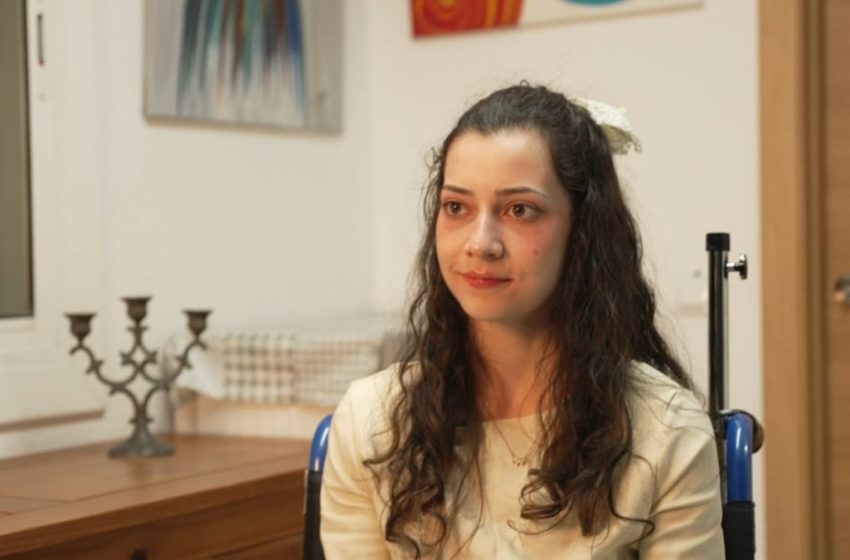
Noelia Castillo, the young woman who fought her parents for her right to die: ‘I can’t take this family anymore’ | International
A Barcelona judge on Thursday denied a last-minute request for emergency injunctive measures to halt the euthanasia of Noelia Castillo Ramos, a 25-year-old Spanish woman who was scheduled to receive assisted death at 6 p.m. local time. The measures had been requested by Abogados Cristianos (Christian Lawyers), the law firm representing her father. For a year and a half this organization has been behind the legal battle to prevent the assisted death of Noelia, who suffered from paraplegia. She died on Thursday afternoon at the Sant Pere de Ribes long-term care facility in Barcelona where she was a resident, health sources confirmed to EL PAÍS.
If everything had gone according to plan, Noelia would have passed away on August 2, 2024. That was the date her euthanasia had initially been scheduled for. A month earlier, the young woman from Barcelona had received unanimous approval from the public agency responsible for ensuring that assisted dying is carried out correctly in the northeastern region of Catalonia.
Everything was ready. But then an order to stop came through: a Barcelona court had accepted a petition from her father, Gerónimo Castillo, to temporarily halt the euthanasia. Advised by the ultra-Catholic group Abogados Cristianos, the man entangled his daughter in a legal maze that kept her alive, against her will, for 601 days.
Her case has been unlike any other: it has exposed the flaws and weaknesses of the euthanasia law; it has sparked debate over who has the right to try to prevent an adult from carrying out their decision to die with dignity; and it prolonged the suffering of a young woman who never wavered in her decision and who received scientific endorsement from the independent professionals who make up the Catalan Guarantee and Evaluation Commission (CGAC).
The ordeal had taken its toll on Noelia, who decided to say goodbye by speaking at length in an interview on the television channel Antena 3, which aired the conversation from her maternal grandmother’s home on Wednesday, the day before her scheduled death. “Let’s see if I can get some rest because I can’t take this family anymore, I can’t take the pain anymore, I can’t take everything that torments me in my head from what I’ve been through,” she says.
Her father, mother, and sister all opposed the euthanasia, she said. The first time she mentioned her plans at home, her father yelled at her, she told Antena 3. “He told me I had no heart, that I didn’t think of others, that everything I said was a lie. It hurt me,” she recounted, before pointing out the contradiction between her father’s desire to keep her alive and his neglect. “He never calls me or writes to me. Why does he want me alive, just to keep me in a hospital?” In the interview, she is seen talking with her mother, Yoli Ramos, about her decision. “Not all parents are prepared for this. He keeps telling me he understands me, but he doesn’t.”
Her life had not been easy: her parents’ neglect — they separated when she was 13 — led to her being placed in the care of the Catalan government for a time. Later, she said, she suffered various incidents of sexual abuse and assault. The last time, she said, it was at the hands of three boys. Shortly thereafter, in October 2022, she threw herself from the fifth floor of a building. It was then that she became paraplegic and requested euthanasia, a petition that was approved in July 2024 after the Catalan regional government agency determined that she was in an “irreversible” clinical condition causing her “severe dependency, chronic pain, and debilitating suffering.” She met the requirements set by law.
But nothing went as planned, and Noelia had to wait for rulings from as many as five different courts before seeing her right upheld. Her case was the first in Spain to go to trial.
Now, there will be no more delays. On March 26, 2026 — as she herself announced — Noelia’s life came to an end at the age of 25.
Sign up for our weekly newsletter to get more English-language news coverage from EL PAÍS USA Edition
First Appeared on
Source link






