


One potential 2026 salary-cap cut for every NFL team: Joe Mixon, Kirk Cousins and more
It’s not the sexiest part of the NFL offseason, but salary-cap casualties often have far-reaching ripple effects.
Failing to find a trade partner, the Los Angeles Rams released star wide receiver and Super Bowl LVI hero Cooper Kupp in March last year when declining production didn’t match the hefty salary, among other reasons.
A few days later, Kupp agreed to a $45 million deal with the division rival Seattle Seahawks, opting to return to his home state. Ten months later, Kupp caught a 13-yard touchdown pass against his former team in the NFC Championship Game en route to a second Super Bowl ring.
Whether the following list of potential salary-cap cuts — comprised by The Athletic’s NFL beat reporters — harbors a Super Bowl LXI champion (or the league’s next great story of revenge) is unknown. But it’s a list worth watching nonetheless as this offseason begins.
Arizona Cardinals
RB James Conner
Every offseason decision for the Cardinals starts with Kyler Murray. Assuming they find a trading partner for the 28-year-old quarterback, they still face difficult decisions. Conner is among the biggest. His value during his five years in Arizona is unquestioned. He runs hard. He is among the most respected players in the locker room. But he’s also coming off a severe right foot injury that ended his 2025 season after three games. Conner, who turns 31 in May, is under contract through the 2026 season. Cutting him would save about $8 million, money the Cardinals could use on a younger replacement. — Doug Haller
Atlanta Falcons
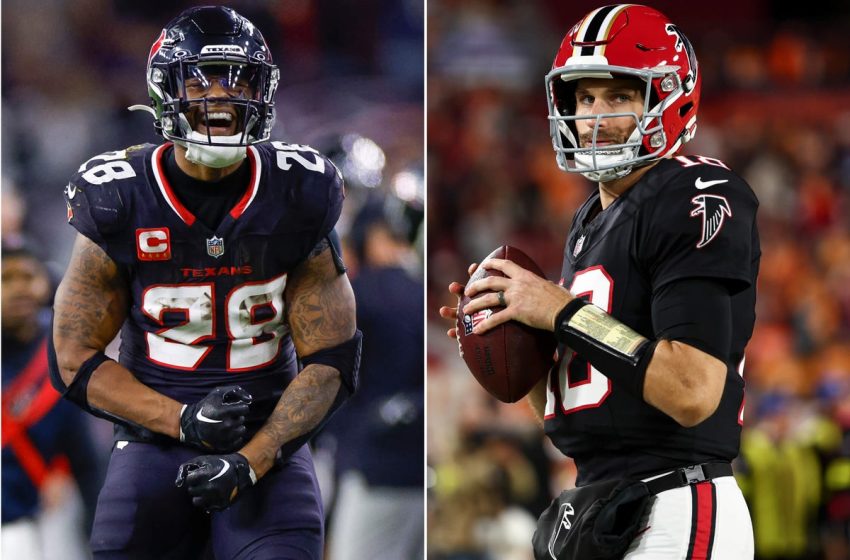
QB Kirk Cousins
If Kirk Cousins’ contract was more forgiving, it would make a lot of sense to bring back the veteran quarterback. There is no guarantee that Michael Penix Jr., who is rehabbing an ACL tear suffered in Week 11 last year, will be ready for the season opener. Cousins led the Falcons to four straight wins to end the season and had his best statistical season under new Atlanta head coach Kevin Stefanski in 2019, when Stefanski was the offensive coordinator in Minnesota. However, his four-year deal always was set to swell in his final two seasons (which start this year) and a recent restructure means the Falcons would owe him a $67.9 million bonus if he’s on the roster March 13. It’s impossible to imagine owner Arthur Blank being willing to foot that bill, although it remains possible Cousins could be released and still re-sign in Atlanta if there was little interest elsewhere. — Josh Kendall
Baltimore Ravens
DL Broderick Washington
The veteran defensive lineman is the Ravens’ most likely candidate for a salary-cap cut. The most interesting decision involves longtime standout cornerback Marlon Humphrey. The 29-year-old four-time Pro Bowler is coming off one of the worst years of his career. He was one of the league’s most-picked-on corners last season. Humphrey is a proud and hardworking player, so he’s a strong candidate for a bounce-back. However, his $26.3 million salary-cap number, the fourth highest on the team, makes him vulnerable. Releasing him before June 1 would trigger nearly $19 million of dead money and further complicate the decision. — Jeff Zrebiec
Buffalo Bills
WR Curtis Samuel
The Bills will have to work to get under the 2026 salary cap to make some moves. One likely offseason goal is adding a legitimate piece to the wide receiver room. Cutting Samuel helps both situations, as it adds over $6 million to their salary cap and helps refresh an inconsistent receiver room from 2025. Samuel, a free-agent signing in 2024, has had two inconsistent and injury-marred seasons in Buffalo. He was at his best near the end of the 2024 season and showed flashes, which helped him stick around in 2025. But he never secured a top-three role on the team. — Joe Buscaglia
Carolina Panthers
DT A’Shawn Robinson
If the Panthers move on from Robinson, it will be because of money, not a lack of production. He had 5.5 sacks his first season in Carolina, and last year ranked among the top 10 defensive linemen in the league in run stops. But the Panthers aren’t flush with cap space and signed two defensive tackles last year, giving Tershawn Wharton a three-year, $45 million contract. Cutting Robinson in the final year of his deal would create $10.5 million in cap room, with $2.1 million in dead money. They could ask him to take a pay cut instead. — Joseph Person
Chicago Bears
LB Tremaine Edmunds
For a team that is currently over the cap, no player has a cleaner “out” in his contract than Edmunds, whose release would create $15 million of cap space while counting as only $2.4 million of dead money. That doesn’t mean it’s an easy decision. Edmunds had four interceptions and nine passes defended last season. He’s only 27. No one on the roster can seamlessly step into his role. The Bears do have some simple restructures they can do to create a bunch of cap space, but it might still be necessary. — Kevin Fishbain
Cincinnati Bengals
DT B.J. Hill
The veteran Hill will be a name to watch next month. Cutting the 31-year-old saves $4.8 million against the cap. The Bengals need an upgrade at defensive tackle and could use the savings to find a better fit. He’s owed a $2 million roster bonus on the fifth day of the new league year, so they would want to make a decision by then. Fellow defensive tackle T.J. Slaton could be in the conversation as well. Releasing him would save $6.4 million. Slaton was solid, but if the Bengals found a better run-stopping defensive tackle for less, they could move on from last year’s free-agent signing out of Green Bay. — Paul Dehner Jr.
Cleveland Browns
OT Cornelius Lucas
The Browns accelerated a bunch of contracts in recent years to accommodate the disastrous contract of quarterback Deshaun Watson, which is why they can’t afford to cut him ahead of 2026. So their biggest moves will be post-June 1 cuts of void years of contracts from players who are actually free agents, most likely tight end David Njoku and guard Joel Bitonio (who may retire). Among the players signed, Lucas stands out as an easy decision because the team will save around $2 million in cap space. Rebuilding the offensive line will be much tougher than handling the accounting for veteran linemen leaving. — Zac Jackson
Dallas Cowboys
S Malik Hooker
The Cowboys are unlikely to have a notable salary-cap cut. Right tackle Terence Steele could be a possibility, but it would make more sense financially to keep him for at least one more year. There’s also the defensive tackle position, where Quinnen Williams, Osa Odighizuwa and Kenny Clark are all making more than $20 million per season. However, it doesn’t sound like the Cowboys have interest in letting any of them walk. That leaves Hooker, who is entering the final year of his deal. Releasing him would save Dallas about $6.8 million against the cap. But that all greatly depends on how new defensive coordinator Christian Parker feels about Hooker and a safety position that isn’t very strong. — Jon Machota
Denver Broncos
LG Ben Powers
Powers, who turns 30 next season, missed nine games due to a biceps tear last season and is scheduled to count $18.1 million against the cap in 2026. The veteran’s injury gave the Broncos a chance to evaluate Alex Palczewski, who joined the team as an undrafted free agent in 2023, as a starter at left guard — and he mostly held up well. The Broncos could save $12.7 million in cap space by designating Powers as a post-June 1 release, but they will likely only consider such a move if they view Palczewski, who is a restricted free agent himself, as a comparable replacement. The Broncos could also save $3.2 million by releasing veteran offensive lineman Matt Peart, who was injured most of last season and has no guaranteed money remaining in the last season of the two-year deal he signed last spring. — Nick Kosmider
Detroit Lions
C Graham Glasgow
Glasgow, a player perhaps best suited at guard, was asked to fill in at center last season when former All-Pro center Frank Ragnow retired in early June. A veteran who’d played the position before, Glasgow obliged, but the results were poor. The Lions couldn’t run the ball in the interior — at least not the way they could when Ragnow was here. The Lions also allowed the third-fastest time to pressure on average last season. Glasgow now enters his age-34 season, with one year left on his contract. With a post-June 1 designation, the Lions could free up $7 million in cap space by moving on. Considering the need to upgrade the center position and the youth added at guard in recent years, this makes the most sense for the team. — Colton Pouncy
Green Bay Packers
OG Elgton Jenkins, edge Rashan Gary
Jenkins turned 30 in December and is coming off a significant Week 10 injury that ended his season, which ESPN first reported to be a lower leg fracture. He switched from left guard to center before the season and improved after a rough start, but the Packers would free up about $19.5 million in cap space by releasing him, according to Over The Cap. Another cut candidate is defensive end Rashan Gary, who has a 2026 base salary of $18 million. Cutting him after he went missing in the second half of the season would free up about $11 million in cap space. — Matt Schneidman
Houston Texans
RB Joe Mixon
There’s a good deal of uncertainty hovering over Mixon, who missed all of last season with a foot injury that general manager Nick Caserio has classified as a “freak” injury. The Texans haven’t offered a lot of clarity on Mixon’s availability, although Caserio says that the 29-year-old is working hard to return. Given the uncertainty, it’s believed that Mixon, who would count roughly $8.5 million against the cap, would be a prime candidate to be released as a cost-saving measure. — Mike Jones
Indianapolis Colts wide receiver Michael Pittman Jr. (11) totaled a career-high seven receiving touchdowns in 2025. (Thomas Shea / Imagn Images)
Indianapolis Colts
WR Michael Pittman Jr.
Pittman totaled a career-high seven receiving TDs in 2025, but also had just 784 receiving yards, which was his lowest mark since his rookie season in 2020. The veteran wideout, who turns 29 in October, has a $29 million cap hit in 2026. There is no way Indianapolis will pay him that salary, especially after Alec Pierce supplanted him as the team’s No. 1 receiver. Pittman could either restructure his contract to reduce his salary and remain with the Colts, or they could release him. The latter choice would create $24 million in cap space with just $5 million in dead money. — James Boyd
Jacksonville Jaguars
G Ezra Cleveland
The Jaguars are $11 million over the salary cap, and they’ll need to get creative this offseason to become cap compliant. The most they could save by releasing a single player would be $4 million for Cleveland, their left guard. They have only two more players who would account for $3 million in cap savings and four additional players who could net $2 million. If the Jaguars need more cap space to make an aggressive addition, they’d likely have to restructure deals for higher-paid players such as Trevor Lawrence, Josh Hines-Allen or Arik Armstead. — Jeff Howe
Kansas City Chiefs
RT Jawaan Taylor
This one seems like a formality at this point. The Chiefs can save $20 million against the cap by cutting the oft-penalized Taylor, who seems destined for a change of scenery at age 28. Kansas City also has a suitable replacement in-house. Jaylon Moore, who signed a two-year free-agent deal last offseason, can easily slide over to right tackle with 2025 first-rounder Josh Simmons securing the left side. K.C. should also part ways with defensive end Mike Danna this offseason to save $8.9 million on next year’s balance sheet. — Jesse Newell
Las Vegas Raiders
G Alex Cappa
One of the many Raiders mistakes of last offseason was rushing to pay Cappa $5 million. He was coming off a season in which he played like one of the worst starting guards in the league, didn’t look much better last season and couldn’t help a Raiders line that struggled. He’s scheduled to make $6 million next year but the Raiders can save $5 million ($1 million in dead cap) by cutting him and adding to their wealth of cap space. This should be one of the easiest decisions of this offseason. Geno Smith could be a cut candidate too, but new head coach Klint Kubiak said he took the Seattle OC job so that he could work with Smith. So there’s a chance Kubiak would be interested in a reunion with Smith in Vegas and the possibility of using him as a bridge quarterback for Fernando Mendoza. — Ted Nguyen
Los Angeles Chargers
RG Mekhi Becton
The Chargers signed Becton to a two-year, $20 million deal last offseason in an attempt to solidify their leaky interior offensive line. The signing turned out to be a pretty glaring failure. He missed three weeks in training camp with an injury, and the injury issues persisted into the season. He struggled to stay on the field, dealing with various ailments, including food poisoning, a concussion and knee troubles. When he was on the field, he was poor in pass protection and did not provide the run-blocking lift the Chargers anticipated. They can cut Becton and save $9.7 million against the cap, according to Over The Cap, ridding themselves of what was ultimately a misguided decision. — Daniel Popper
Los Angeles Rams
CB Darious Williams
The Rams have been up-front about how they have to improve their cornerback room after they allowed Sam Darnold to enjoy a breakout playoff performance to end their season, along with other struggles from the unit throughout the year. Williams is the top cap hit here, and he spent several games last season as a healthy scratch. He’s had a strong pair of runs with the Rams but turns 33 next month, and Los Angeles can create an additional $7.5 million in 2026 cap space by moving on while incurring a reasonable $1.17 million in dead-cap penalties. — Nate Atkins
Miami Dolphins
WR Tyreek Hill
The Dolphins can save $35 million in cap space while incurring about $16 million in dead money by releasing Hill, who is coming off a gruesome knee injury. The 32-year-old might have had trade value if not for the injury, but he seems like a safe place for the Dolphins to start as they navigate the exit plan with QB Tua Tagovailoa. — Jeff Howe
(Editor’s note: The Dolphins released Hill on Monday.)
Minnesota Vikings
DT Javon Hargrave
The Vikings signed the 33-year-old last offseason with the idea that he could recover some of his game-changing pass-rush potential. There were flashes. However, the consistency lacked, and it didn’t feel like he was a phenomenal fit for the scheme of defensive coordinator Brian Flores. Minnesota, which is projected to be around $40 million over the cap, can save nearly $10 million by cutting Hargrave. This is an easier move than others, considering the Vikings have trusted depth with youngsters Jalen Redmond and Levi Drake Rodriguez. Other options here are center Ryan Kelly and running back Aaron Jones. Hargrave, though, is an obvious candidate. — Alec Lewis
New England Patriots
C Garrett Bradbury
The Patriots’ roster is in relatively good shape. Unlike past years, there aren’t any obvious candidates to cut. They could split with wide receiver Stefon Diggs or tight end Hunter Henry given the lack of guaranteed money remaining on their respective contracts. But wide receiver and tight end are already positions of need for the Pats. So, perhaps they move on from Bradbury as they usher in offensive line changes. — Chad Graff
New Orleans Saints
S Jordan Howden
The Saints have very few options to create any significant space by cutting a player before June 1. Via Over the Cap, Howden would create $3.65 million in space if the team let go of its backup defensive back. The real action could come from the Saints’ voided contracts of Cam Jordan, Demario Davis and Taysom Hill. Moving on from those three would open about $25 million after June 1. So the creation of any major cap space should occur through contract extensions and restructures of current players. — Larry Holder
New York Giants
LB Bobby Okereke
The Giants have some obvious cuts (RB Devin Singletary, OL James Hudson and K Graham Gano) to create much-needed cap space. Okereke will be the biggest cap decision. The Giants can create $9 million in cap savings while eating $5.5 million in dead money if they cut him this offseason. A captain during each of his three seasons in New York, Okereke plays every snap as the leader of the defense. But the 29-year-old’s performance has declined, so the savings from cutting him could be spent on an upgrade. A decision will come before a $3 million roster bonus is due on March 13. — Dan Duggan
New York Jets
QB Justin Fields
The Jets are going to land somewhere in the range of $70 million to 80 million in cap space without even cutting anyone — and they don’t have a whole lot of options for cap savings anyway outside of defensive tackle Harrison Phillips, who won’t be waived. Fields was a disaster last year, his first of a two-year, $40 million contract — $30 million of it guaranteed. Unless someone wants to trade for him (unlikely), the Jets will have one of two options for cutting him: do it outright, incur a $22 million dead cap hit and only $1 million in savings, or designate him a post-June 1 cut, spread that dead cap hit out over two years and save $10 million — savings which wouldn’t come onto the books until after June 1. Since the Jets don’t need the space, the first option feels likely. — Zack Rosenblatt
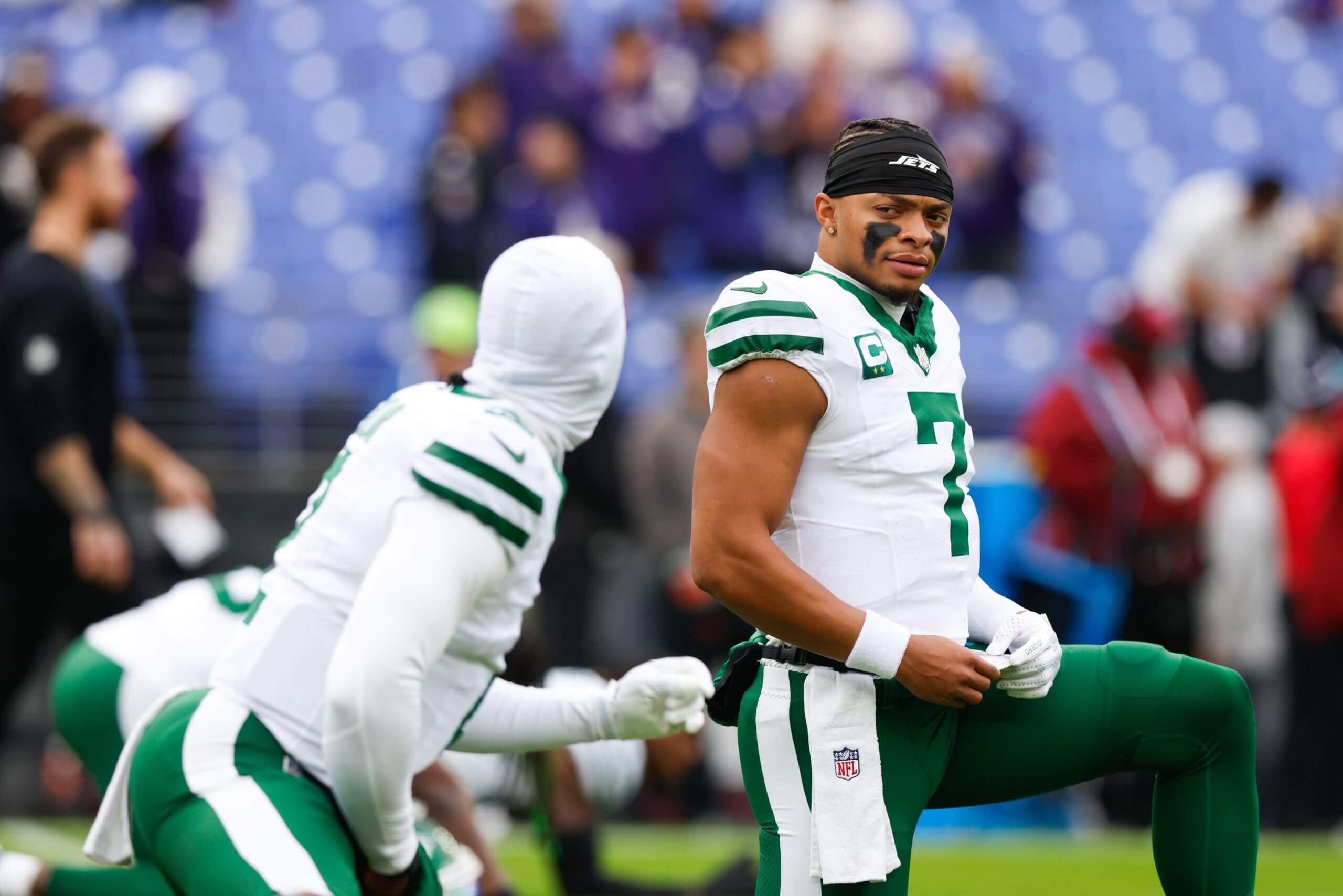
Quarterback Justin Fields (7) signed a two-year, $40 million contract with the New York Jets last offseason. (Peter Casey / Imagn Images)
Philadelphia Eagles
DB Michael Carter II
The Eagles can get $8.7 million in cap savings by cutting Carter. There is no other player who offers them savings above $3.7 million. That makes this decision fairly easy. GM Howie Roseman secured depth after rookie safety Drew Mukuba fractured his ankle, using a midseason trade that sent WR John Metchie III to the New York Jets for Carter and a swap of Day 3 picks. With Mukuba returning, the Eagles’ need for Carter simply does not outweigh the savings they’d get by releasing him. Carter also played nickel for the Jets, but Cooper DeJean netted an All-Pro selection at that position, which certainly suggests nickel will be his home base. The Eagles can spend their savings on other positional needs — perhaps a CB2 with Adoree’ Jackson’s contract expiring. — Brooks Kubena
Pittsburgh Steelers
TE Jonnu Smith
The Steelers acquired Smith last offseason in a blockbuster trade with the Dolphins, hoping he’d give tight end-friendly offensive coordinator Arthur Smith yet another weapon. With Smith, Pat Freiermuth, Darnell Washington and Connor Heyward, the Steelers had one of the most talented, versatile and deep tight end rooms in the league — or so they thought. In reality, two of the NFL’s 10 highest-paid tight ends (Smith and Freiermuth) on the same roster was one too many.
This redundant approach to roster construction hurt both players much more than it ever helped the offense. After a 2024 Pro Bowl season, Smith’s production fell off a cliff. Maybe even worse, the addition of Smith muddied the depth chart, causing Freiermuth to stand on the sideline much more than a well-compensated player at his position should. After playing between 62-69 percent of snaps in his first four seasons, Freiermuth played only 51 percent of the snaps in 2025.
Smith could be an effective weapon in an offense in which he can play a higher percentage of plays. But if the Steelers can’t find a trade partner, it makes sense to cut him and save $7 million of his $10.9-million cap hit. — Mike DeFabo
San Francisco 49ers
Edge Bryce Huff, WR Demarcus Robinson
Huff and Robinson fall into the same category: 2025 acquisitions who didn’t live up to expectations. Huff, who’s due to earn $17 million, finished with just four sacks and none after Week 7. Robinson, meanwhile, had ample opportunities for a major role in the passing attack due to all the injuries to 49ers pass catchers but ended up with just 276 receiving yards, seventh best on the team. Both play positions of need for the 49ers, meaning that despite their underwhelming 2025 campaigns, they could be back. It’s possible the team approaches Huff about restructuring his contract. — Matt Barrows
Seattle Seahawks
LB Uchenna Nwosu
Seattle has the sixth-most cap space entering the offseason, according to Over the Cap, so general manager John Schneider doesn’t need to shed a ton of salary to keep his Super Bowl team together. But one possibility could be Nwosu, who’d save the team $11.4 million if released. He turned 29 in December, had a productive season on the best defense in the league and basically ended the Super Bowl with a fourth-quarter pick six.
Seattle has plenty of incentive to keep him, especially with fellow outside linebacker Boye Mafe’s contract expiring. Nwosu is just the name to monitor here because Seattle doesn’t otherwise have an obvious cut candidate among its veterans ($9 million of Kupp’s 2026 base salary became fully guaranteed on Friday, according to Over the Cap, which is why he wasn’t selected). — Michael-Shawn Dugar
Tampa Bay Buccaneers
DL Anthony Nelson
The Bucs don’t have a glaring candidate to be cut who could save significant cap space, but Nelson, a holdover from Super Bowl LV, has been the subject of speculation. Soon to be 29, Nelson had three sacks last season and is going into the last year of a contract that calls for him to be paid $4.5 million. Cutting him would clear a path for second-year pass rusher David Walker, who missed his rookie season with an ACL tear and is attempting a return. — Dan Pompei
Tennessee Titans
CB L’Jarius Sneed
This is a 100 percent certainty. Former Titans GM Ran Carthon’s 2024 acquisition of Sneed for a third-round pick represents the worst of many bad moves in his brief tenure — and a fleecing on the part of the Kansas City Chiefs, who at the time employed the Titans’ current GM, Mike Borgonzi. He will rid the franchise of the mistake at a cap savings of $11.4 million, and get on to completely rebuilding the Titans’ corner group. Sneed has a degenerative knee, which didn’t take all the blame for his total of 12 games played in two seasons with the Titans, but clearly was a factor. A more difficult question for Borgonzi: Cut Calvin Ridley or not? That’s likely a yes as well. — Joe Rexrode
Washington Commanders
CB Marshon Lattimore
Cap casualty, veteran cut, unsurprising cut — use whatever label you want, but Lattimore’s time with the Commanders is almost certainly done. He has one year left on his deal, but his $16.5 million salary isn’t guaranteed, which means the team can move on and save $18.5 million in cap space. It’s a layup, and frankly it’s necessary for the defense to improve. But the failed experiment was costly. Washington gave up essentially three draft picks (the Commanders also swapped fifth-rounders) to acquire Lattimore from the New Orleans Saints at the 2024 trading deadline. The Commanders’ attempt to rebuild, at the time, seemed to be on a faster track than anticipated. But Lattimore was often more of a liability than an asset to Washington’s secondary, and the team proved last season that it’s clearly far from contending anytime soon. — Nicki Jhabvala
First Appeared on
Source link






