


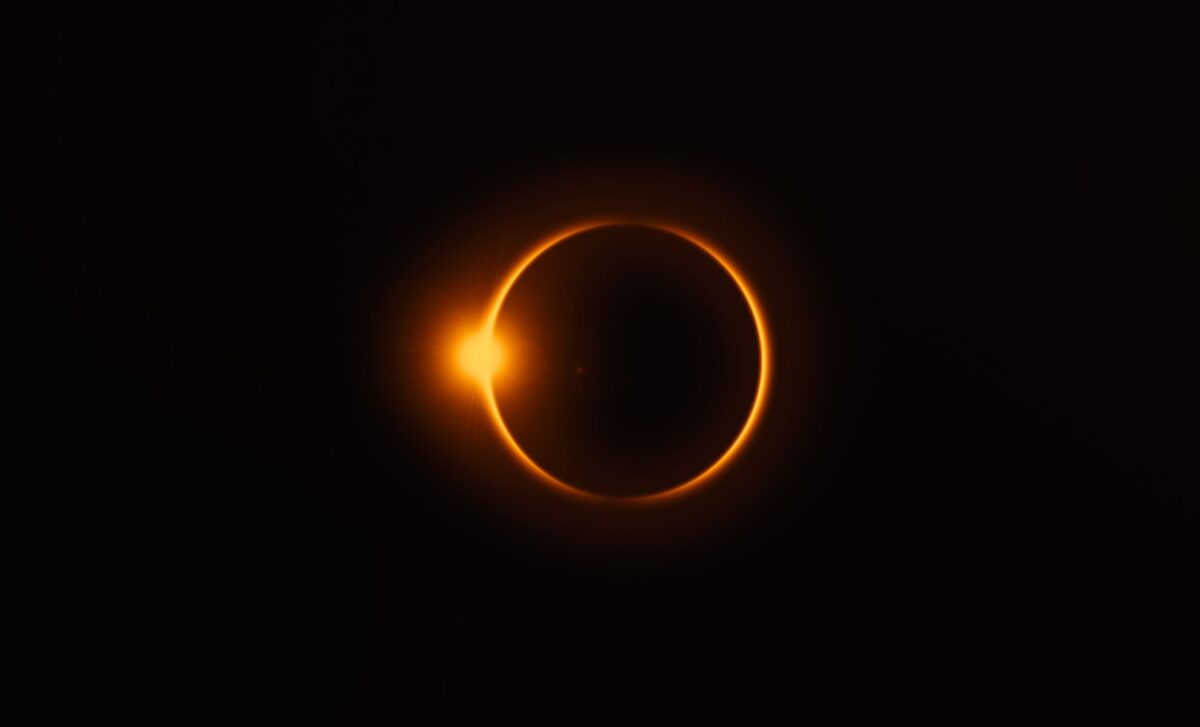
Only 16 People Might See This Eclipse, And It’ll Be the Most Spectacular in Years
In a few days, a rare annular solar eclipse will set the skies over Antarctica alight with a dramatic “ring of fire”. The spectacle will only be fully visible from a narrow, uninhabited stretch of the continent, with a handful of research stations falling within the celestial event’s path. Elsewhere, a partial eclipse will touch parts of southern Africa, South America, and the surrounding oceans.
Given the extreme location and limited visibility zone, this phenomenon will likely go unseen by most of the world. But for researchers stationed in Antarctica or adventurers aboard cruise vessels in the right place at the right time, it promises a brief but spectacular display in one of the most isolated environments on Earth.
Eclipse Path Limited To Antarctica
The antumbral shadow of the Moon, the area where the full annular eclipse can be seen, will travel across a 2,661-mile stretch of mainland Antarctica, from 11:42 to 12:41 UTC, according to Space.com. Only two inhabited locations fall within this narrow band: Concordia Station, a French-Italian base, and Mirny Station, operated by Russia.
At Concordia, annularity will last 2 minutes and 1 second, with the Sun positioned 5 degrees above the horizon. Mirny will experience 1 minute and 52 seconds of annularity, with the Sun slightly higher at 10 degrees. Outside these points, no towns, cities, or tourist infrastructure exist, making access extremely difficult. Aseclipse meteorologist Jay Anderson noted:
“It’s a challenge to reach and there are only two inhabited locations within the annular shadow, neither of which is set up to welcome tourists.”
More Regions to Witness a Partial Eclipse
While the ring of fire itself will be confined to Antarctica, a partial eclipse will be visible over a much larger region. This includes several Antarctic research bases, parts of southeastern Africa, the southern tip of South America, and stretches of the Pacific, Atlantic, and Indian Oceans.
Space.com lists various locations and their expected eclipse coverage: A.B. Dobrowolski Station (Poland) will see 92% of the Sun covered; McMurdo Station (US), 86%; and Durban, South Africa, 16%. Even distant areas such as Port Louis (Mauritius) and Ushuaia (Argentina) will witness at least a faint solar bite, though typically less than 10% of coverage. The list includes data from more than a dozen stations and cities within the partial eclipse zone.
Cloud Cover May Interfere
According to Eclipsophile.com, the likelihood of clear skies over much of Antarctica’s coast is low. Mirny Station, for example, averages 65% cloud cover in February, while Concordia, despite being colder, has a clearer profile with about 35% coverage during the same period.
An intriguing but unpredictable factor is the eclipse-induced cooling effect, where the sudden temperature drop may disrupt local cloud formation. Space.com notes that this can cause convective clouds to dissipate, improving visibility in certain cases. Still, with temperatures dropping as low as -112°F (-80°C) in parts of the continent, observers will be facing extreme conditions even if skies do clear.
First Appeared on
Source link






