


Opinion: If You Think the End of the Iran War Will Lead to a “Trump Bump” on Wall Street, You’ll Be Sorely Disappointed
During Donald Trump’s first term in office (Jan. 20, 2017 – Jan. 20, 2021), he oversaw some of the highest annualized stock market returns of any president since the late 1890s. When his term concluded, the ageless Dow Jones Industrial Average (^DJI 0.13%), broad-based S&P 500 (^GSPC +0.11%), and tech-dependent Nasdaq Composite (^IXIC +0.18%) gained 57%, 70%, and 142%, respectively.
However, President Trump’s tenure hasn’t been without several bouts of historic volatility (e.g., the five-week COVID-19 crash in February-March 2020 and the one-week tariff tantrum in early April 2025). The latest episode of heightened volatility, caused by the Iran war, sent both the Dow and Nasdaq Composite into correction territory (as of the closing bell on March 27), with the S&P 500 enduring a meaningful pullback.
The widespread belief among investors is that a quick end to the Iran war will stem near-term uncertainty and lead to a “Trump bump” for equities. While this thesis makes sense on paper, it ignores the bigger picture and is likely to leave investors sorely disappointed.
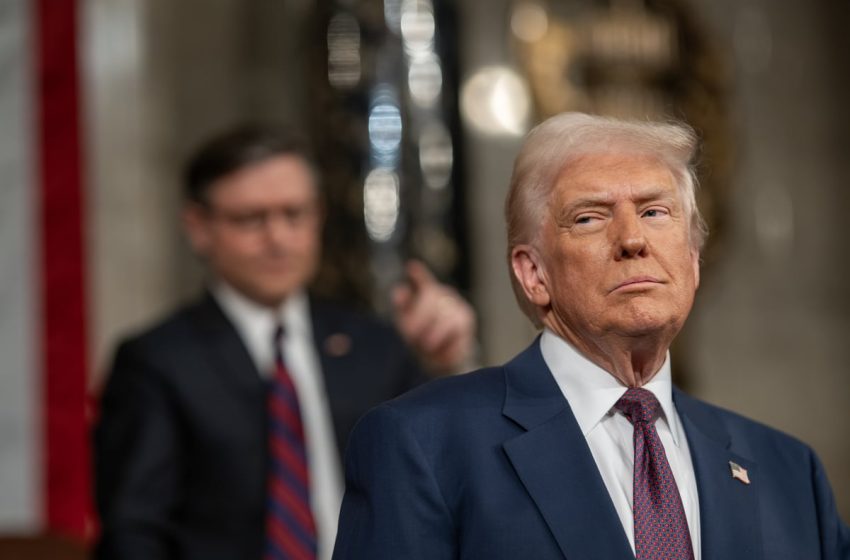
President Trump delivering remarks. Image source: Official White House Photo.
Investors are wagering on a short conflict and quick bounce-back for equities
On Feb. 28, the U.S. and Israel began military operations against Iran, which, as of this writing in the late evening of March 30, are ongoing.
Shortly after the attacks began against Iran, it closed the Strait of Hormuz to virtually all oil exports. This roughly 30-milewide channel between Iran and Oman has 20 million barrels of petroleum liquids traverse it daily (roughly a fifth of the world’s demand).
When the supply of an in-demand good or service is constrained/limited, the law of supply and demand states that prices will rise until demand tapers off. In the wake of this virtual closure, crude oil prices have skyrocketed. The average price of a gallon of regular gas has jumped by more than $1 over the last month to $3.99 as of March 30, according to data from AAA. We’ve also witnessed the price of West Texas Intermediate crude close above $100 per barrel for the first time since July 2022.
The logic is that if President Trump and/or his administration can negotiate a ceasefire or an end to the military operations, the reopening of the Strait of Hormuz would halt the largest energy supply disruption in history. The expectation is that crude oil prices would fall, thereby giving consumers and businesses hope that lower transportation and/or production costs are around the corner.
While this scenario can’t be ruled out, it overlooks a much bigger problem that goes well beyond conflict in the Middle East — and it’ll very likely stamp out any chance of a sustained Trump bump in stocks when the Iran war concludes.
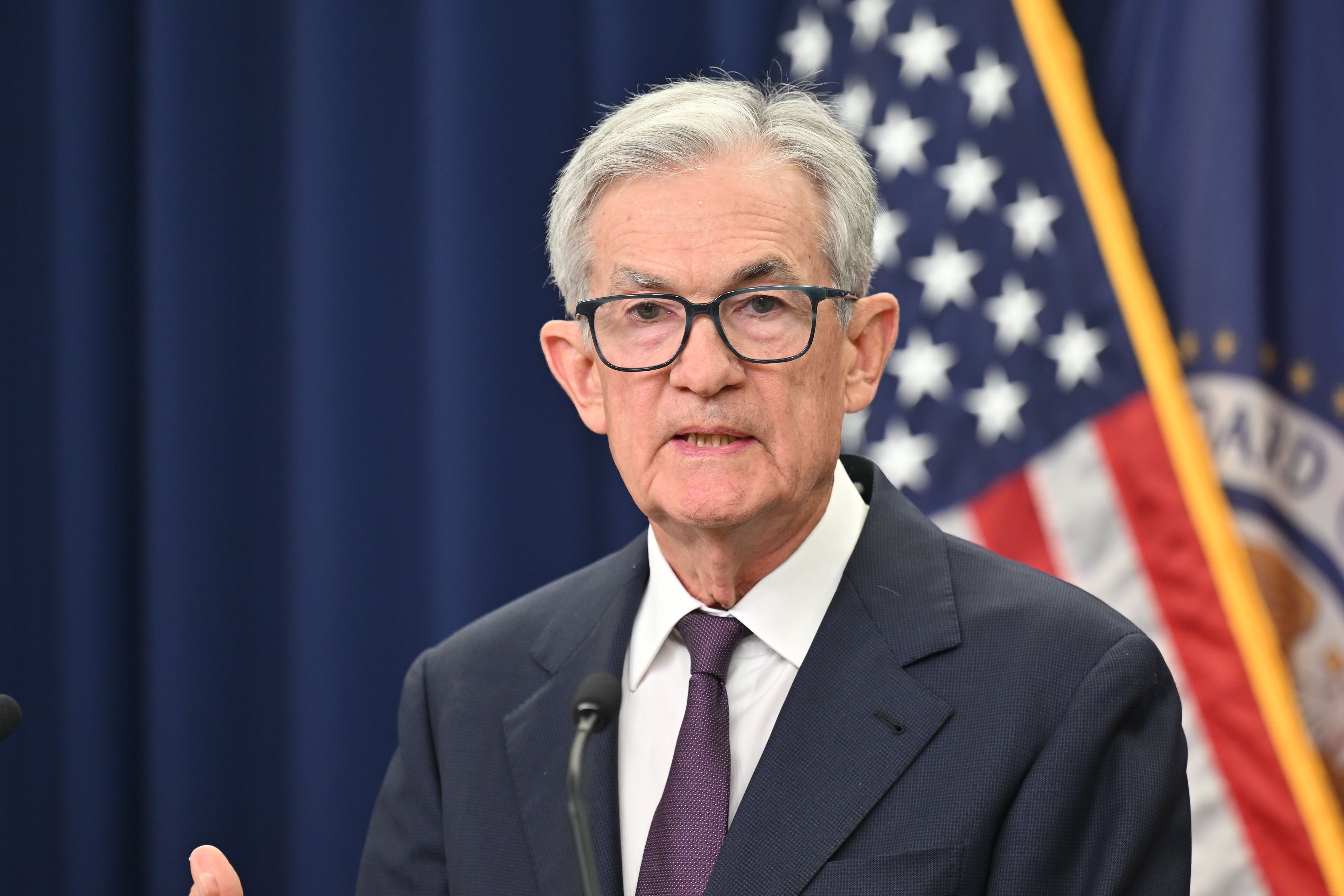
Fed Chair Jerome Powell delivering remarks. Image source: Official Federal Reserve Photo.
Opinion: The Iran war is going to demonstrably shift the Fed’s monetary policy
Although the most immediate impact of the Iran war has been felt at the gas pump, there are far bigger implications for the U.S. economy. Oil price shocks affect all aspects of the corporate supply chain, meaning they’ll significantly impact the U.S. inflation rate.
In mid-March, the U.S. Bureau of Labor Statistics released the February inflation report, which showed a trailing 12-month increase of 2.4%. Based on the latest estimates from the Federal Reserve Bank of Cleveland’s Inflation Nowcasting tool, the Consumer Price Index is expected to come in at 3.16% for March. A 76-basis-point month-over-month increase is massive — and very likely more than a one-month issue.
The old adage about fuel prices is that they rise like a rocket and fall like a feather during crude oil shock events. Even if the Iran war were to end rather quickly, the effects of a rapid increase in energy commodities are likely to ripple through the U.S. economy for several quarters to come.
Keep in mind that this isn’t the only inflationary catalyst consumers and businesses are contending with at the moment. Fed Chair Jerome Powell has repeatedly pointed to sticky goods sector inflation caused by President Trump’s tariffs as a reason the U.S. inflation rate is above the central bank’s long-term target of 2%.
Professional and everyday investors are counting on dovish monetary policy to power a historically expensive stock market even higher. The Federal Open Market Committee (FOMC) — the 12-person body, including Fed Chair Powell, responsible for setting the nation’s monetary policy — has cut the federal funds target rate six times since September 2024.
The Fed’s preferred measure of inflation (Core PCE) moved up to 3.1% in January, the highest level in 22 months. That was the 59th consecutive reading above the Fed’s 2% target level. There will be no Fed rate cut next week and one could make a strong case for a rate hike. pic.twitter.com/s3GcBZvceD
— Charlie Bilello (@charliebilello) March 13, 2026
Entering 2026, there was a strong belief that the FOMC would oversee several rate cuts. But that was before the largest energy supply disruption in history sent crude oil prices soaring. With inflation expected to jump dramatically in March and likely continue on an upward trajectory for at least a few months thereafter, the impetus for rate cuts is effectively gone.
In fact, a strong argument can be made that the Fed is more likely to completely shift its stance on monetary policy and increase the federal funds target rate before the end of 2026. The Federal Reserve Bank of Atlanta’s Market Probability Tracker suggests there’s a 12% chance of a rate cut by June 17 and a 34% chance of a rate hike by the same date.
The growing potential for the central bank to turn hawkish more than outweighs any near-term positive for equities. Higher borrowing costs would almost certainly slow tech growth and expose a pricey stock market that had been propped up by the expectation of additional rate cuts.
While the immediate reaction to an eventual end of the Iran war is likely to be positive, the bigger picture is going to stymie any Trump bump and leave investors disappointed.
First Appeared on
Source link






