


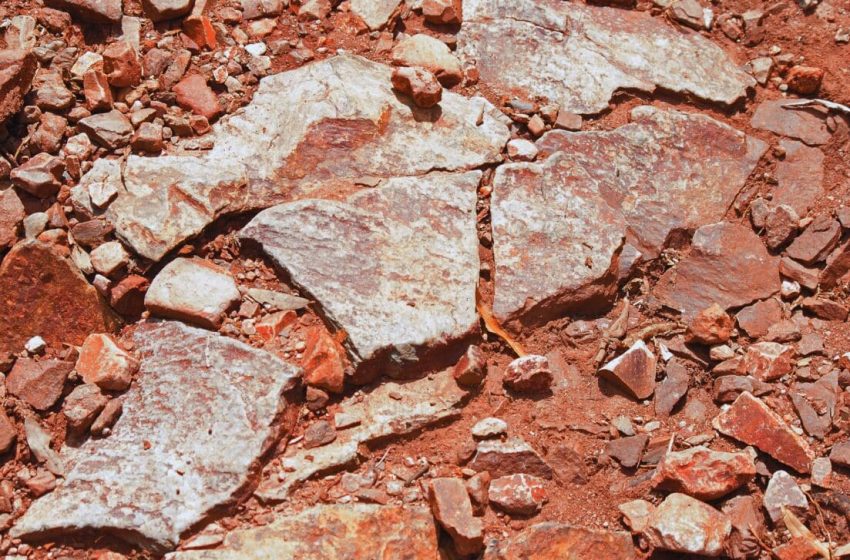
Paleontologists Smashed Open Red Rocks… and Found Perfectly Preserved Fossils
Beneath quiet farmland in New South Wales, researchers stumbled upon a site that defies scientific expectations. Hidden within layers of deep red, iron-rich rock, long overlooked by fossil hunters, was something no one saw coming.
As they cracked open the seemingly ordinary stones, scientists uncovered fossils of astonishing precision:soft tissues, internal organs, even cellular details. All preserved in a type of rock once thought incapable of such preservation.
A Rainforest Locked in Rust
The level of preservation in McGraths Flat fossils is striking. Researchers found not just bones or shells, but soft tissues: spider hairs, insect eyes, internal organs, and even pigment cells. According to a study published in Gondwana Research, these structures were preserved because of the ultrafine particles, just 0.005 millimeters across, making up the ferricrete. These particles filled in the tissues with such detail that even nerve cells could be observed.
Matthew McCurry, Tara Djokic, and Patrick Smith from the Australian Museum Research Institute led the analysis of the site. Their research emphasized the rarity of such preservation for terrestrial life, which is much less commonly fossilized in this way compared to marine organisms.
Fossilization Reimagined
For decades, paleontologists considered iron-rich environments to be poor candidates for fossilization. These conditions were typically associated with banded iron formations from Earth’s oxygen-depleted oceans, dating back 2.5 billion years. In more recent geological periods, iron was thought to degrade organic material due to its oxidative properties.
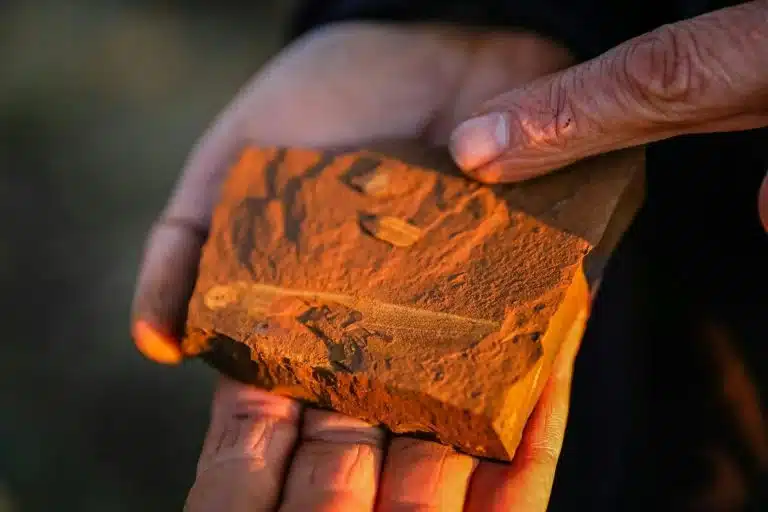
But McGraths Flat tells a different story. According to the Australian Museum Research Institute team, the site formed under warm, humid rainforest conditions. The authors added:
“Acidic groundwater carried the dissolved iron underground until it reached a river system with an oxbow lake. There, the iron precipitated in the water column as ultra fine iron-oxyhydroxide sediment, rapidly coating dead organisms on the lake floor and replicating their soft tissue down to the cellular level, all in iron,” explained the statement.
This discovery shows that iron, far from being a destructive agent, can actually be a powerful medium for fossilization, under the right conditions. And those conditions may have existed in more places than previously recognized.
Mapping the Red Fossil Trail
Researchers think that figuring out how this site formed could act like a “guidebook” for finding similar fossil hotspots around the world. By looking for places with basalt-heavy ground, old river channels, and low levels of sulfur, scientists might uncover more hidden fossils locked inside ferricrete.
Some things to watch for: thin layers of ferricrete in areas that were once volcanic and humid. These kinds of clues could shift how fossil hunters choose their dig sites, especially in regions where red, iron-rich rock has been ignored for years.
First Appeared on
Source link






