


Peaky Blinders: The Immortal Man Review
Peaky Blinders: The Immortal Man is in select theaters on Friday, March 6, and premieres Friday, March 20 on Netflix.
Four years after the Season 6 finale and 13 years since Tommy Shelby first rode into frame on a black horse, Peaky Blinders is back, ushering in a new era for the British period crime drama now set against the backdrop of the Birmingham Blitz. But Director Tom Harper’s The Immortal Man is both a beginning and an end – a final hurrah for Cillian Murphy’s beloved antihero as he’s pulled out of self-imposed exile to settle a score as World War II rages on.
Full disclosure: I never watched the series beyond the first episode of Season 1, but after 112 minutes of viewing this film, I’m inclined to make up for lost time. That’s due in large part to Murphy, an actor brimming with so much pathos that he elevates everything he’s in. Here, as Tommy – contemplating his life of violence, the losses, and legacy while hiding out in an isolated farmhouse – you don’t need to know the ins and outs of his criminal past to recognize the heavy burden on his soul. It’s present in every shrouded glance and the stiffness of his body. It’s there in his pained eyes as ghosts of dead loved ones invade his solitary retreat, which soon morphs into stoic resolve once he realizes the chaos of war won’t let him hide away any longer.
In 1940, Birmingham was taking heavy fire from Nazi forces; bombs rained down on the midland city, aiming at munitions factories worked by local women. Their tragic deaths are devastatingly reimagined in an incendiary opening sequence that soon leads to the arrival of the Peaky Blinders, now led by Tommy’s illegitimate firstborn son, Duke, who calmly enacts violence to take ownership of the country’s weapons.
Barry Keoghan replaces Conrad Khan in the prodigal role, showcasing a less sinister edge than we’re accustomed to when he’s cast as an antagonist. Duke is really just an insecure kid with abandonment issues; he was sold by his Irish-Romani family to his father, who subsequently disappeared. His aunt Ada (Sophie Rundle), now a Member of Parliament, has zero patience for the aggressive resurgence of the Peaky Blinders under his leadership.
It’s the sort of morally ambiguous, character-driven arc that Peaky creator and writer Steven Knight is known for. Duke seeks acceptance through power, even if that means accepting a deal with the Nazis to flood the British banking system with hundreds of millions of forged banknotes in order to send the country into freefall and help Germany win the war. He sees it as an opportunity to step out of his father’s shadow, but once Ada threatens the contract, he’s forced to reckon with his actions, which Keoghan calibrates with quiet fortitude and vulnerability.
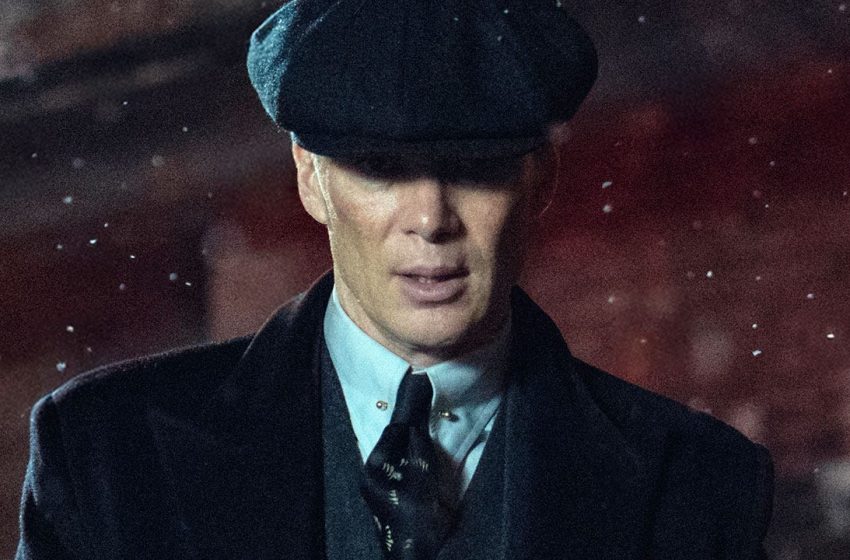
Once a suited, booted, and flat-capped Tommy returns to Birmingham, the real action begins. A tense but hilarious confrontation with a gobby (chatty) soldier at the Blinders’ haunt, the Garrison Tavern, reminds everyone who Tommy Shelby is – the type to bring a grenade to a gun fight and throw in a one-liner about music in pubs for good measure. It’s one of a few dry jokes that earn a knowing chuckle, with Packy Lee earning a fair few laughs as Tommy’s long-suffering sidekick, Johnny Dogs. Tommy’s reunion with Duke is far messier; he throttles his son and throws him around a pig sty, demanding answers about his involvement in the murder of a relative. With lesser actors, this scene might have veered into the ridiculous, but Murphy and Keoghan play it so intensely and emotively straight, you’re swept up in the image of men’s dirty behavior coming to a head.
The Immortal Man certainly has style. Fontaines DC’s Grian Chatten and Amyl and the Sniffers’ Amy Taylor add original songs to the anachronistic, atmospheric score with some recognizable needle drops from Massive Attack and Nick Cave. We see a muddied Tommy riding through Birmingham’s battered streets like he’s just come from the Front Line trenches with citizens reaching out to him – a messiah returned to save them. Tim Roth’s smooth-talking Nazi sympathizer Beckett makes his entrance with a casual “heil f**king Hitler.” Roth is always a reliably likeable baddie, and here he exudes a charmingly nonchalant energy for a war profiteer.
Rebecca Ferguson oozes into Tommy’s life as a Roma fortune teller, the camera shifting seductively as she embodies his dead lover and manipulates him out of stagnation. Peaky Blinders clearly celebrates the Irish-Romani roots of its characters, and it makes sure its mystical practices, language, and ceremonies are sensitively handled…though I do wonder how many actors with that particular heritage were cast in these roles.
The elephant in the room is Arthur Shelby, Tommy’s volatile brother, played by Paul Anderson in the series. Legal issues regarding substance abuse prevented his involvement in the film, and his absence is felt in a shakily-handled flashback subplot. But devotees will be happy to see the returning Ned Dennehy as Charlie Strong and Stephen Graham as union convenor Hayden Stagg, who both aid Tommy in his mission to foil the Nazi’s counterfeit scheme in the Liverpool dockhouses. It’s a tense, action-packed finale complete with exploding canal boats, Nazis getting punched, and a heartbreaking showdown between Tommy, Beckett, and Duke.
The Immortal Man may not have reinvented the wheel with conventional wartime escapades, but it ticks most of the boxes for Peaky Blinders fans, with Murphy and the cast playing a blinder.
First Appeared on
Source link






