


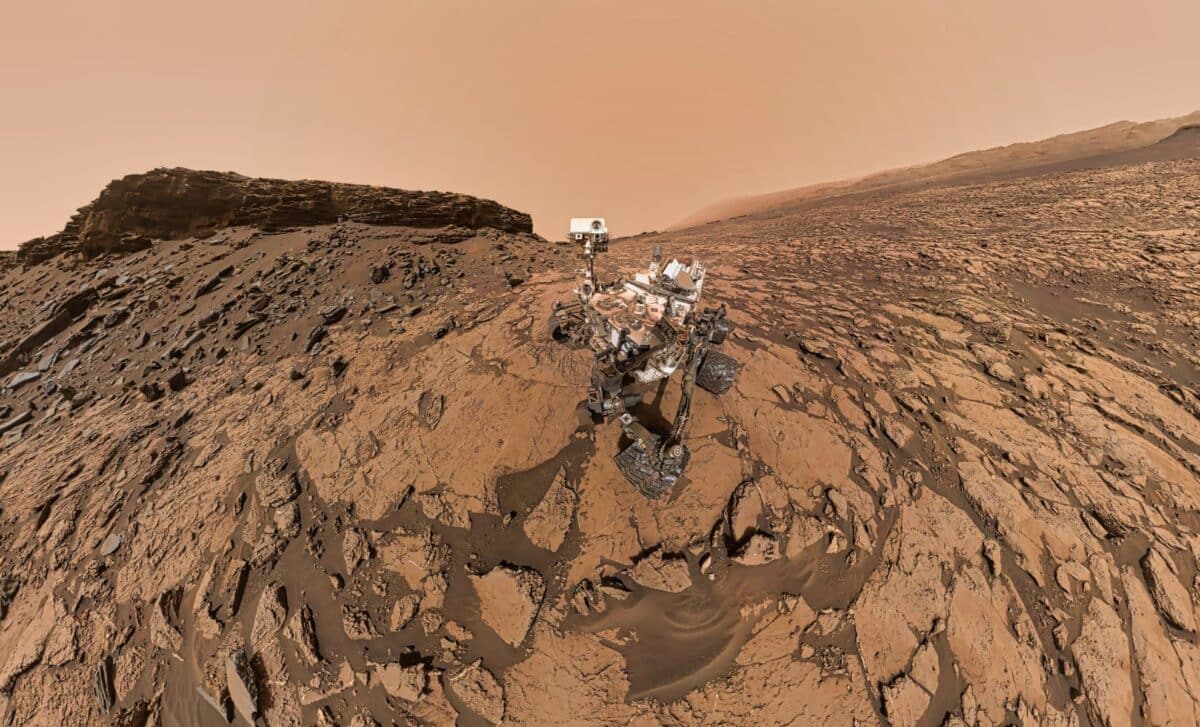
Perseverance Rover Spots Something Mysterious from Outer Space!
NASA’s Perseverance rover has made a significant discovery on Mars: a meteorite, which could provide vital clues about the planet’s past and its interactions with space objects. The rover has been exploring Mars since its landing in February 2021, with the primary mission of searching for signs of ancient life.
This discovery, made in the Jezero Crater, marks the first time Perseverance has identified a meteorite. This finding could help scientists better understand Mars’ geological history and its potential to preserve traces from the broader solar system.
Phippsaksla: A Mysterious Visitor from Space
While exploring the Jezero Crater, Perseverance came across a rock that seemed to stand out from its surroundings. Initially dubbed Phippsaksla, the rock’s unusual appearance prompted the rover’s team to perform additional analysis. According to NASA, Perseverance used its SuperCam to scan the rock’s composition, revealing that it contained high levels of iron and nickel.
“This element combination is usually associated with iron-nickel meteorites formed in the core of large asteroids, suggesting that this rock formed elsewhere in the solar system.”
This discovery is significant for multiple reasons. Meteorites like Phippsaksla can help scientists understand the effects of impacts on Mars and provide insights into the materials that existed in the early solar system. Also, since Mars lacks the protective atmosphere of Earth, objects from space, such as meteorites, are often preserved on the Martian surface for long periods.
How Meteorites Illuminate the Mysteries of Mars and Beyond
As stated by the American Space Agency, some meteorites contain materials that date back to a time before the formation of our solar system, making them valuable tools for studying the conditions that existed billions of years ago. These remnants from space can provide insights into how our solar system formed and the types of materials that were present during its early stages.
The Phippsaksla meteorite could also help scientists further test theories about how Mars interacts with such objects. It is believed that iron-based meteorites on the Red Planet are better able to resist erosion, and the preserved condition of meteorites found on the planet’s surface could support this hypothesis. As mentioned in the report:
“Due to the exotic composition of this rock, more investigation by the team needs to be done to confirm its status as a meteorite. But if this rock is deemed to be a meteorite Perseverance can at long last add itself to the list of Mars rovers who have investigated the fragments of rocky visitors to Mars.”
Perseverance’s Ongoing Mission
Since its landing, Perseverance has been working to collect samples from the Jezero Crater in the hope of finding signs of ancient life. Studying meteorites helps scientists piece together the broader context of Mars’ past, including its climate and the potential for life-supporting conditions.
Despite the excitement over Phippsaksla, this is not the first time a Martian rover has found meteorites. Previous rovers, such as Curiosity, have discovered meteorites like Cacao and Lebanon. However, Perseverance’s finding in the Jezero Crater is especially significant due to the crater’s history as a former lakebed, which may offer more context about Mars’ ancient environment and its capacity to preserve remnants of cosmic debris like meteorites.
First Appeared on
Source link






