


Pfizer (PFE) earnings Q4 2025
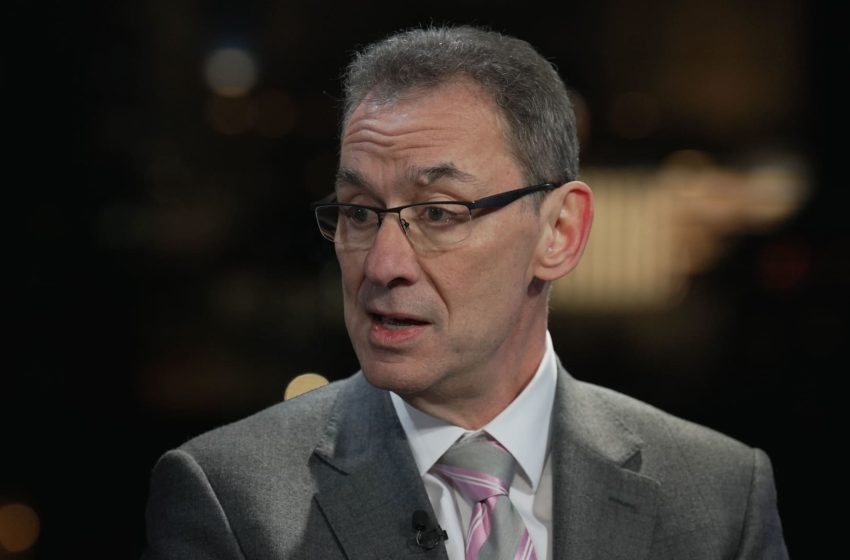
Albert Bourla, CEO of Pfizer, speaking on Squawk on the Street at the World Economic Forum in Davos, Switzerland on Jan. 20, 2026.
Oscar Molina | CNBC
Pfizer on Tuesday reported fourth-quarter results that topped estimates even amid dwindling demand for its Covid products, while reaffirming its modest 2026 guidance that rattled investors in December.
The pharmaceutical giant is looking to longer-term investments in its pipeline, including its $10 billion acquisition of the obesity biotech Metsera, to counter waning Covid product sales and declines from older drugs. Pfizer moved to show the promise of that investment Tuesday, when it also reported mid-stage data showing that an obesity injection from Metsera can be taken once a month and drive solid weight loss.
In addition, Pfizer is on track to cut costs by about $7.7 billion by the end of 2027 as part of two separate initiatives.
Here’s what the company reported for the fourth quarter compared with what Wall Street was expecting, based on a survey of analysts by LSEG:
- Earnings per share: 66 cents adjusted vs. 57 cents expected
- Revenue: $17.56 billion vs. $16.95 billion expected
Pfizer reported revenue of $17.56 billion for the fourth quarter, down around 1% from the same period a year ago. That is largely because of lower demand for its Covid vaccine and Paxlovid, an antiviral pill for the virus.
The company booked a net loss of $1.65 billion, or 29 cents per share. That compares with net income of $410 million, or 7 cents per share, during the same period a year ago.
Excluding certain items, including restructuring charges and costs associated with intangible assets, the company posted earnings per share of 66 cents for the quarter.
Pfizer expects 2026 adjusted profit to come in between $2.80 and $3 per share, and revenue to total $59.5 billion to $62.5 billion. Those sales would largely be flat compared to 2025 revenue.
Pfizer previously said the lackluster revenue outlook comes in part from declining sales of its Covid vaccine and antiviral pill Paxlovid, which it expects to fall by about $1.5 billion year-over-year to $5 billion.
The company also pointed to another roughly $1.5 billion year-over-year expected drop in sales due to certain products losing their market exclusivity. Some blockbuster drugs, such as the company’s pneumonia vaccine Prevnar, are facing more competition from rivals.
In December, Pfizer CFO Dave Denton told investors there is also “price compression and margin compression baked into” the company’s 2026 guidance as it plans to provide “deeper discounts” in its Medicaid business as part of a landmark drug pricing deal struck with President Donald Trump.
Under that agreement, Pfizer agreed to sell its existing drugs to Medicaid patients at the lowest price offered in other developed countries and guarantee the same “most-favored-nation” pricing on its new drugs for Medicare, Medicaid and commercial payers. In return, the company will get a three-year exemption from tariffs.
Pfizer’s Xeljanz and Xeljanz XR, treatments for rheumatoid arthritis and other inflammatory conditions, were selected in January for the third round of Medicare drug price negotiations. New negotiated prices will take into effect in 2028.
First Appeared on
Source link






