


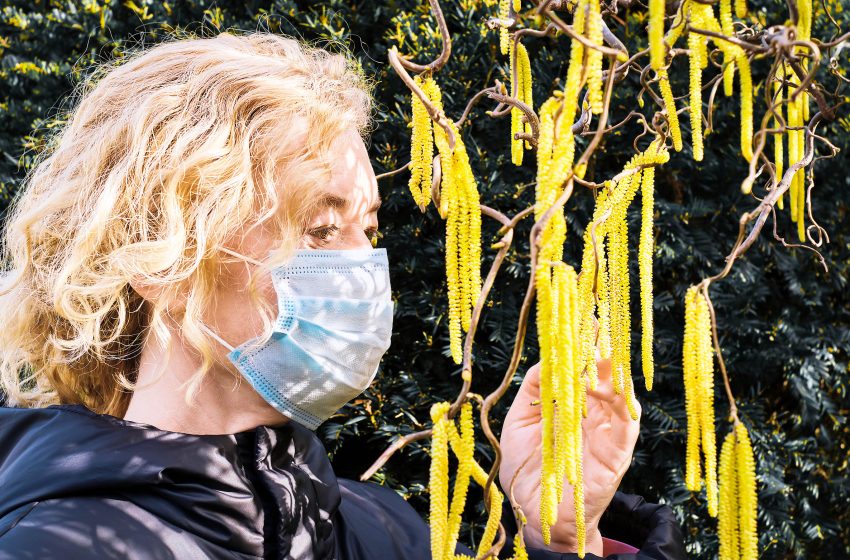
Pollen allergy season is getting longer every year due to city lights
Each spring, pollen season sweeps in and turns mild, sunny days into a struggle for millions of people with allergies.
What should feel like a welcome change in the weather often brings sneezing, itchy eyes, and constant congestion instead.
Now, scientists are confirming that pollen season is lasting longer each year, and the cause is an unlikely source.
City lights and pollen season
Artificial light that illuminates cities at night can delay the end of pollen season, keeping allergens in the air longer than usual.
The extended season alters the timing and length of allergen exposure for people living in cities, prolonging the misery of millions of people each year.
Dr. Lin Meng at Vanderbilt University traced this pattern by documenting how outdoor night lighting corresponds with delayed shutdown of pollen activity.
Across Northeastern cities, artificial light at night (ALAN) from outdoor fixtures aligned with longer pollen seasons.
Artificial light at night includes streetlights, building lights, and other outdoor illumination that brightens the night beyond natural darkness and alters biological timing.
“ALAN’s impact on the end of the season is larger than on the start of the season,” wrote Dr. Meng.
Plants follow day length
Plants run on light and dark, and many species start flowering when day length crosses a seasonal threshold.
That clock depends on photoperiod, the hours of daylight a plant senses, and it guides when buds open.
ALAN adds hours of light that plants treat as daytime, and it can delay the darkness cue that ends flowering.
Even modest light can push these cues off schedule, especially near streetlights that shine steadily through autumn.
Why fall ends later
Late-season pollen can linger because trees and weeds keep working longer when nights stay bright.
Light at night can delay senescence, the natural leaf aging that ends growth, by keeping light-sensing proteins active.
Warm spells often cue early spring buds, but darkness cues fall dormancy, so ALAN can have outsized influence then.
That makes late-season lighting a target for city action, since a light shield can reduce exposure without touching weather.
Counting pollen in the air
Daily pollen counts come from a certified network that samples air and counts grains under microscopes.
Technicians pull a known volume of air through a trap, then convert what sticks into a daily concentration.
For this project, the team used 2012-2023 records from 12 Northeastern stations, then matched them to satellite night brightness.
The findings showed strong associations rather than direct cause, meaning experiments will matter before cities rely on lighting changes alone.
When exposure turns severe
Longer seasons hurt most when high-pollen days pile up, and the study tracked how often exposure reached severe levels.
In ALAN areas, 27% of season days met the severe cutoff, compared with 17% where nights stayed dark.
Breathing these particles can trigger histamine, a chemical that causes swelling and itching, with symptoms that can last for hours.
More severe days also strain clinics and workplaces, because people need more medication and more time indoors.
When millions share exposure
A databrief from the Centers for Disease Control and Prevention estimated that 25.7% of U.S. adults had seasonal allergies in 2021.
Separate global mapping shows that more than 80% of people now live under light-polluted skies.
Dense neighborhoods concentrate both problems, so residents can face weeks of symptoms while streetlights keep plants on schedule.
That overlap turns lighting into a public issue, because choices made for one block can affect an entire city.
Heat and rain still matter
Warm years still pushed spring pollen earlier, but light at night kept showing up after the team accounted for weather.
Temperature speeds plant growth, because enzymes run faster in warmth, while precipitation can wash pollen down on some days.
However, the patterns tied to ALAN stayed consistent across wet and dry sites, suggesting light works through a separate pathway.
Cities cannot cool their way out of this alone, since dimmer nights may shorten exposure even as climates warm.
Streetlight choices can help
Lighting principles emphasize using only the light that is needed, aiming it downward, and favoring warmer tones.
Shielded fixtures cut stray rays, which reduces the amount of light that reaches leaves and buds after midnight.
Timers and motion sensors also limit exposure, and they save energy while keeping sidewalks and intersections lit when used.
Small design changes can add up across a city, because every reduced hour weakens the light signal that plants respond to.
Pollen season, lights, and urban planning
City foresters often pick fast-growing trees for shade, yet some common choices also release highly allergenic pollen.
Many street species respond strongly to light cues, so extra illumination can lengthen flowering and keep pollen production going.
Planting lower-pollen species near schools, apartments, and clinics can cut exposure, especially when planners avoid the brightest corners.
Tree selection cannot replace better lighting, but it can reduce the amount of pollen launched into dense neighborhoods.
Together, the evidence suggests that city light can stretch pollen exposure by changing plant timing and increasing the number of hard days.
Future work can test cause more directly, while planners can start reducing unnecessary nighttime light and tracking health impacts.
The study is published in the journal PNAS Nexus.
—–
Like what you read? Subscribe to our newsletter for engaging articles, exclusive content, and the latest updates.
Check us out on EarthSnap, a free app brought to you by Eric Ralls and Earth.com.
—–
First Appeared on
Source link






