


Pregnancy and antidepressants, Moderna: Morning Rounds
Get your daily dose of health and medicine every weekday with STAT’s free newsletter Morning Rounds. Sign up here.
Good morning. Sorry to keep talking about the weather, but I got outside in mid-thirties weather yesterday and I felt more alive than I have in weeks. Is it time for the first fake spring yet?
The latest on Moderna’s rejected vaccine app
In case you missed it, another Lizzy Lawrence scoop came in yesterday: Top FDA official Vinay Prasad overruled the agency’s reviewers when he refused to accept Moderna’s application for a new flu vaccine. Three agency officials familiar with the matter told Lizzy that a team of career scientists was ready to review Moderna’s application.
A senior FDA official said that if the company comes back to the agency, “maybe even show[ing] some humility,” then perhaps the decision would change. Read Lizzy’s story, even if you read it early yesterday when she first published. She’s added more good details since then.
Gotta catch ’em all (HHS posters?)
HHS secretary Robert F. Kennedy Jr. gathered supporters at agency headquarters in downtown D.C. yesterday to celebrate the first MAHA Super Bowl commercial. If you missed that spot, it features boxer Mike Tyson talking about obesity, which runs in his family, and how Americans need to “eat real food.”
HHS has gone all-in on the “real food” idea: At yesterday’s rally, poster boards balanced on every seat included the phrase alongside an image of a carrot, egg, apple, or a slab of salmon or beef, among other options. “We are putting the full weight of the American government behind one goal,” Kennedy said.
The posters were a talking point at agency events last month, as attendees tried to figure out where to keep them during speeches (they make for very stiff chair-backs). Now they have become something else: cheerleading tools and, to some, collectibles. HHS staff stood near the stage on Tuesday, waving posters around and urging the crowd to join in as Kennedy, Tyson, and others spoke. Afterward, attendees poked around for a poster to take, or asked to swap the depicted food items.
“Ooh, banana!” one woman crooned. “I already have that one,” said another. An event goer who works in the dairy industry said her co-worker brought back a whole milk poster from the dietary guidelines launch. One special poster, in which Kennedy is pictured in black and white, with Tyson’s signature face tattoo, was not up for grabs. — Isabella Cueto
This item also ran in D.C. Diagnosis.
New questions about lung cancer in ‘never-smokers’
As the number of people who smoke has gone down over the decades, those who never smoked have begun to make up a greater proportion of lung cancer cases overall. STAT’s Sharon Begley, who herself never smoked, wrote about this in 2021 just days before her own death from the disease. At the time, it was unclear whether the absolute number of lung cancer cases among never-smokers was increasing, even though the proportion clearly was.
Five years later, there’s still debate around those numbers. STAT’s Andrew Joseph spoke with lung cancer biologist Deborah Caswell about the questions that remain. It’s a really accessible conversation about the science surrounding the disease, including why women’s risk is higher than men’s and what it means for someone to present with “nonspecific symptoms.” I recommend giving it a read.
A growing fentanyl harm reduction move
Over the last decade, there’s been a rapid, organic shift among drug users away from injection and towards smoking. The change is a clear example of how people’s behavior, no matter the context, can significantly affect their health outcomes. (Opting out of needles can practically eliminate a person’s risk for skin wounds or certain infections, for example.)
The shift has also revealed how, too often, public opinion and government policy are out of step with the basic realities of drug use epidemiology. “My favorite thing about smoking as overdose prevention is that smoking is a social experience,” said Jim Duffy, the founder of Smoke Works, which distributes “injection alternatives” like pipes. “We lose people when they’re alone.”
Read more from STAT’s Lev Facher on what changing behaviors mean for public health and addiction treatment. And to get an up-close look at how harm reduction works, watch the accompanying video. Lev and Alex Hogan visited Duffy at the Smoke Works headquarters, then hiked into the New Hampshire woods with a local worker distributing supplies to folks in a remote homeless encampment.
What happens when pregnant people discontinue antidepressants?
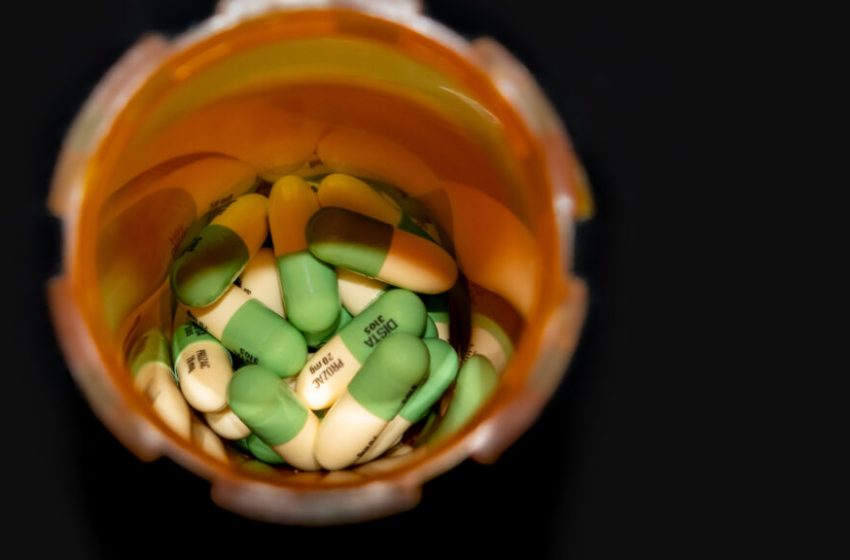
People who discontinue antidepressants during pregnancy are almost twice as likely to have a mental health emergency as those who continue on their meds, according to a study abstract presented yesterday at the Society for Maternal-Fetal Medicine’s annual pregnancy meeting. Those emergencies peaked in the first and ninth month of pregnancy, data from nearly 4,000 patients showed.
Researchers analyzed a “state-based private insurance database” and found that the majority of people who had prescriptions for SSRIs or SNRIs discontinued them during pregnancy. It’s an important time for this research: a recent FDA panel on antidepressant use during pregnancy elevated skeptics of the drugs, and officials have indicated that they’re considering adding warning labels for pregnant people. “Treatment for mental health conditions should not be withheld during pregnancy,” the study authors concluded in the abstract.
An uptick in rejections with little explanation
At least 40 life sciences students have had their applications for the National Science Foundation’s high-profile early-career fellowship program “returned without review.” Effectively, these applications have been rejected before outside experts got a chance to judge the scientific merit of their proposals.
STAT’s Jonathan Wosen writes about this disappointing phenomenon being tracked by Grant Witness and first reported by Eos. “A lot of students are hearing all these things that are happening, but they may not be at the forefront of submitting large NSF or large NIH grants. They’re getting a taste of it 1770901425,” computational biologist and master’s advisor Jill Wegrzyn told Jonathan. Read more on how this experience might alter the course of some students’ careers.
What we’re reading
-
A tragedy of early Covid has finally been explained, The Atlantic
-
Intersex Texans fear new law will force gender identities, Texas Tribune
- A Greek myth explains the biggest challenge facing oncologists like me, STAT
- Tens of thousands of mothers were flagged to police over flawed drug tests at childbirth, The Marshall Project
- WHO director-general calls plans for U.S.-funded vaccine trial ‘unethical,’ STAT
First Appeared on
Source link






