


‘Project Hail Mary’ Writer on Ryan Gosling, Making ‘The Matrix 5’
The last time Drew Goddard adapted one of Andy Weir’s books, it earned him an Oscar nomination. Plus, “The Martian,” the film that Goddard wrote, was a blockbuster hit. But when he got the call to handle screenplay duties on “Project Hail Mary,” Weir’s bestselling story of a science teacher on a mission to save humanity with the help of a crab-like alien, he hesitated.
“‘The Martian’ was such a magical experience, but there’s something about going back to the well,” Goddard said. “You worry you’re just trying to do an imitation of a previous movie. But then I read the book and loved it. It was much more challenging to adapt, because the scope was much bigger. And it’s got this deep, emotional story about a human and an alien that I couldn’t resist.”
Goddard is in a Manhattan hotel room, three days removed from the world premiere of “Project Hail Mary.” The $200 million science-fiction epic stars Ryan Gosling and was directed by Phil Lord and Christopher Miller, the team behind “21 Jump Street” and the “Spider-Verse” animated franchise. Critics have widely embraced the space epic, praising its humor and heart, and the film is expected to dominate the box office this weekend. But Goddard, one of Hollywood’s most in-demand filmmakers and writers, won’t be checking the grosses.
“I’ve been working on this film for six years — we had COVID and the strikes — so it took a really long time,” Goddard says. “It’s enjoyable to have people finally discovering it, but looking at the box office results is like checking out your old graduation photos. It seems so long ago. I’m just grateful that we got to make it.”
Goddard has plenty of other things keeping him busy. “High Potential,” a crime series he created for ABC, recently got picked up for a third season, and he’s executive producing Netflix’s “Pagans,” a supernatural drama from “Say Nothing” creator Joshua Zetumer. Then he’s entering “The Matrix” and taking over writing and directing duties from the Wachowskis on a reboot of the iconic sci-fi series.
Why were you drawn to “Project Hail Mary”?
Andy really wanted to do something different with this alien. He doesn’t speak our language. He doesn’t even have a face. He doesn’t have expressive features. He can’t exist in the same atmosphere. That sounds good when you read it, but then you go, how are we going to dramatize this? It scared me to death, and that’s where I like to live.
Beyond creating a believable alien character, what other challenges did you face in adapting “Project Hail Mary”?
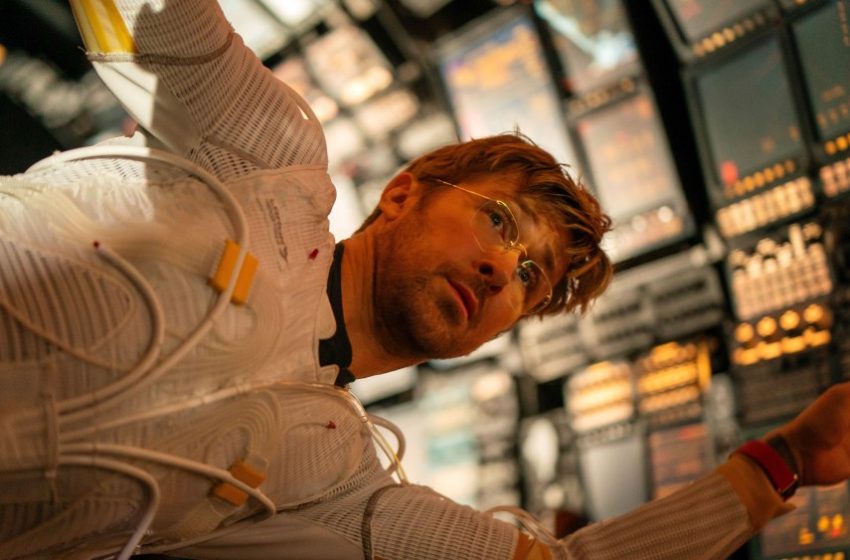
So much of the story takes place from the protagonist’s point of view and Ryan’s character doesn’t know what’s happening initially. He’s trying to figure out why he’s in space. And for half of the movie, he doesn’t have anyone to talk to. So how do you make that work for a movie? Let’s be honest, most scenes in movies are people talking. Ryan really wanted to be true to what the character was going through. In early drafts, I used some of my old crutches from “The Martian,” where Matt Damon is talking to camera, because scientists document their work. But Ryan rightfully pointed out that his character is a high school teacher who finds himself in space. He’s not going to take the time to document everything. He’s just trying to survive. As soon as he said it, I knew he was right.
This is based on a preexisting text, but were there movies you looked to for inspiration?
It was all rooted in Andy. When I look back, however, I see James Cameron’s influence on structure. He from my point of view, for big event movies, there’s nobody better at structure. If you look at something like “Titanic,” we meet two kids, they fall in love, we root for them, the ship hits the iceberg, right? If you look at “The Abyss,” there’s a couple trying to put their marriage back together when the encounter this fantastic thing. Both these movies are about two individuals dealing with these big emotional things in the middle of wildly complicated situations.
That’s interesting because I feel like James Cameron’s writing gets knocked a lot.
It does, but unfairly. If you look at “The Terminator,” it’s a profoundly emotional film. It’s not just about a robot who shows up to kill people. It’s about this woman and how she deals with this chaos.
How did Christopher Miller and Phil Lord’s approach differ from “The Martian” director Ridley Scott’s?
They couldn’t be more different. Ridley is very formal in his approach. He storyboards himself, so he knows every shot of the movie six weeks out. Phil and Chris come from animation, which is more of an iterative process where they’re constantly trying and trying things. Neither approach is wrong. You just have to do what’s right for the movie. In “Project Hail Mary” the main character is a fish out of water. You need it to feel rough around the edges, even a little sloppy. We don’t want to feel like he’s a perfect astronaut. And then there’s the character of Rocky. I don’t know anyone else who could have realized the logistics of making that rock crab come to life. In their animation, Phil and Chris thrive in finding the humanity inside of these crazy characters. That’s what this film required.
Do Phil and Chris encourage a lot of improvisation?
Oh yeah. They are improvisation masters, and I’ve never seen anyone better at it than Ryan.
This project was greenlit before MGM was sold to Amazon. Were you worried that it might not survive the merger?
Absolutely. The sad truth is that over the course of my career, I’ve had projects at studios that have been bought by other studios so many times. Often they don’t get made. But Amazon loved what we were doing.
What are some of the films that got scrapped that you’ve worked on?
I had a big Spider-Man movie about the Sinister Six go down because of the Sony hack. My office was right on the lot, and I saw the FBI swarm in and the helicopters fly over the studio. I was sad about it, but there was literally nothing I could do to change the course of events. I suppose it was better than if they hadn’t liked the script.
You’ve been tapped to write and direct “The Matrix 5.” What’s your take on it?
I can’t say too much, because we’re still in the stage of writing it. I need to give myself space to find the best story. I think the approach will be the way I approach anything, which is, do I love it? And I love what Lana and Lilly Wachowski did with those movies. They mean so much to me and I feel like they’ve had a profound impact on my creative voice. I take this responsibility very seriously. I feel the weight of wanting to do right by the fans, wanting to do right by the creators and wanting to do right for myself as a fan.
Will Keanu Reeves and the original cast return?
I can’t speak to that.
Why do you think the fourth “Matrix” didn’t resonate as strongly at the box office?
I don’t know. It certainly resonated with me. When I watched the movie, I was deeply moved. It may be the most emotional of the of the four. I know it got caught up in the COVID times and it was when Warner Bros. was putting everything on streaming.
What’s your writing process?
I’ve sort of honed a very chaotic process, which came from my TV training, because we would have to generate 60 pages in eight days over and over. The way you would do it is you focus really intently on the story. I’m not a person that wants to do 18 drafts to find the story. I’ll do 50 drafts of outlines, then when it’s time to write, I put all that away and handwrite every script. That goes back to college where a writing teacher said, “If you work on your computer, try handwriting, because unleashing your creativity is about tricking your brain to think you’re not working.” I took that to heart. I sit outside when I write. I try to make it feel playful.
What’s a movie that you’ve seen recently and really admired for its writing?
There’s so many, but I’d have to say “Weapons.” Zach Cregger’s script is extraordinary. There was a point in “Weapons,” like an hour in, where I realized I couldn’t even blink because I was afraid to look away from the screen. I didn’t know what was about to happen. It was thrilling. And I felt the same way about “Sinners” and “Sentimental Value.”
When Obama recently said there were aliens, did you think what great marketing for “Project Hail Mary”?
I probably should have, but I didn’t. I grew up in New Mexico, so I’m well versed in alien lore. Mostly, I was excited about him mentioning it because I thought it might mean we’re gonna get new information. Andy Weir takes this seriously. He comes from a reality-based approach to science fiction. He’s thinking, if a first contact situation were to happen, what would it look like? This is his answer.
First Appeared on
Source link






