


Report says new coal plant construction surged in China in 2025
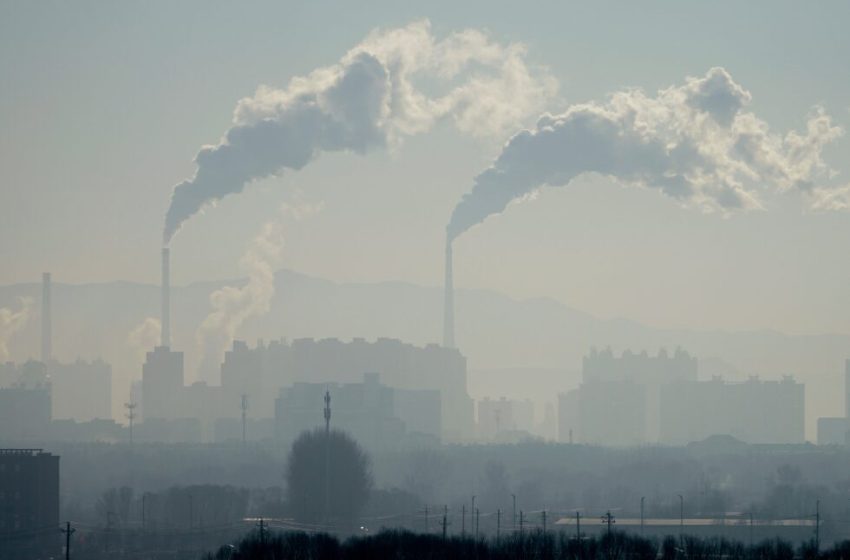
BEIJING (AP) — Even as China’s expansion of solar and wind power raced ahead in 2025, the Asian giant opened many more coal power plants than it had in recent years — raising concern about whether the world’s largest emitter will reduce carbon emissions enough to limit climate change.
More than 50 large coal units — individual boiler and turbine sets with generating capacity of 1 gigawatt or more — were commissioned in 2025, up from fewer than 20 a year over the previous decade, a research report released Tuesday said. Depending on energy use, 1 gigawatt can power from several hundred thousand to more than 2 million homes.
Overall, China brought 78 gigawatts of new coal power capacity online, a sharp uptick from previous years, according to the joint report by the Centre for Research on Energy and Clean Air, which studies air pollution and its impacts, and Global Energy Monitor, which develops databases tracking energy trends.
“The scale of the buildout is staggering,” said report co-author Christine Shearer of Global Energy Monitor. “In 2025 alone, China commissioned more coal power capacity than India did over the entire past decade.”
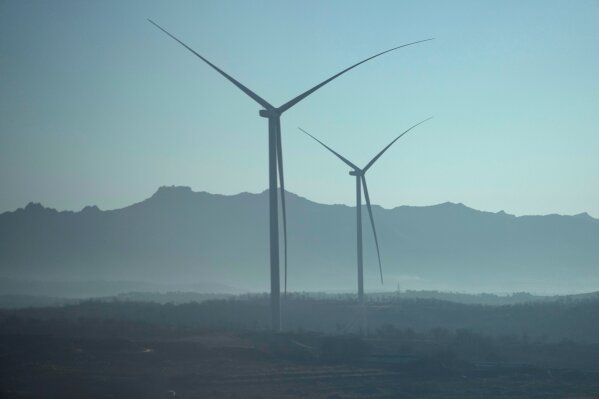
At the same time, even larger additions of wind and solar capacity nudged down the share of coal in total power generation last year. Power from coal fell about 1% as growth in cleaner energy sources covered all the increase in electricity demand last year.
China added 315 gigawatts of solar capacity and 119 gigawatts of wind in 2025, according to statistics from the government’s National Energy Administration.
Blackouts in 2021-22 prompted coal plant building spree
The massive growth in wind and solar begs the question: Why is China still building coal power plants and, by most analyses, way more than it actually needs?
The answer is complicated.
China is at an earlier development stage than the United States or Europe, so it needs more energy to keep growing. If more of the nation’s 1.4 billion people climb into the middle class, more will be able to afford air conditioners and washing machines.
Electricity is needed to keep China’s factories humming and to meet the high power demands of artificial intelligence, a government priority as it seeks to make the country a leader in technology.
Power shortages in parts of China in 2021 and 2022 reinforced longstanding concerns about energy security. Some factories temporarily halted production and one city imposed rolling blackouts.
The government’s response was to signal that it wanted more coal plants, leading to a surge in applications and permits for their construction.
That 2022-23 surge drove the big jump in capacity last year as the new units came on line, said Qi Qin, an analyst at the Centre for Research on Energy and Clean Air and another co-author of the report. “Once permits are issued, projects are difficult to reverse,” she said.
Construction started on 83 gigawatts of coal power last year, the report said, suggesting a large amount of new capacity may come online this year.
Excess coal capacity could slow the transition to wind and solar
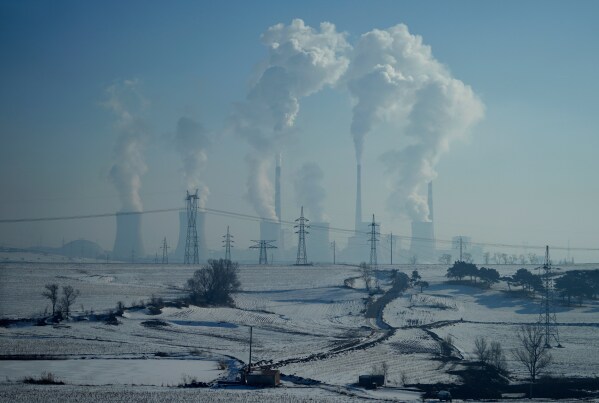
The government position is that coal provides a stable backup to sources such as wind and solar, which are affected by weather and the time of day. The shortages in 2022 resulted partly from a drought that hit hydropower, a major energy source in western China.
Coal should “play an important underpinning and balancing role” for years to come, the National Development and Reform Commission, the lead economic planning agency, said in guidance issued last year on making coal plants cleaner and more efficient.
The China Coal Transportation and Distribution Association, an industry group, said last week that coal-fired power would remain essential for power-system stability, even as other sources of energy replace it.
The risk of building so much coal-fired capacity is it could delay the transition to cleaner energy sources, Qin said. Political and financial pressure may keep plants operating, leaving less room for other sources of power, she said.
The report urged China to accelerate retirement of aging and inefficient coal plants and commit in its next five-year plan, which will be approved in March, to ensuring that power-sector emissions do not increase between 2025 and 2030.
“Whether China’s coal power expansion ultimately translates into higher emissions will depend on … whether coal power’s role is genuinely constrained to backup and supporting rather than baseload generation,” Qin said.
___
Associated Press video journalist Olivia Zhang contributed to this report.
___
The Associated Press’ climate and environmental coverage receives financial support from multiple private foundations. AP is solely responsible for all content. Find AP’s standards for working with philanthropies, a list of supporters and funded coverage areas at AP.org.
First Appeared on
Source link






