


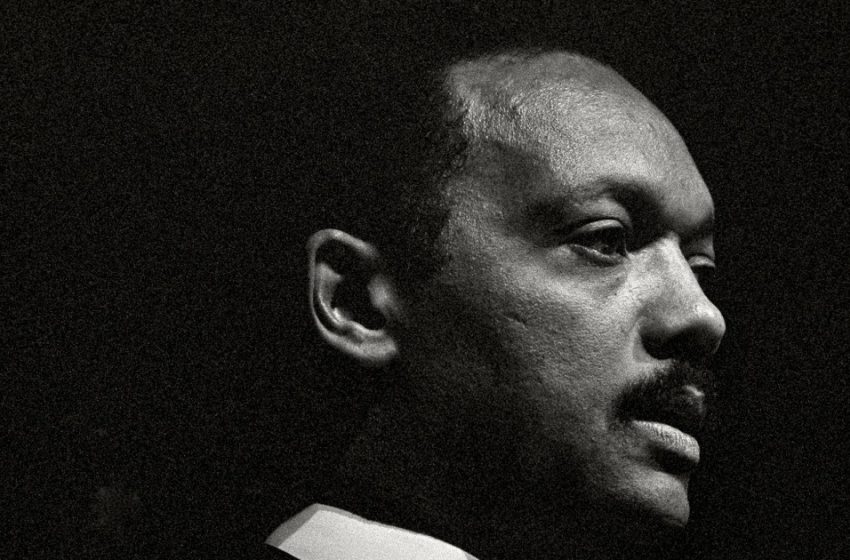
Rev. Jesse Jackson, civil rights icon and two-time presidential candidate, dies at 84
Jackson was born in Greenville, South Carolina, and rose to prominence in the civil rights era, participating in demonstrations alongside the Rev. Martin Luther King Jr. His activism spanned decades, including two runs for the Democratic presidential nomination, in 1984 and 1988.
In the first race, he won more than 18% of the primary vote and a handful of primaries and caucuses.
“Merely by being black and forcing other candidates to consider his very real potential to garner black votes, which they need, Jackson has had an impact,” read a 1984 New York Times profile.
Four years later, he built on that success by winning 11 primaries and caucuses.
Jackson began his work as an organizer with the Congress of Racial Equality, participating in marches and sit-ins. He attended North Carolina A&T State University and graduated with a degree in sociology. He began rallying student support for King during his divinity studies at Chicago Theological Seminary and participated in the 1965 Selma-to-Montgomery march in Alabama.
Shortly afterward, Jackson joined the Southern Christian Leadership Conference, or SCLC, to work alongside King full time. He drew praise from King as a young man running the SCLC’s economic development and empowerment program, Operation Breadbasket — “we knew he was going to do a good job, but he’s done better than a good job,” King said.
As he grew as an organizer, Jackson married Jacqueline Brown, who survives him, in 1962. They have five children, including former Rep. Jesse Jackson Jr., D-Ill.
Jackson, who was at the motel in Memphis, Tennessee, with King when he was assassinated in 1968, did not let up after King’s death. He took his vision for Black liberation even further by founding People United to Save Humanity, or PUSH, in 1971. He resigned from the SCLC that year to start PUSH after he was suspended from the organization; he was accused of using the SCLC for personal gain. PUSH worked to improve economic conditions of Black communities in the country and later expanded to politics with direct action campaigns and social areas through a weekly radio show and awards for Black people.
Jackson’s 1984 presidential bid prompted the launch of his National Rainbow Coalition, which opposed President Ronald Reagan’s policies and advocated for social programs, voting rights and affirmative action. PUSH and the National Rainbow Coalition merged in 1996 and are now the Rainbow/PUSH Coalition.
His 1984 campaign angered some Democrats who said his ideas were too left-leaning and would hurt the party in the general election. Jackson dismissed the concerns.
“The great responsibility that we have today is to put the poor and the near-poor back on front of the American agenda,” Jackson said of the 1984 campaign in a 1996 interview with PBS. “This is a dangerous mission, and yet it’s a necessary mission!”
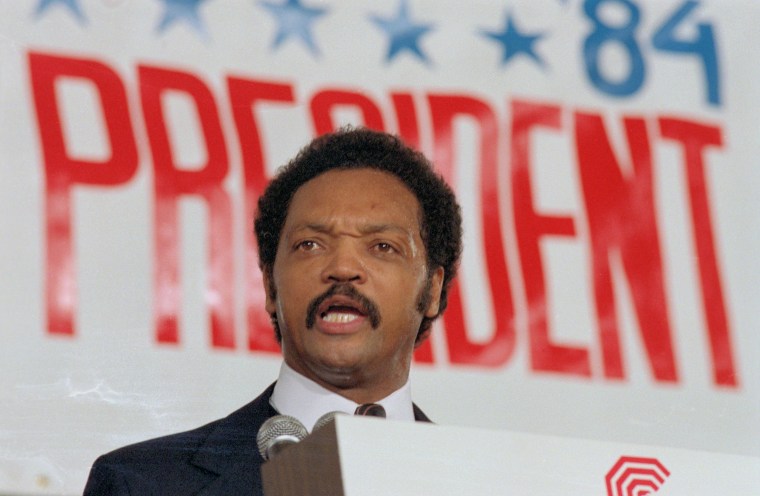
Jackson’s 1984 campaign was marred when he referred to Jewish people as “hymies” and called New York City “hymietown” in a Washington Post interview. He initially denied having made the remarks and accused Jewish people of targeting his campaign. He later admitted having used the slur and offered an impassioned apology.
In 1991, Jackson was elected as one of Washington, D.C.’s two “shadow senators” to lobby for D.C. statehood and served one term.
Jackson also helped win the release of several detained and captured Americans around the world. In 1999, he negotiated the release of three U.S. soldiers being held in Yugoslavia. President Bill Clinton awarded him the Presidential Medal of Freedom for those efforts a year later.
Jackson’s other successes included winning the release of a U.S. Navy pilot in 1984 from Syrian captors after his plane was shot down, at least 16 Americans held in Cuba in 1984, 700 women and children from Iraq in 1990 and two Gambian Americans from prison in the West African country in 2012.
First Appeared on
Source link






