


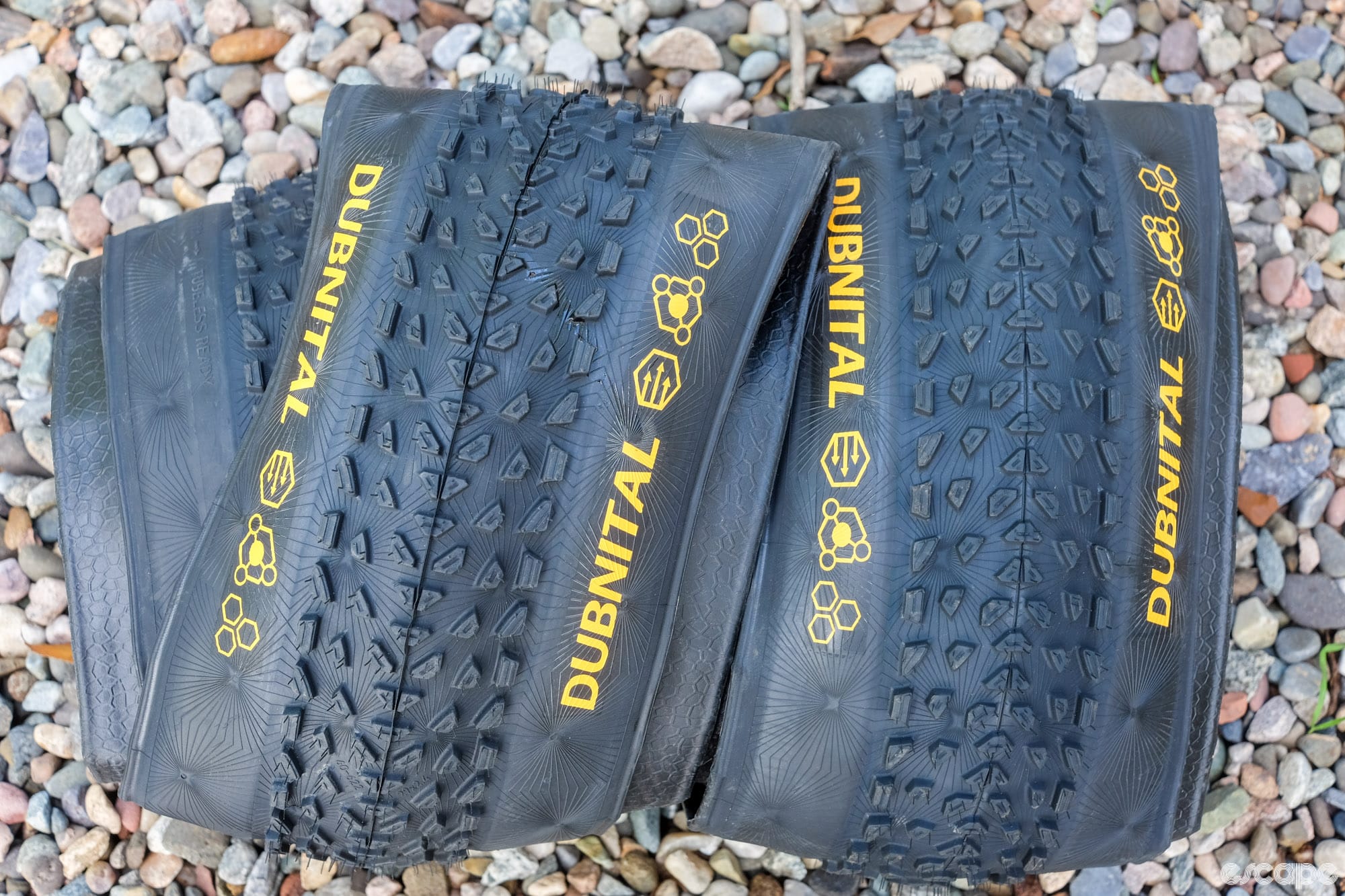
Review: Continental Dubnital Rapid 2.4
Faster than an Aspen or Peyote? Maybe. But the Dubnitals require attention to detail during setup.

Caley Fretz
Few cross-country race tires have as much history as the Continental Dubnital, the recently renamed, thoroughly reworked, and modernized version of the long-loved Race King line. This is a tire that has existed in roughly the same form for nearly two decades, raced to piles of World Cup victories, and, more recently, plenty of gravel podiums. It’s the descendant of royalty.
That’s a lot to live up to. So is the latest version any good? And more crucially, should you pick it over other excellent XC tires like the Vittoria Peyote or Maxxis Aspen?
Maxxis Aspen vs. Vittoria Peyote review, battle of the nearly-slicks
A head-to-head review of two of the top fast-rolling XC tires, plus a bonus look at the Rekon Race and Mezcal.
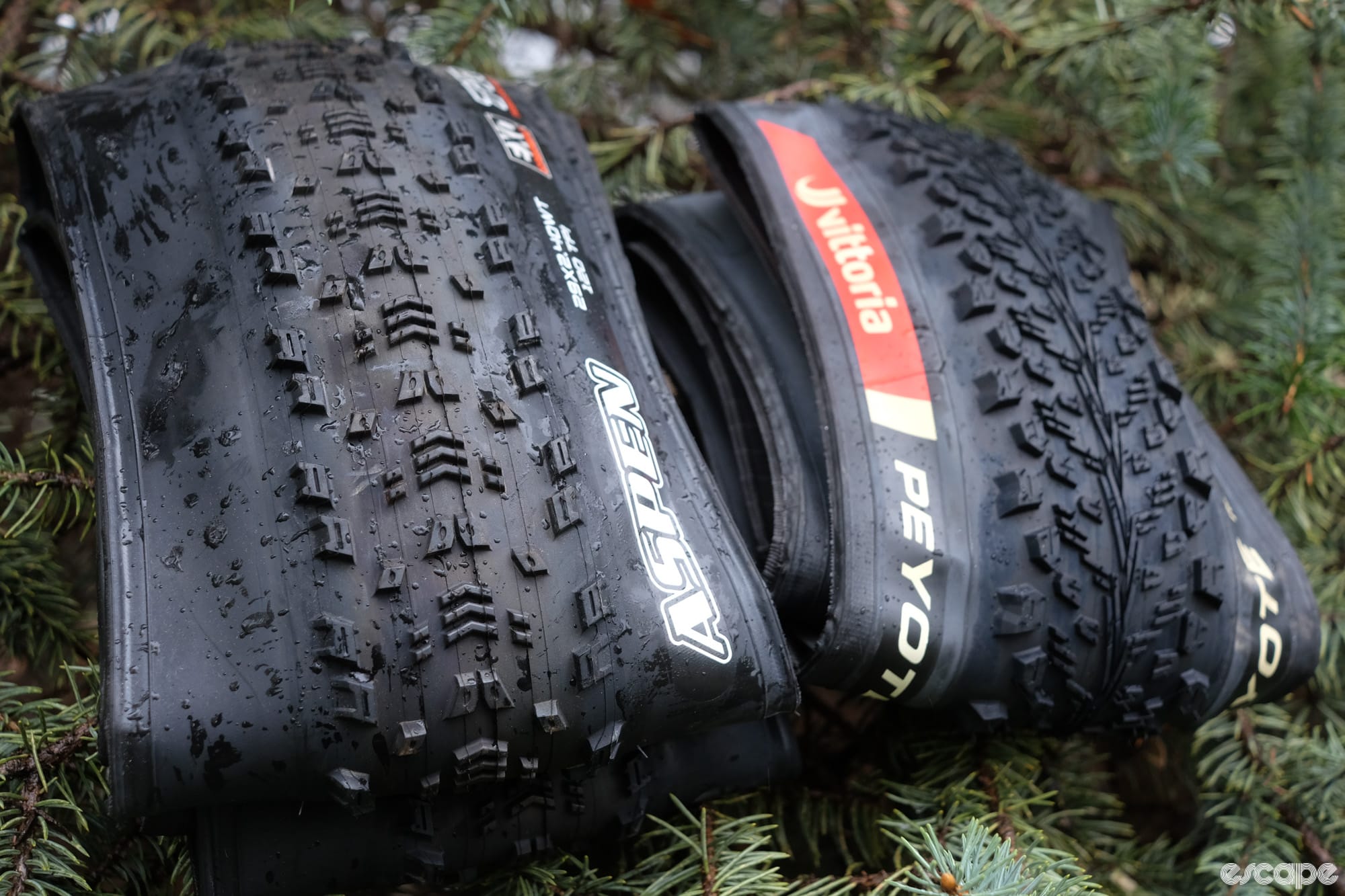
We’ve been working through reviews of all the popular XC race tires we can get our hands on. Previously, we took a close look at the Peyote and Aspen, as well as Maxxis’ Rekon Race and Vittoria’s Mezcal. This review will focus on the Dubnital but will pull in comparison so all those other options, plus a few others (like the Pirelli Scorpion, Vittoria Barzo, and more) that we have in but haven’t run full reviews on yet.
All these tires test well on popular rolling resistance tests from the likes of Bicycle Rolling Resistance and Escape Collective member John Karrasch, but this review is set in the real world: how the tires turn, stop, stay inflated, and generally keep you going down the trail as fast and efficiently as possible.
Real-world testing hints that MTB tyres are faster on all gravel
With all the debate around the optimal gravel tyre setup, one Escape Collective member decided to stop talking and start testing, and you can use the same method.
The specs: Weight, width, and height of the Continental Dubnital 2.4
I don’t normally pay too much attention to the weight of my XC tires. Most of them sit within about 50 grams of each other, mostly in the 750-800 g range. Those differences are overwhelmed by other factors and attributes, such that going light for the sake of it doesn’t make much sense. But damn, these Dubnitals are light.
Continental sent over four tires for testing. Weights were relatively consistent, widths and heights were identical.
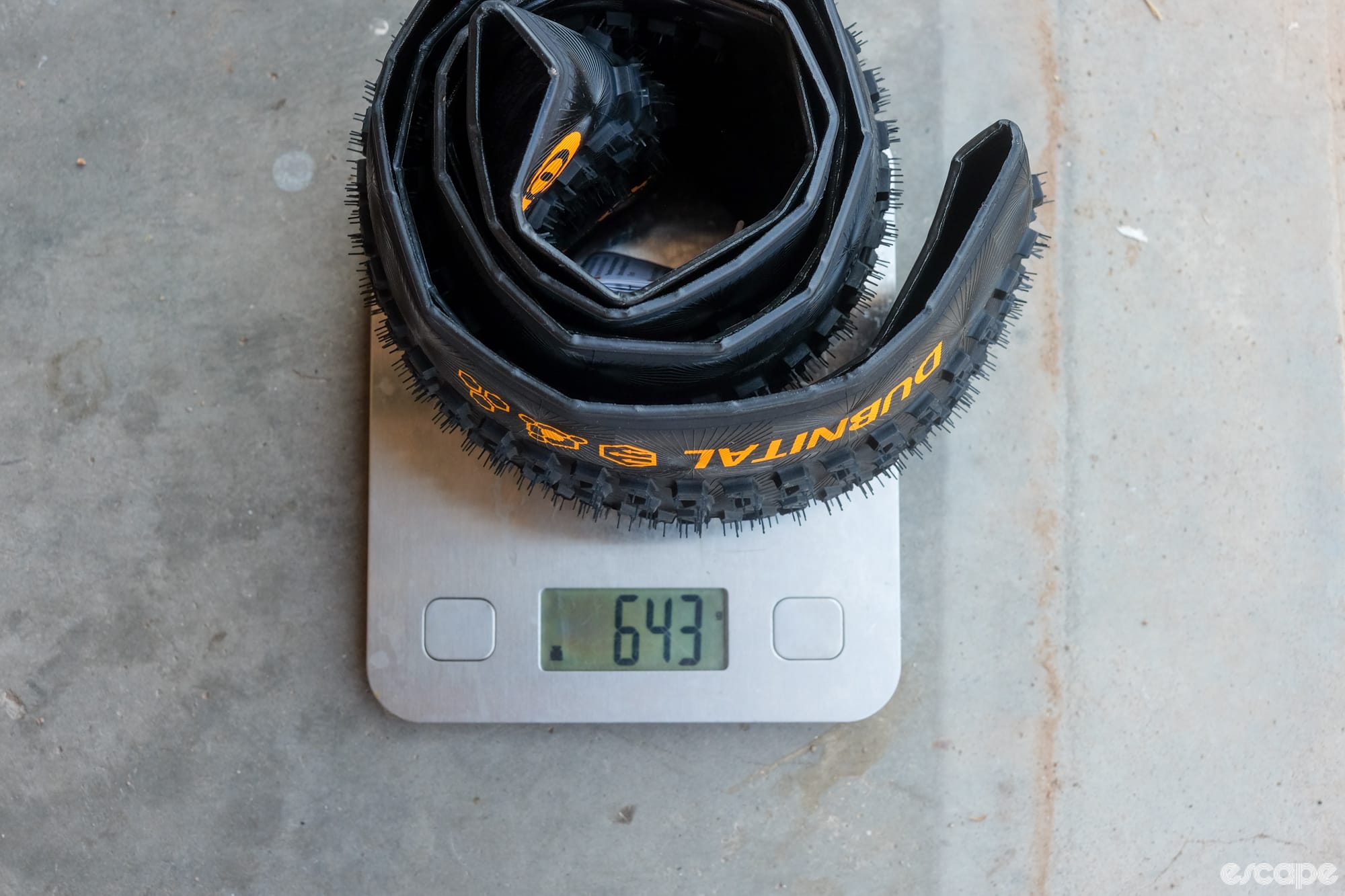
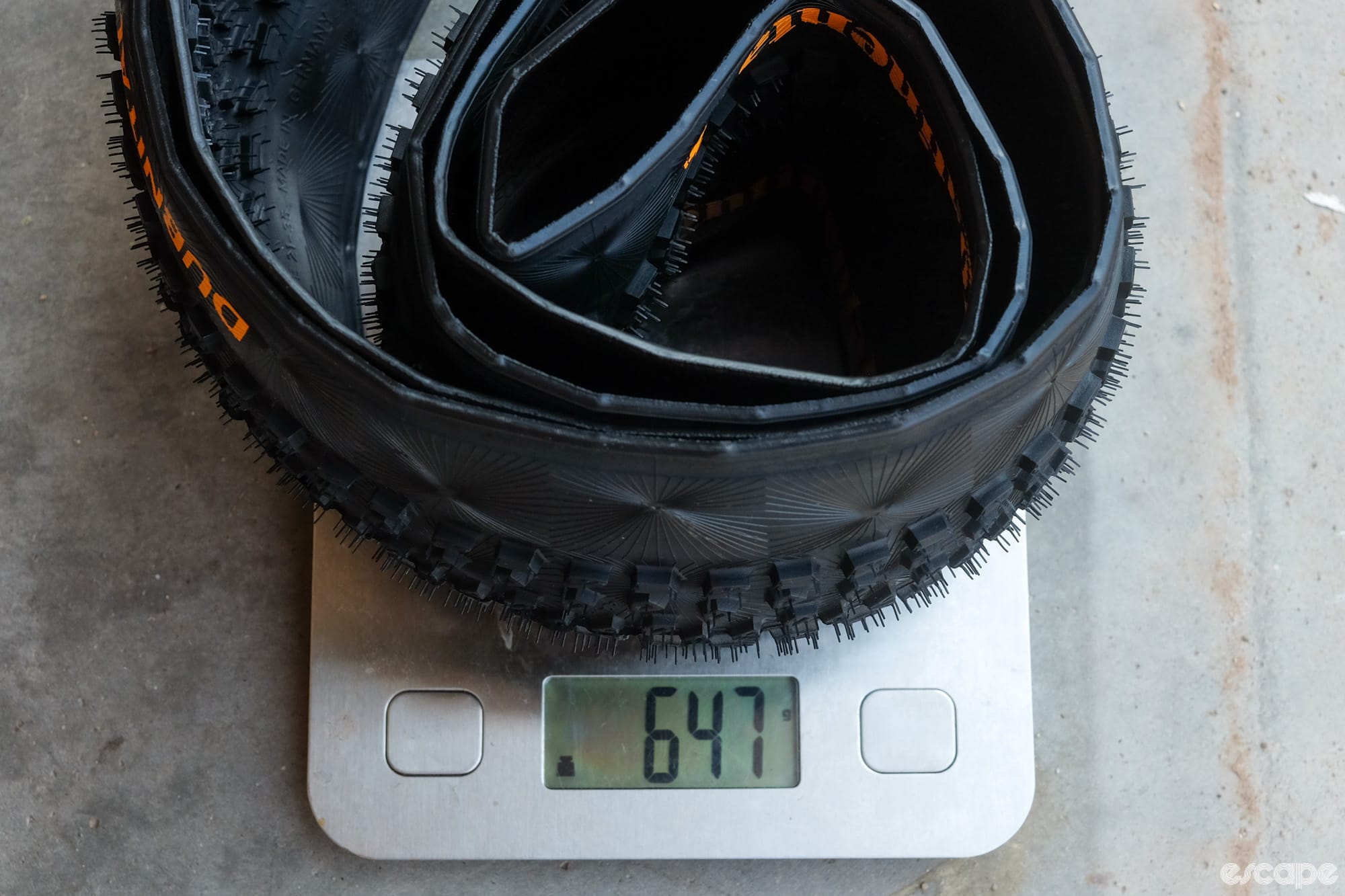
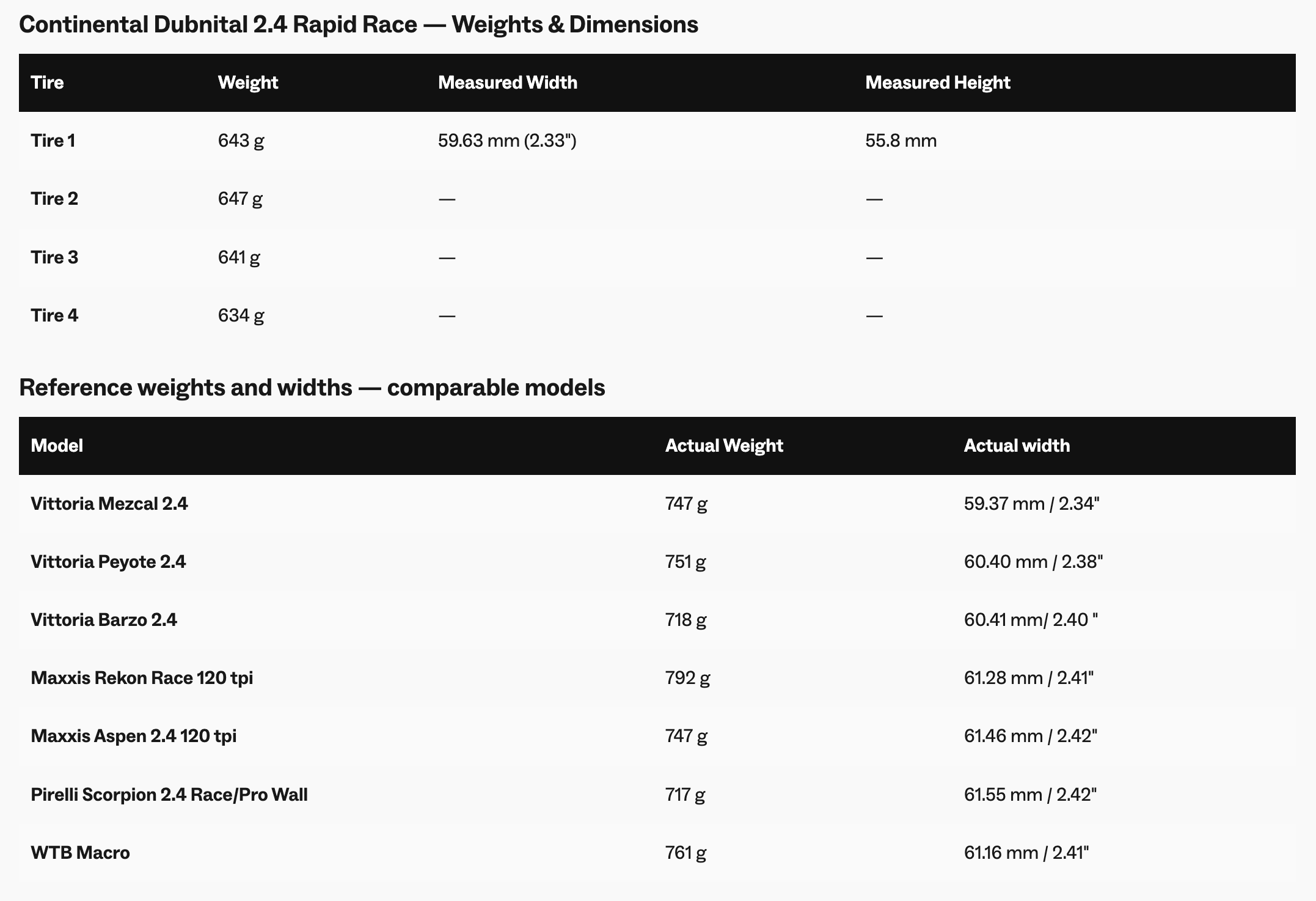
The Dubnitals are 80-150 grams lighter than even these light XC race tires. Is that good? Well, it can be. But it depends. More on that when we get to shape and support below.
How and where the tires were tested
After the Aspen/Peyote review, a few members asked for more info on my test trails. So here goes:
Our local trails in Durango, Colorado, are dry with varying levels of loose dust and rocks most of the year. The rocks are sharp and generally grippy: decomposing granite plus a lot of sedimentary stuff (limestone, shale, sandstone). Traction decreases as the summer wears on and things get drier and dustier.
They are also fast. A good example is the classic Durango town trail Cuchillo. This 5-7 minute segment, entirely on singletrack, sees max sustained speeds over 20 mph (32 km/h). That’s ripping on dirt. Here are some photos of that trail:
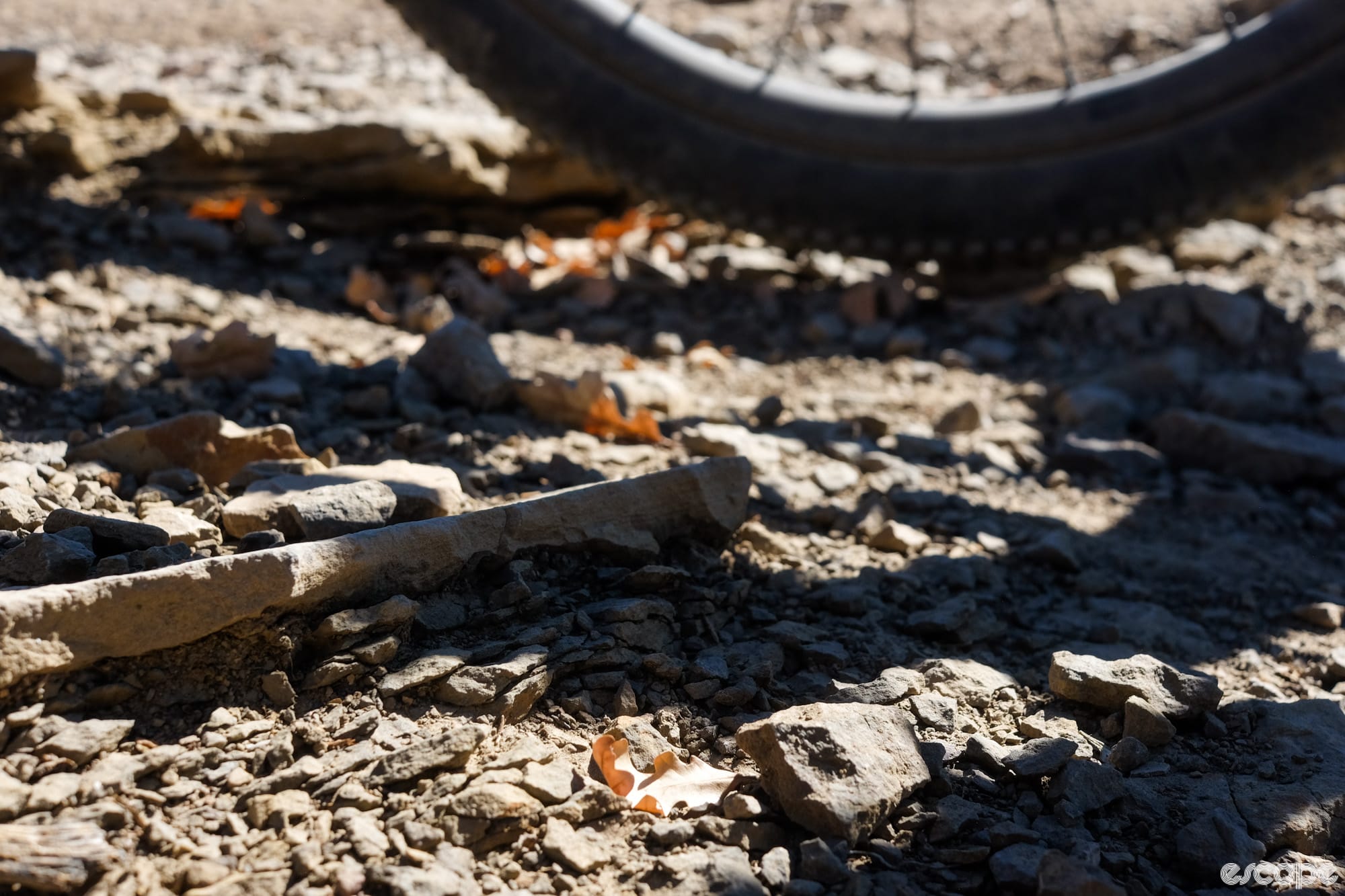
In short, it’s terrain that pushes XC tires quite hard, mostly because you regularly go from smooth and fast to PILES OF ROCKS while still at high speed. These surfaces also wear tires quickly. Ripped sidewalls are common, as are punctures straight through the tread from sharp points on the rocks, and the loose-over-hard nature of the mid-summer trail conditions puts significant demands on any tire’s braking and cornering grip.
It is not particularly slippery terrain — loose is different than slippery and requires different things of a tire. Rubber durometer is more relevant to wear rate here than grip (or lack of grip) on slimy roots or rocks.
I have tried to go out and do more empirical, back-to-back testing on a short loop here. Frankly, parsing differences between these tires is impossible in that format. I can do two five-minute laps within two watts average power on the same tire and the difference is 5+ seconds; it’s impossible to completely replicate brake points, line choice, etc. That means the data are messy and the statistical confidence that the results mean anything is basically nil. We are working on ways to fix this, but for now, I’m a firm believer that the subjective (do they turn, do they stop, do they stay inflated?) is actually more useful.
In an effort to gauge the Dubnital’s performance on different types of terrain, I also took them into the high country (altitudes above 9,000 ft/2,800 m). While also frequently rocky, these higher-elevation trails offer up more loam and softer dirt terrain, more roots, and smoother, more slippery rocks. Plus there were a few days when I got rained on and got to test the tires on wet roots and rocks. I’ve also included a section below with thoughts from Escape members who have ridden these tires in other places.
I tested the Dubnitals both with and without tire inserts, but spent the vast majority of testing time with a rear Cushcore XC insert installed and no insert in the front. This was my preferred setup, particularly given the folding issues I was experiencing early on (more on that below).
I ran the Dubnitals as a pair, as well as paired up with various other XC options, including a Peyote front, a Rekon Race front, and a Rekon Race rear.
The TL;DR
These are great tires. We live in a golden age of fast XC tires, I think, with competitors to the longstanding Maxxis hegemony (the Aspen has been the best hardpack tire for over a decade, in my opinion) popping up left and right. We also now have some inkling as to the rolling resistance of these tires via folks like Karrasch and Bicycle Rolling Resistance and thus a better idea what makes an empirically faster tire.
Did we do a good job with this story?
First Appeared on
Source link






