


Revolutionary Plasma Tunnel Could Redefine the Future of Space Travel
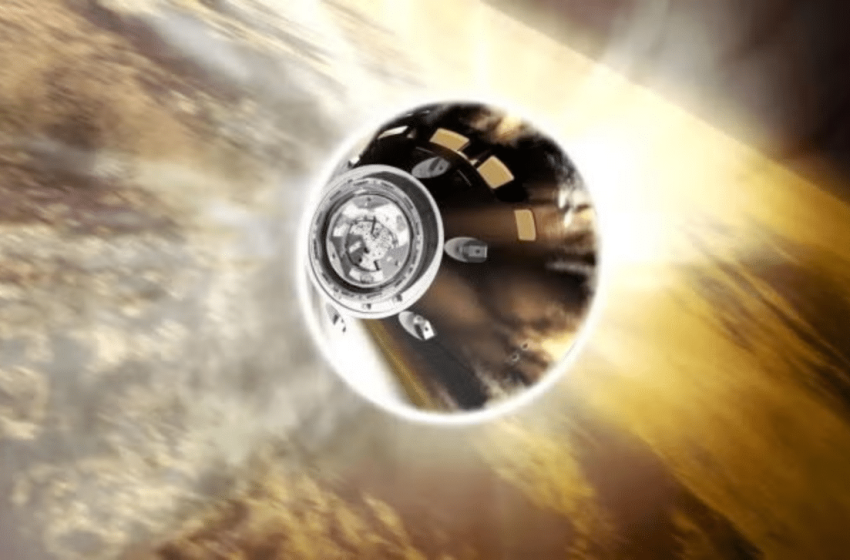
Researchers at the University of Colorado at Boulder have developed a groundbreaking plasma tunnel to simulate the extreme conditions spacecraft face during reentry into Earth’s atmosphere. This cutting-edge facility generates plasma flows that mimic the intense heat and pressure of hypersonic flight, offering valuable insights into how spacecraft and materials respond to the violent forces encountered during reentry. As space missions grow more frequent, especially with the rise of space tourism, ensuring spacecraft safety during this critical phase is essential for the future of human space exploration.
The Science Behind the Plasma Tunnel
The plasma tunnel, created by Hisham Ali and his team, is one of the first of its kind globally. Designed to replicate the extreme conditions spacecraft endure during reentry, it allows scientists to test materials, heat shields, and sensors in an environment of intense heat and pressure.
“One of the most critical and dangerous phases of any space mission is when spacecraft reenter Earth’s atmosphere,” said Hisham Ali. “If we’re taking more humans to orbit through space tourism, we need to do that safely and effectively, and that’s a challenging problem.”
With temperatures reaching up to 9,000 degrees Fahrenheit, hotter than the surface of the sun, the plasma tunnel creates an environment that replicates the intense shockwaves produced when a spacecraft enters Earth’s atmosphere at hypersonic speeds. This is vital for testing spacecraft technologies before they are used in actual missions. The ability to simulate these extreme conditions provides a better understanding of how materials behave under such immense pressure.
A Unique Facility for Hypersonic Flight Research
Ali emphasizes that the CU Boulder plasma tunnel is unlike any other research facility. “There’s not a chamber exactly like this anywhere in the world,” Ali noted, highlighting the uniqueness of the plasma tunnel. The setup uses a powerful vacuum system to inject gases like argon, which are then energized using radio frequency waves to produce plasma. This process is crucial in mimicking the shockwaves that spacecraft experience as they travel through Earth’s atmosphere at hypersonic speeds.
In addition to simulating Earth’s atmosphere, the facility can replicate the conditions on other planets, such as Mars. The plasma tunnel can inject carbon dioxide into the system to create a plasma that mirrors what spacecraft might encounter when reentering Mars’ thin, carbon dioxide-rich atmosphere. “Once our plasma is lit, we can inject carbon dioxide and create a plasma made of flowing carbon dioxide, similar to what a spacecraft might experience at Mars,” Ali said.
Inspiration From a Childhood Experience
Ali’s passion for space and hypersonic flight began with a childhood experience during a visit to Space Camp in Alabama. There, he had the opportunity to interact with a NASA heat shield tile that demonstrated the remarkable heat resistance of the material. “They put a blowtorch on one side and let us put our hands on the other. You could still feel that it was cool,” Ali recalled. “I thought that was very interesting.” This hands-on encounter ignited his lifelong interest in materials science and space safety, ultimately leading to the development of the plasma tunnel.
Ali’s childhood experience serves as the foundation for the work he and his students do at CU Boulder. “My students and I worked a lot of late hours to make this happen,” Ali said, acknowledging the hard work and dedication required to bring the facility to life.
Testing New Materials and Future Possibilities
The plasma tunnel serves as an invaluable tool for testing new heat-resistant materials and technologies. The ability to simulate the extreme conditions of hypersonic flight allows engineers to test how different materials and sensors react to high-velocity plasma flows. This research is essential for improving spacecraft design and ensuring the safety of astronauts during reentry.
As space tourism becomes more feasible, this research will help create safer spacecraft for human passengers. The facility also holds potential for advancing space exploration, providing insights into how spacecraft might behave when entering other planetary atmospheres. The flexibility of the plasma tunnel makes it an essential tool for future space missions, both for Earth and beyond.
A Glimpse Into the Future of Space Travel
Looking ahead, Ali’s team is exploring an innovative concept that could help spacecraft maneuver through the extreme conditions of reentry: the use of powerful magnets. Traditional flight control mechanisms like wings or flaps are ineffective at hypersonic speeds due to the intense heat and pressure, making it nearly impossible to steer a spacecraft after reentry. However, Ali and his team believe that by using strong magnets to manipulate the plasma shockwaves, spacecraft could potentially change their trajectory during reentry.
“Plasmas are made of charged particles, and if you have a powerful enough magnet, you can potentially change the flow of those charged particles,” Ali said. This novel approach could revolutionize how spacecraft are controlled during reentry, improving both safety and maneuverability in the harshest environments.
First Appeared on
Source link






