


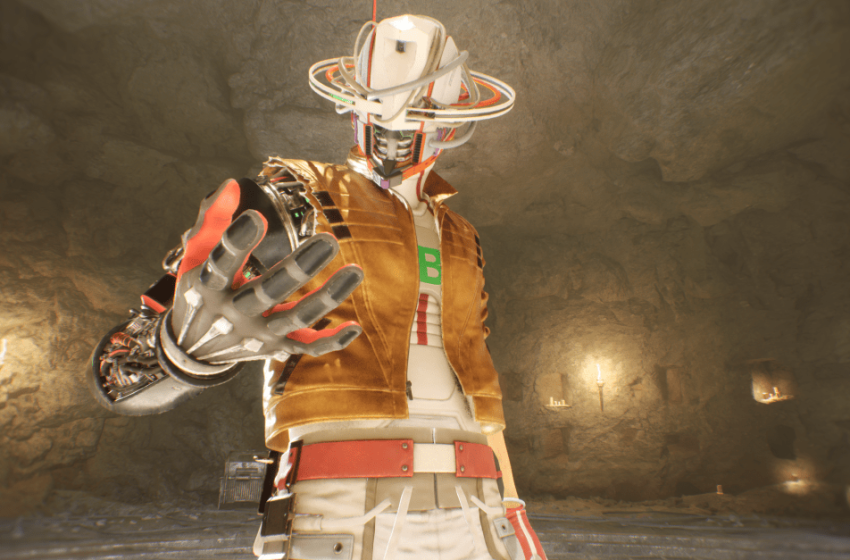
Romeo Is a Dead Man is bizarre, bloody, and exactly what makes Grasshopper special
A postmodern surrealist tale of geopolitics. An otaku’s hell-bent journey to become the top-ranked assassin. A high school cheerleader who kills zombies with a chainsaw and pompoms, with a story cowritten by James Gunn. Every project under the Grasshopper Manufacture umbrella sounds like an unlikely anecdote.
The Japanese video game studio founded in 1998 by Goichi “Suda51” Suda proudly carries a B-movie spirit, blending absurd concepts, complex characters, and cascades of pixelated blood on screen. Over the years, the developer’s work has often received a mixed critical reception, and the founder doesn’t think there’s a game in Grasshopper’s portfolio that he would consider “financially successful.” Yet, it has also cultivated a loyal following, carving its own space in the industry with games that carry an indistinguishable look and feel. And few Grasshopper releases encapsulate the studio’s ethos more than the latest, the action game Romeo Is a Dead Man.
Each game has an element of surprise. Whether it is the visual style, leaning on (often rock-adjacent) original songs or licensed tracks for the ambiance, or just being proudly wacky, the shared DNA is always portrayed in some way. They can be rough around the edges — combat and level design often take a back seat to aesthetics — but the games always try new things. While Suda has distanced himself from the “punk’s not dead” mantra, he still believes in the importance of doing something that others aren’t, regardless of financial and critical results.
Which brings us to Romeo Is a Dead Man. It’s an action game starring Romeo Stargazer, a sheriff’s deputy who, right at death’s door, is implanted with a futuristic device and brought back to life as a Dead Man — half dead, half alive. In that process, he’s recruited as an FBI Space-Time special agent. His assignment? To find his Juliet — literally. As it turns out, his girlfriend appears to be an entity that is wreaking havoc in many timelines. Who better than her lover to stop it?
If this brief introduction to the sci-fi story sounds confusing, don’t fret. It only gets weirder. Romeo is saved by his grandfather, who travels from the future and then tags along in his crusade as a living jacket patch. The first timeline rendition of Juliet he brawls with is a colossal beheaded naked body called “Everyday Is Like Monday” (nobody tell Morrissey). You spend most of the game fighting zombies, but you can also harvest them from a farm in your spaceship and use their abilities in combat.
Romeo Is a Dead Man is painstakingly self-referential
The story doesn’t take itself too seriously. At its core, similar to previous Grasshopper games, there’s pop culture references galore: Back to the Future, Star Wars, Twin Peaks, The Clash, Mobile Suit Gundam, you name it. Romeo Is a Dead Man is also painstakingly self-referential. Romeo spouts phrases like “fuckhead,” one of Travis Touchdown’s not-so-heroic lines in No More Heroes, as well as “kill the past,” the latter referencing not just past games but a collective term for games directed by Suda51 with similar themes and elements (look, it’s complicated). Every time you meet a new character or open a menu you haven’t seen before, there’s a chance of a visual or written reference to a game from the studio’s portfolio.
Romeo’s defining trait is telling this story through mixed media. It starts with a handmade diorama and follows with influences from comic books, Japanese animation, live action, and pixel art. Right until the end credits, I kept being surprised by the sheer creativity on display and how it all meshed together. It’s not as groundbreaking as, say, Spider-Man: Into the Spider-Verse was for animation as a medium. It’s more of an homage. In 2026, this homage feels like a culmination of the past couple of years. Grasshopper has long been vocal about championing independent games, including crossovers of a plethora of indie studios as in-game shirts in Travis Strikes Again: No More Heroes, and regularly appearing in Devolver Digital showcases, the publisher behind the likes of Cult of the Lamb, Inscryption, and Hotline Miami.
The latter is Suda’s favorite game, and one he happily gushed about with me for an hour for its 10th anniversary in 2022. In his words, Hotline Miami, which was developed by a two-person team, rekindled a spark. “When I first started up Grasshopper, I always had a preference and sort of a tendency to work with smaller teams, so even if we’re working with bigger companies on a bigger project, I’ve always felt more comfortable on smaller teams,” he told me. “So that was sort of an extra little piece of stimulation for me.”
Despite this, Grasshopper has a history of partnering with big companies. In the early days, the studio worked on licensed games for Bandai Namco, and Killer7 was published by Capcom. Results were mixed. The most notorious was a collaboration with Electronic Arts for Shadows of the Damned. The project — which also involved developer Shinji Mikami, known for his work on Resident Evil — was tangled in a constant creative back-and-forth, leading to five different drafts during development and several compromises to the original vision.
How did that all turn out? Let’s just say the name Damon Ricotello, a villainous corporate CEO in No More Heroes and an antagonist you fight against, sounds very similar to former EA CEO John Riccitiello.
In 2021, publisher NetEase acquired Grasshopper after a tenure under GungHo Online Entertainment. But the studio is self-publishing Romeo Is a Dead Man. In an interview with VGC, Suda said that, with Grasshopper’s latest being a brand-new series, the team wanted to “be able to put out this game exactly the way we wanted to put it out on our own terms.” As much financial backing as it has from its parent company, the paradigm for the studio hasn’t been ideal. The conglomerate has been cutting back, and a 2024 report from Game File suggested the company plans to continue to divest from overseas studios like Grasshopper.
It’s too early to predict how Romeo Is a Dead Man will fare for Grasshopper, both critically and financially. Like many of the studio’s games, it looks great and has fascinating ideas, but also has some issues. The combat system is flashy but shallow, focused more on button mashing than any real strategy. Level design also gets in the way of pacing, as you’re constantly forced to travel back and forth to labyrinthine cyberspace.
But Romeo Is a Dead Man wouldn’t really be a Grasshopper game if it wasn’t a little rough. If anything, it’s the ideal showcase of what the studio is all about — it builds on three decades of experience to create a game that’s bizarre, enchanting, and unlike anything else out there.
Romeo Is a Dead Man is available on the PS5, Xbox, and Steam.
First Appeared on
Source link






