


Russia’s ISS Cargo Mission Suffers Unexpected Glitch Moments After Launch
A newly launched Russian cargo spacecraft is heading toward the International Space Station with a significant technical issue, raising operational stakes for mission controllers and astronauts alike, according to updates shared by NASA.
A Routine Launch Turns Into A High-Stakes Mission
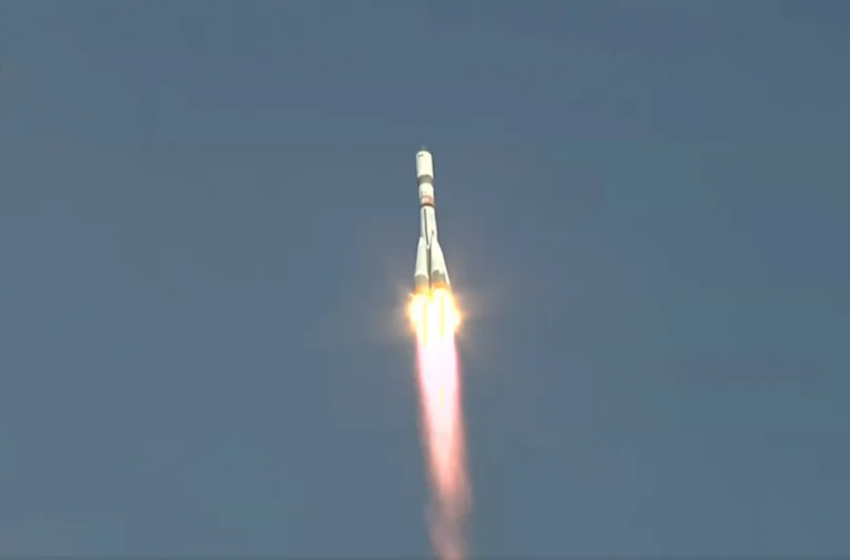
The launch of the Progress 94 cargo spacecraft began as a precisely timed and well-executed operation from the historic Baikonur Cosmodrome in Kazakhstan. Riding atop a reliable Soyuz rocket, the uncrewed freighter carried nearly three tons of vital supplies, including food, fuel, and scientific equipment destined for the crew aboard the International Space Station.
Initial ascent and orbital insertion proceeded without incident, reinforcing decades of engineering reliability associated with the Soyuz system. Yet shortly after reaching orbit, mission controllers identified a malfunction that quickly shifted the tone from routine to urgent. One of the spacecraft’s critical antennas, used for automated rendezvous and docking, failed to deploy as expected.
This antenna plays a central role in enabling the spacecraft to autonomously align and attach to the station. Without it, the mission enters a far more complex operational scenario. Engineers immediately began analyzing telemetry data while preparing contingency procedures, highlighting how even minor hardware failures in space can escalate into mission-defining challenges.
Despite the issue, the spacecraft remains on a stable trajectory toward the ISS, maintaining power, navigation, and propulsion capabilities. This stability has given teams on the ground valuable time to evaluate options and avoid rushed decisions. The situation underscores the fragile balance between automation and human intervention in modern spaceflight, where redundancy is not just a feature but a necessity.
NASA And Roscosmos Coordinate A Critical Response
The unfolding situation has drawn close attention from both Roscosmos and NASA, reflecting the deeply collaborative nature of ISS operations. According to NASA updates, all core systems aboard Progress 94 continue to function nominally, aside from the antenna anomaly, allowing mission teams to proceed with cautious optimism.
“All other systems are operating as designed, and Progress will continue toward its planned docking at 9:34 a.m. EDT on Tuesday, March 22,” agency officials said via X on Sunday.
“Troubleshooting will continue and if the antenna cannot be deployed, Roscosmos cosmonaut Sergey Kud-Sverchkov will manually pilot the spacecraft through a backup system for rendezvous and docking at the space station.”
This statement highlights both the resilience of the spacecraft’s design and the importance of human oversight in orbital operations. The backup system referenced is a well-established manual control mode that allows cosmonauts aboard the ISS to remotely guide incoming spacecraft. While rarely used in recent years due to advances in automation, it remains a critical safeguard.
The mention of Sergey Kud-Sverchkov as the potential operator signals readiness for a scenario that requires precision piloting under constrained conditions. Manual docking demands exceptional timing and spatial awareness, as even minor miscalculations can compromise safety. The coordination between ground teams and station crew will be pivotal if this path is taken.
NASA’s involvement also reflects the broader operational framework of the ISS, where international agencies share responsibility for safety and mission success. The situation serves as a reminder that even amid geopolitical tensions on Earth, cooperation in orbit remains tightly interwoven and mission-critical.
What Happens Next For Progress 94 And The ISS
As Progress 94 continues its approach, engineers are working against time to resolve the antenna issue before the scheduled docking window. If the system can be restored, the spacecraft will proceed with its automated docking sequence, minimizing risk and conserving crew resources aboard the station.
If not, the mission will transition into manual mode, marking a rare but carefully planned deviation from standard procedures. Such operations are inherently more demanding, requiring continuous monitoring, real-time adjustments, and flawless communication between crew and mission control.
The cargo aboard the spacecraft adds urgency to the situation. These supplies are not optional; they support ongoing experiments, station maintenance, and daily life for astronauts in orbit. While the ISS typically maintains reserves, timely delivery ensures mission continuity and avoids operational strain.
Once docked, the spacecraft is expected to remain attached to the station for approximately six months. During that time, it will serve as both a storage module and a disposal vehicle. After completing its mission, it will be filled with waste and directed to burn up safely in Earth’s atmosphere, a standard end-of-life procedure for Progress vehicles.
First Appeared on
Source link






