


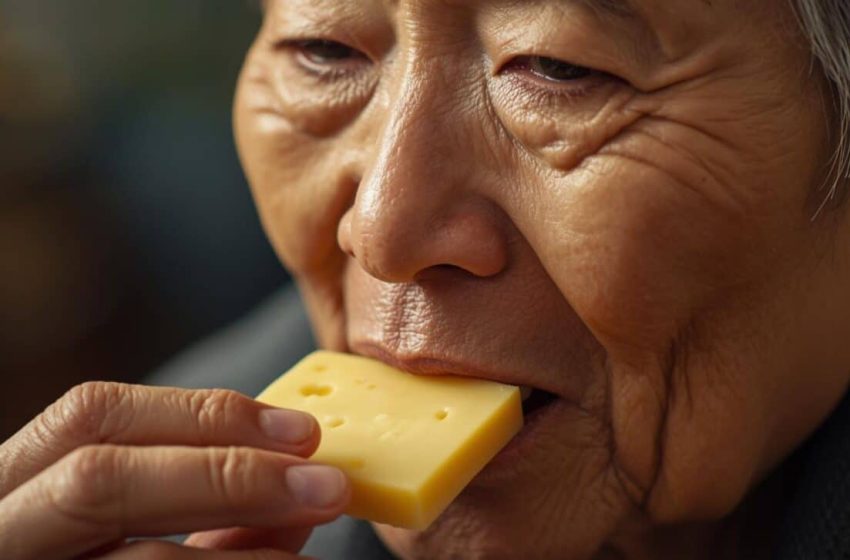
Scientists Claim Weekly Cheese Habit Is Linked to Reduced Dementia Risk
Japan’s aging population has become a global preview of dementia‘s trajectory. More than 12 percent of citizens over 65 already live with the condition, and total cases are expected to exceed 5.8 million by 2040. Against that backdrop, a team of Japanese researchers spent three years tracking nearly 8,000 older adults, asking a question that would have seemed peripheral a decade ago: does the habit of eating cheese correspond to any measurable difference in who develops dementia?
The answer, published in the journal Nutrients, arrived with a specific figure. Among those who ate cheese at least once a week, the incidence of dementia over the follow up period was 3.4 percent. Among those who ate it rarely or never, the figure was 4.5 percent. The difference translated to a 24 percent lower relative risk for regular consumers, a finding that held even after researchers statistically stripped away the influence of income, education, and overall diet quality.
The study does not claim that cheese prevents dementia. Its authors, drawn from the National Center for Geriatrics and Gerontology, Niimi University, and Chiba University, repeatedly frame the result as an association that warrants further investigation. But in a field where modifiable risk factors remain scarce, any signal that survives rigorous methodological scrutiny commands attention.
The Statistical Surgery That Made Groups Comparable
The analysis drew on data from the Japan Gerontological Evaluation Study, a long running survey of community dwelling adults aged 65 and older. Researchers linked 2019 questionnaire responses to long term care insurance certification records through fiscal year 2022, using the certification date as a proxy for incident dementia. After applying exclusion criteria, the initial pool included 10,180 eligible participants.
To address the risk that cheese consumers might differ systematically from non consumers in ways that independently influence dementia risk, the team employed propensity score matching. This statistical technique creates comparable groups by matching each cheese consumer with a non consumer who shares similar characteristics.
The final analytic sample included 3,957 matched pairs, balanced across variables including age, sex, educational attainment, equivalized household income, self rated health, instrumental activities of daily living, and memory complaints.
The resulting hazard ratio of 0.76 (95 percent confidence interval 0.60 to 0.95, p=0.015) indicates that regular cheese consumption was associated with a 24 percent reduction in the hazard of developing dementia over the three year period. The absolute risk difference was 1.06 percentage points.
What Cheese Eaters Actually Put in Their Shopping Carts
Because cheese consumers in the study also tended to eat more fruits, vegetables, fish, and meat, researchers conducted an additional analysis adjusting for overall dietary quality. After this adjustment, the association weakened slightly but remained statistically significant, with a risk reduction of approximately 21 percent. This suggests the relationship is not merely a marker of generally healthier eating habits.
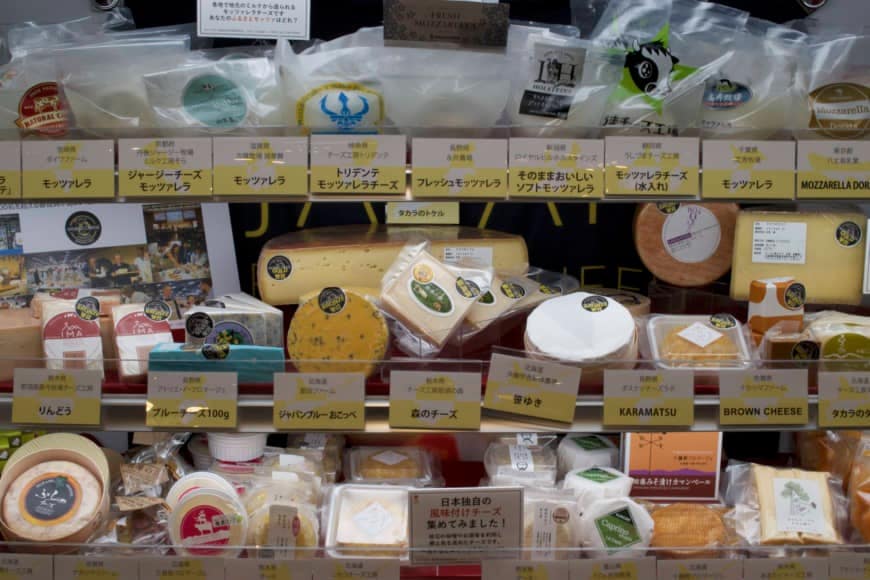
Consumption frequency and cheese type were documented. Among participants classified as consumers, 72.1 percent reported eating cheese one to two times per week. Processed cheese dominated, accounting for 82.7 percent of consumption. White mold cheeses such as camembert or brie constituted 7.8 percent, with other varieties making up the remainder.
Three Biological Roads Not Yet Taken
The study’s authors outline several biologically plausible routes through which cheese consumption could influence cognitive health, while emphasizing that their observational design cannot test these mechanisms directly.
Vitamin K2, present in fermented dairy products, plays a role in regulating vascular calcification. Because cerebrovascular disease contributes significantly to dementia risk, particularly in older populations, vitamin K2 mediated vascular protection represents one potential pathway. The report notes that hypertension and atherosclerosis are established risk factors for cognitive decline.

Bioactive peptides generated during cheese fermentation may exert anti inflammatory and antioxidant effects. Chronic inflammation and oxidative stress are both implicated in neurodegenerative processes, including the accumulation of amyloid plaques and neurofibrillary tangles characteristic of Alzheimer’s disease.
Probiotic content in fermented cheeses could influence the gut brain axis, a bidirectional communication system linking intestinal microbiota to central nervous system function. Dysbiosis, or imbalance in gut microbial communities, has been associated with various neurological conditions, though the direction of causation remains uncertain.
What the Study Could Not Measure
The study carries several limitations that its authors explicitly acknowledge. Cheese consumption was assessed only at baseline, preventing analysis of changes in intake over time. Portion sizes were not recorded, only frequency, which precludes dose response analysis.
Dementia ascertainment relied on administrative data. In Japan, long term care insurance certification follows a standardized process involving municipal interviews, physician input, and a national algorithm that calculates required care time. Certification for dementia related care was used as the outcome measure. While this approach is widely used in Japanese aging research, it does not capture clinical diagnoses and cannot distinguish between dementia subtypes such as Alzheimer’s disease, vascular dementia, or Lewy body dementia.
Genetic data were unavailable. The APOE ε4 allele, the strongest known genetic risk factor for late onset Alzheimer’s disease, was not measured. Without this information, researchers could not assess whether the association between cheese consumption and dementia risk varies by genetic background.
The Japanese dietary context also limits generalizability. Per capita cheese consumption in Japan is approximately 2.7 kilograms annually, far below levels typical in Europe or North America. In populations with higher baseline intake, additional cheese consumption might not confer the same marginal benefit.
First Appeared on
Source link






