


Scientists Discover Breakthrough That May Reverse Osteoporosis and Strengthen Bones
For millions of people living with osteoporosis, a condition that weakens bones and leads to painful fractures, the road to recovery has long been one of slow and uncertain progress. But in an exciting turn of events, scientists may have just discovered a game-changing approach to reversing this debilitating disease. With a newfound understanding of a specific receptor in the body, researchers are now poised to develop therapies that not only prevent bone loss but potentially rebuild bones that have already been damaged.
Unveiling the GPR133 Receptor: A Key to Stronger Bones
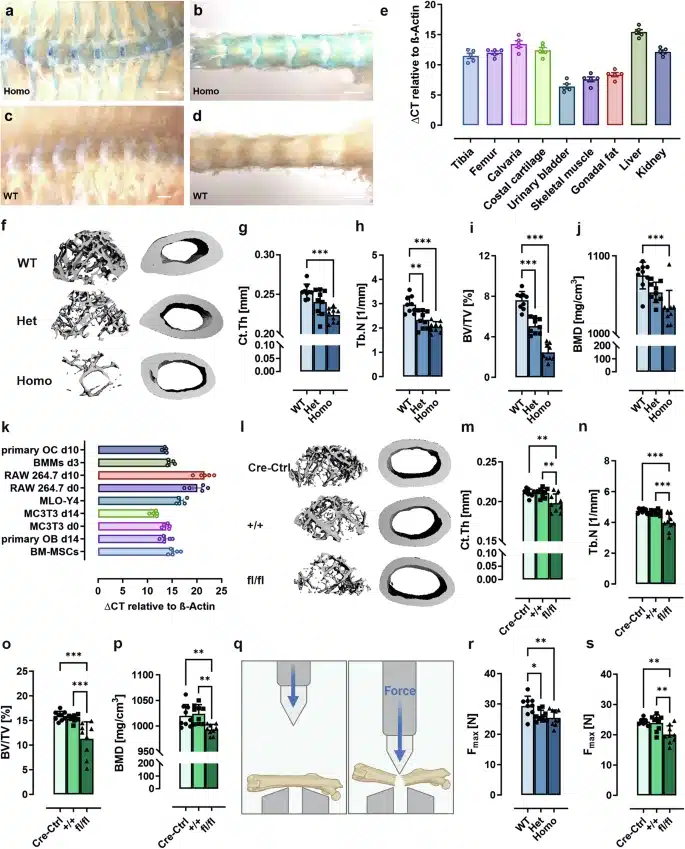
Osteoporosis, a condition affecting millions, has long been a challenge for medical science, with treatments primarily focused on slowing its progress rather than reversing the damage. The new breakthrough, published in Signal Transduction and Targeted Therapy, centers on a receptor called GPR133, which plays a crucial role in regulating bone strength. Researchers have found that activating this receptor in mice with osteoporosis significantly improved bone density and strength. The receptor works through osteoblasts, the cells responsible for building bones, showing promise as a potential treatment for osteoporosis.
University of Leipzig biochemist Ines Liebscher, who led the research, explained the importance of their findings:
“Using the substance AP503, which was only recently identified via a computer-assisted screen as a stimulator of GPR133, we were able to significantly increase bone strength in both healthy and osteoporotic mice.”
The chemical AP503 acts as a switch to activate GPR133, kick-starting the osteoblasts into producing more bone tissue, which could dramatically strengthen weakened bones.
As highlighted by ScienceAlert, the team’s experiment involved mice that either lacked the GPR133 gene or had it activated. Those with the receptor present showed impressive results, with their bones becoming much stronger. This finding has brought new optimism to the field of bone health, suggesting that targeting this receptor could become a game-changing approach in treating osteoporosis.
The Potential of AP503: Boosting Bone Strength
AP503, a compound that activates GPR133, has shown remarkable promise in animal studies. This breakthrough discovery could lead to new therapeutic options that go beyond merely slowing bone loss, addressing the root cause of osteoporosis. As Liebscher noted, the ability to activate GPR133 offers the potential for “significantly increasing bone strength” in both healthy and osteoporotic animals. The researchers also tested the compound in combination with exercise, showing even further improvements in bone strength.
The compound’s ability to enhance bone production in an osteoporotic model is particularly significant, as it may allow for the restoration of bone density in individuals suffering from advanced stages of osteoporosis. Current treatments primarily focus on slowing the condition’s progression, and AP503 could be a key to making bone regeneration a reality, especially for those who have suffered fractures or other bone-related damage.
Medical Applications and the Aging Population
As we age, our bones naturally weaken, but this discovery offers hope for reversing some of that damage. Osteoporosis, which primarily affects postmenopausal women, can result in fractures and chronic pain, but the research into GPR133 could offer an entirely new way of treating the condition. The receptor has shown such significant promise that researchers believe it could play a central role in the future of osteoporosis therapies.
Molecular biologist Juliane Lehmann of the University of Leipzig emphasized the broader implications of the discovery for an aging population.
“The newly demonstrated parallel strengthening of bone once again highlights the great potential this receptor holds for medical applications in an aging population,” she said.
This could pave the way for treatments that not only treat osteoporosis but could be used to prevent bone loss in the first place, offering a preventative approach for aging individuals.
While the research is still in its early stages, the potential impact on those suffering from osteoporotic fractures or weakened bones is immense. The ability to restore bone density in this way could dramatically improve the quality of life for millions of people worldwide.
The Future of Bone Repair: Beyond Traditional Treatments
The science behind bone repair continues to advance at a rapid pace. In addition to the discovery of GPR133, there are other exciting developments, such as a blood-based implant material designed to enhance bone healing. The implant uses synthetic peptides to mimic the natural clotting process that occurs when the body repairs injuries.
“The possibility to easily and safely turn people’s blood into highly regenerative implants is really exciting,” said biomedical engineer Cosimo Ligorio.
If this technology can be scaled for human use, it could revolutionize bone repair and significantly shorten recovery times for fractures.
These developments, combined with the GPR133 research, paint an optimistic future for treating bone conditions. Scientists are actively exploring ways to harness the body’s own healing mechanisms, offering non-invasive and effective treatments for various bone disorders.
First Appeared on
Source link






