


Scientists Discovered This Massive 7,000-Pound Dinosaur Fossil With Skin Still Intact
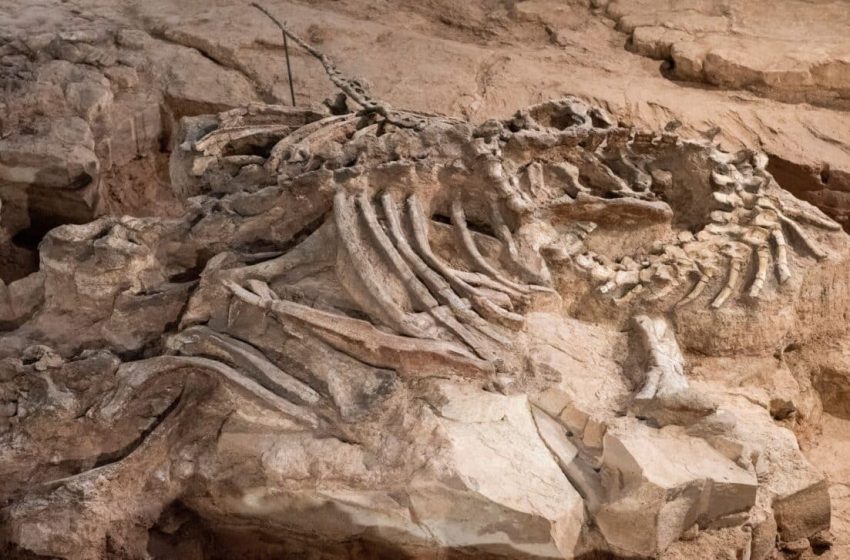
A 66-million-year-old Edmontosaurus fossil with preserved skin has been discovered in the North Dakota Badlands by a team from Winona State University. Nicknamed “Medusa,” the specimen stands among the rarest dinosaur fossils ever found due to its exceptional state of preservation.
The discovery helps paint a clearer picture of a species that lived alongside Triceratops and Tyrannosaurus rex at the end of the dinosaur era. Its rarity lies not only in its size but in the unusual preservation of soft tissue, a feature seldom seen in fossils of this scale.
Now housed at the university’s Science Laboratory Center, the fossil is expected to play a key role in both academic research and public education. The team behind the discovery sees it as a long-term resource for students and scientists alike.
An Exceptionally Preserved Specimen With Fossilized Skin
The presence of fossilized skin alongside a largely articulated skeleton makes this discovery particularly significant. According to a press release available on Winona State University, Dr. Lee Beatty emphasized that such preservation is extremely rare, especially in large dinosaur specimens.
“This is an extraordinary moment for Winona State and for science,” he said. “ If this fossil contains preserved skin and soft tissues, it could provide unprecedented insights into dinosaur biology, evolution, and appearance — things skeletons alone can’t tell us.”
He noted that only a small number of comparable fossils exist worldwide. The Edmontosaurus, an herbivore, lived during the final moments of the Cretaceous period, making this specimen a valuable record of that time.
This Badlands Recovery Was Anything But Easy
The fossil was discovered in a difficult-to-access area, perched about 85 feet up a cliff. Extracting it required careful coordination due to both the terrain and limited resources.
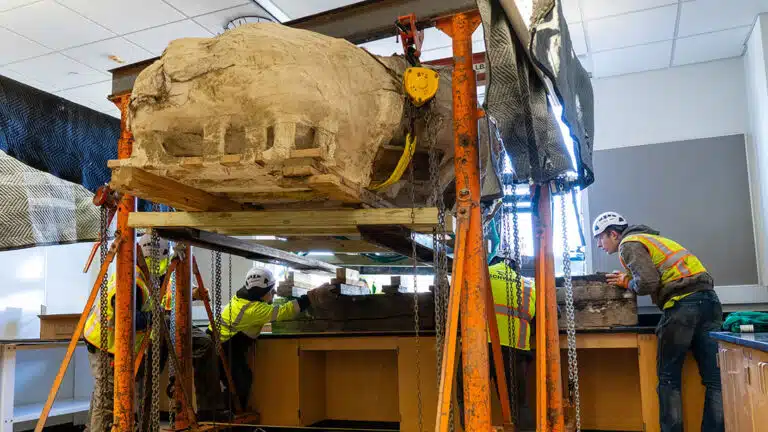
Adam Schroeder, owner of Hell Creek Fossils, described the site as nearly impossible to work on with heavy equipment, citing budget limitations. The fossil measures approximately 12 feet in length and 7 feet in width, with a weight exceeding 7,000 pounds, adding to the complexity of the operation.
“Medusa,” a Rare Scientific Find Making Waves
Despite missing its head, the specimen remains highly complete, with a preserved spine extending from the shoulders to the hips. This level of articulation is uncommon, further increasing its scientific value.
The nickname “Medusa” reflects both the fossil’s headless condition and the presence of snakes at the site. Now preserved at Winona State University, the fossil will be made available for research, student work, and public viewing, with the aim of expanding understanding of dinosaur ecosystems and encouraging interest in the field.
“This discovery is not just about science — it’s about education and opportunity,” Beatty stated. “Our students will gain hands-on experience in fossil preparation and research, and the community will have a chance to engage with a piece of Earth’s history.”
First Appeared on
Source link






