


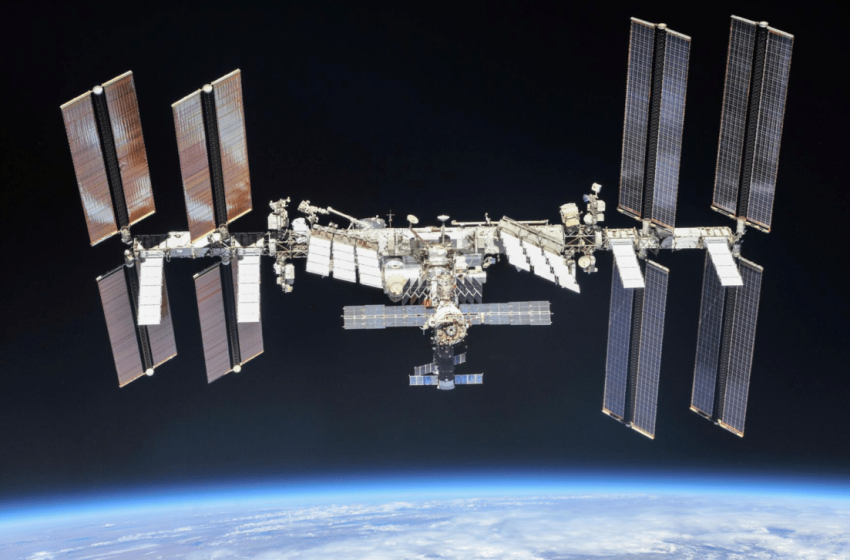
Scientists Find Unexpected Results in Microbial Mining Experiment on the ISS
As humanity pushes the boundaries of space exploration, one of the key challenges is how to access resources from distant asteroids. A recent study published in npj Microgravity has revealed groundbreaking findings on how microbes, specifically bacteria and fungi, might be harnessed for resource extraction in space. This experiment aboard the International Space Station (ISS) tested the ability of these organisms to extract valuable metals from asteroid material under microgravity, offering new possibilities for future space missions where resupplying from Earth is impractical.
A New Frontier in Space Resource Extraction
The exploration of asteroids has long captured the imagination of scientists and space enthusiasts alike. These space rocks are not only fascinating because of their origins but also because many are rich in metals such as platinum, palladium, and other valuable elements. Traditionally, extracting resources from asteroids would be a monumental task for astronauts, involving complex mining techniques. However, the BioAsteroid project, detailed in a recent study published in npj Microgravity, has explored a unique and more sustainable method, using microbes.
In an unprecedented experiment aboard the ISS, scientists tested the use of Sphingomonas desiccabilis, a bacterial species, and Penicillium simplicissimum, a fungal species, to extract metals from L-chondrite asteroidal material.
“This is probably the first experiment of its kind on the International Space Station on meteorite,” said Dr. Rosa Santomartino, a researcher at Cornell University and the University of Edinburgh.
Microgravity: A Unique Challenge for Microbial Behavior
One of the central questions of the BioAsteroid project was how the microbes would behave in space, particularly in microgravity conditions. On Earth, gravity plays a significant role in the behavior of living organisms, influencing everything from fluid movement to the way microbes interact with materials. In space, however, gravity is nearly nonexistent, which can lead to unexpected changes in biological processes. “We wanted to keep the approach tailored in a way, but also general to increase its impact,” Santomartino explained, emphasizing the need for broad applications beyond just the experiment at hand.
The experiment involved exposing the microbes to asteroid fragments, specifically L-chondrite material, under both microgravity and terrestrial gravity conditions. “These are two completely different species, and they will extract different things,” Santomartino noted. This variety allowed researchers to explore how each microbe might extract different metals and how they function in space compared to Earth. In their analysis, the researchers sought to understand not just the metals extracted but also the processes driving these extractions.
The Results: Microbial Behavior and Metal Extraction
The research revealed some surprising findings. The microbes exhibited different extraction efficiencies based on the metal being targeted and the conditions they were in.
“We split the analysis to the single element, and we started to ask, OK, does the extraction behave differently in space compared to Earth?” said Dr. Alessandro Stirpe, also from Cornell and the University of Edinburgh.
The results were not entirely predictable, suggesting that different metals responded differently to microbial extraction, and this response varied with both the species of microbe used and the gravity conditions.
Some elements, such as palladium, platinum, and others, were extracted in larger quantities when microbes were used compared to non-biological extraction methods. However, the results also showed that non-biological leaching performed less effectively in microgravity compared to Earth-based experiments. Dr. Santomartino emphasized that “In these cases, the microbe doesn’t improve the extraction itself, but it’s kind of keeping the extraction at a steady level, regardless of the gravity condition.” This suggests that microbes may provide a more reliable method for resource extraction, especially in environments where traditional methods might struggle.
A Step Towards Sustainable Space Mining
While the study’s findings were fascinating, they also opened up new questions about the viability of using microbes for large-scale space mining. The ability to extract 44 different elements, with 18 biologically extracted, shows that microbial methods could be a promising option for future space missions. However, the varying results between different metals and microbes suggest that more research is needed to fine-tune the process.
Dr. Stirpe raised a key point in this context: “Are these elements more extracted when we have a bacterium or a fungus, or when we have both of them?” This question is critical for understanding how to optimize the microbial mining process for different materials.
First Appeared on
Source link






